
Table Tennis
Sheffield Sows the Seed: Inside ITTF's Youth Development Machine
Trả lời cốt lõi: ITTF World Hopes Week 2026 diễn ra tại Sheffield, quy tụ 40 tay vợt dưới 12 tuổi toàn cầu trong 5 ngày huấn luyện. Sự kiện không tính điểm xếp hạng, tập trung phát triển tài năng và năng lực huấn luyện viên. Người thắng Challenge: Joseph Sebatindira (Uganda) và Kaede Neya (Nhật Bản). Sự kiện chính: - 40 vận động viên dưới 12 tuổi, gồm 20 nam và 20 nữ, cùng huấn luyện viên riêng. - Khối huấn luyện 5 ngày do Eva Jeler và Magnus Mallander (huấn luyện viên trưởng ITTF) dẫn dắt. - Người thắng Challenge: Joseph Sebatindira (Uganda) và Kaede Neya (Nhật Bản). - ITTF trao lại quyền đăng cai cho Table Tennis England sau kỳ 2025 thành công. - Đối tác học thuật Sheffield Hallam; giải thưởng Butterfly gắn thiết kế London 2026. Nguồn: Table Tennis England | Cross-checked: VuaBong.vn Hỏi đáp liên quan: H: World Hopes Week có tính điểm xếp hạng không? Đ: Không, đây là sự kiện phát triển tài năng nằm ngoài hệ thống điểm WTT. H: Ai thắng phần thi Challenge năm 2026? Đ: Joseph Sebatindira (Uganda) và Kaede Neya (Nhật Bản). H: Sự kiện có tiền thưởng không? Đ: Không có tiền thưởng; giải thưởng duy nhất được nêu là bàn Butterfly trong chương trình giới thiệu thành viên.
On August 13, 2026, in Sheffield, a table tennis table carrying a design inspired by London 2026 sat waiting for its winner inside a member-referral campaign run by Table Tennis England. The gift is not a piece of playing equipment. It is a commercial hook, attached to a larger event running at the same time: ITTF World Hopes Week 2026, where 40 under-12 players gather in less than two weeks. The two names that won the Challenge competition are Joseph Sebatindira of Uganda and Kaede Neya of Japan. No Chinese representative is mentioned. That small detail opens a larger story about how world table tennis is sowing seeds at the lowest tier.
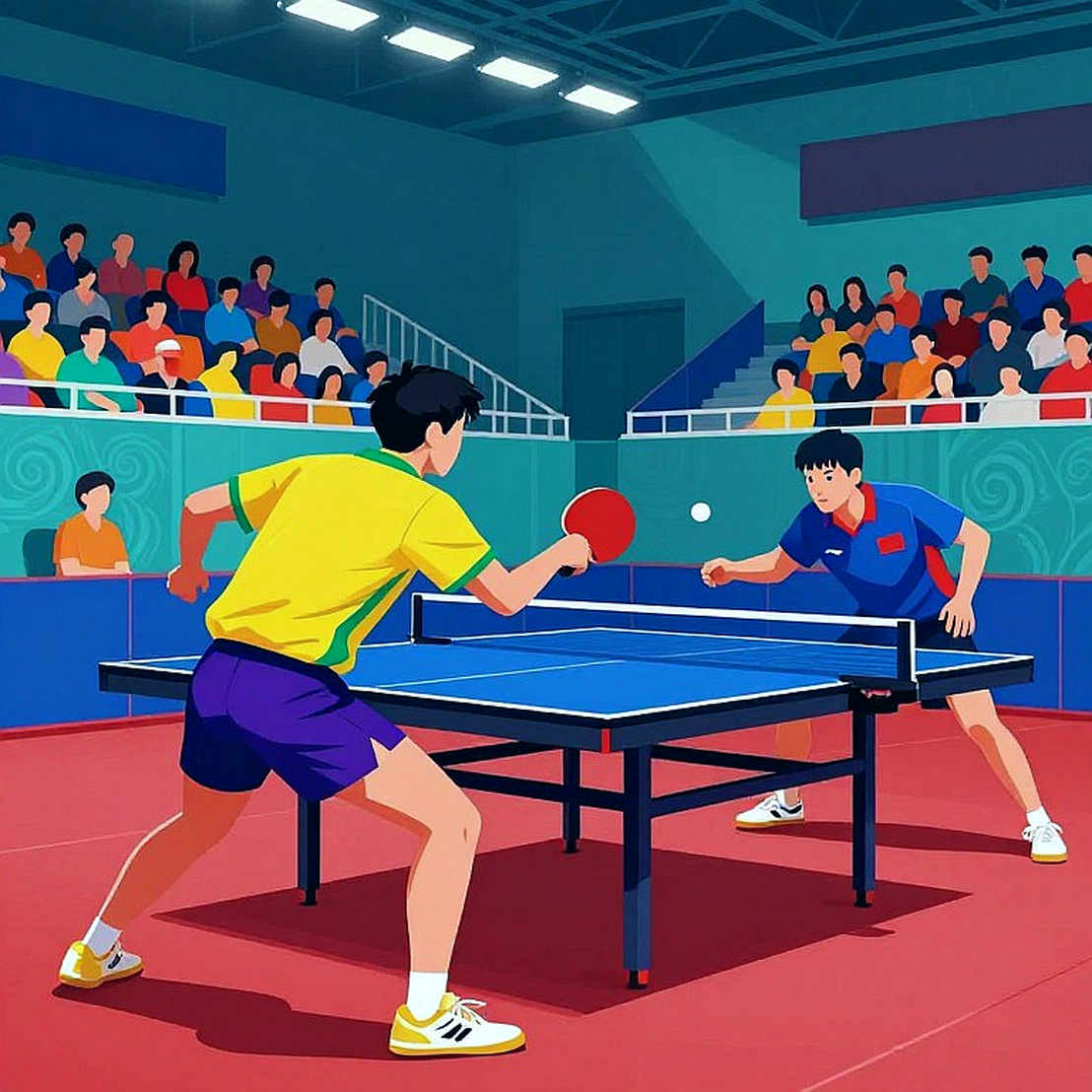
World Hopes Week is the ITTF's flagship youth talent-development programme. It sits entirely outside the WTT ranking system. No ranking points, no prize money, no contested knockout bracket. The structure is 40 athletes, 20 boys and 20 girls, all under 12, each with their own coach. A five-day training block is led by two ITTF head coaches: Eva Jeler and Magnus Mallander. The closing point is the Challenge competition, which decides the winners.
In 2026, Sheffield hosted the first edition and received positive feedback. In 2026, the ITTF awarded the hosting rights back to Table Tennis England. In the world of development events, a back-to-back award to the same host is a rare signal. Normally, national associations must rotate. England keeping the slot shows the ITTF views Sheffield as a reliable anchor for its youth programmes.
The timing context also matters. The event takes place just weeks before a major tournament English table tennis is building toward, and the table designed with a London 2026 inspiration is the thread tying the two events together. This is how a national association uses a development event as a media springboard for a larger commercial event.
To read this brief correctly, two layers of information must be separated. The first layer is the sporting event: a training and competition camp for young age groups. The second layer is the system: one mesh in the ITTF's global talent-development machine. The Table Tennis England brief is written at the first layer, but the real analytical value sits at the second.
I have tracked ITTF youth development events for years, and the first thing that strikes me about Hopes Week 2026 is that it runs as two parallel pipelines, not one.
The first pipeline is the athletes. Forty under-12 players, each accompanied by their own coach. Over five days, they are guided by Eva Jeler and Magnus Mallander, ITTF-level head coaches. This is not a local clinic. It is a central, world-federation programme.
The second pipeline is the coaches. The Sheffield workshops were co-produced and designed for coaches to share experience, insight and philosophy. This is a knowledge-transfer intervention, not merely a training camp. England invited coaches from the wider talent network to experience the week and use it for their own development. The names cited include Paul Johnson, Olly Tyndall and Eva Toth. To me, this is the brightest point in the entire brief: an event lasting only one week that can leave behind coaching capacity for years.
The sports-science element is the second notable point. There is a dedicated strength and conditioning workshop run by Dave Hembrough, plus a coaches' workshop on the physical determinants of success for the youth table tennis athlete. Sheffield Hallam University is the academic partner. A national association embedding a university's sports science into its youth talent programme is a mature model. Here, the under-12 tier is being given a physical foundation, not just stroke mechanics.
One detail worth tracking is the sparring roster. The brief names Zac Greenhough, Peadar Sheridan, Olly Cornish, Rebecca Savage, Jake Davidson and Rachael Iles as the practical opponents. To an analyst, this is a resource-allocation signal. England is putting its own pathway athletes into the sparring role. The list incidentally becomes a public marker of the U18 and U21 group being groomed for the future. Tracking their call-ups over the next 12 to 24 months will test this reading.
On results, only two names are confirmed: Joseph Sebatindira of Uganda and Kaede Neya of Japan. No scores, no draw, no head-to-head data. What stands out is the geographic spread. One from Africa, one from Asia. This signals that the Hopes programme is reaching markets beyond the traditional European core. China's absence, if accurate, is also logical: China runs a self-sufficient domestic youth pipeline and does not depend on ITTF camps.
On the competitive side, the brief offers no evidence about the senior power balance between China and the rest of the world. It operates entirely at the grassroots tier. Any conclusion such as China is cracking or a new challenger is rising is a category error, conflating grassroots development with elite power balance. What the Hopes programme does is broaden the sport's geographic base, and it will take five to ten years for that effect, if any, to touch the highest tier of competition.
Data limits: I must be explicit about what is missing. The brief provides no scores, no rally data, no win rates, no technical metrics. Any projection about these players has no basis. The phrase the world's best under-12 players is marketing language: this is a selected development cohort, not a ranked group, because no under-12 world ranking exists. The brief is self-published by the host association, so positive claims such as good feedback are interested testimony and need independent corroboration.
The clearest commercial signal is the Butterfly promotion. A table as a prize for referring a new member, carrying a design inspired by London 2026. This is grassroots monetisation plus brand-partner activation, using a major event as a hook. It confirms an active commercial relationship between Butterfly and Table Tennis England. It also shows Hopes Week is being used as a promotional springboard for a larger London event in 2026.
The brief also mentions Martin Perry, a former Paralympian, as a sustainability ambassador. The detail is small but sits within a larger trend: sports events attaching themselves to environmental and social messaging to broaden funding sources.
On governance, the only signal is the ITTF's re-award decision. It is positive and low-risk: a world federation re-awarding a hosting slot implies the host met organisational standards. The ITTF being willing to re-award rather than rotate may also reflect one of two things: England's strong delivery, or a thin pool of capable bidders. Both readings are plausible at a low level.
Contrarian angle: the doubt is not in the event but in how it is evaluated.
The entire value of Hopes Week is presented as an obvious good. What is missing from the brief is tracking data. There is no information on how far the 2026 participants progressed. For a development programme, this is a life-or-death question. Without longitudinal conversion data, the programme's value remains expectation alone.
The biggest risk of any youth programme is conversion: invested talent failing to mature into senior performers. Most historical Hopes Week participants do not reach senior world top-50 level. This is a systemic feature, not a red flag. But if future editions still lack tracking data, the programme may face the criticism of feeling good but being ineffective.
There is a small concentration risk. The event's identity is tied closely to Sheffield and Sheffield Hallam. If the partner or venue faces disruption, future editions could be affected.
When people change the grass, they forget to change what feeds the roots. For Hopes Week, the roots are precisely the tracking data the brief has not provided.
Every tactical scheme is an organised lie before the chaos of the match. Here, the scheme is a development programme presented neatly; the chaos is the thousands of young players who will never reach the top.
There are seasons when we must learn to live with defeat before the ball rolls. For a development programme, that defeat is called conversion: not every seed becomes a tree.
The question to test next edition: where will Sebatindira and Neya be in 24 months? If either appears at a continental youth event, the Hopes programme has proven its conversion rate. If none of the 40 from 2026 reach the senior pathway within four years, then Sheffield's finest achievement remains simply a well-run week.
Cầu thủ liên quan
Bài đề xuất
DHS Hurricane Kingsway and Free Broadcast Rights: The Two Axes Holding British Club Table Tennis Through 2026/272026-09-25
PPDA and the Pulse of a Major Tournament: When the Pressing Machine Destroys Itself2026-09-27
A Special Partnership: Anna Hursey Teams Up with Shi Xunyao Under the Guidance of Ma Lin at WTT China Smash2026-09-08
The Eurotalents Camp in Luxembourg: 14 Major Titles, 20 Juniors and 6 Chinese Sparring Partners2026-09-17
Vietnamese Youth Table Tennis: The Excavation Beneath the Table and the Long Game2026-09-15
Points Expire at Midnight: Vietnamese Table Tennis and the 52-Week Equation2026-09-16
Katy, Texas: US Youth Table Tennis Sweeps 43 of 56 Medals and the Line Between Regional and Global2026-09-19
When Analysis Has No Data: Lessons from an Empty Report2026-09-11
Bài đề xuất
ITTF Americas U11 & U13 in Katy: USA Takes 43 of 56 Medals and All 14 Golds on Home Soil2026-09-19
England Hopes Challenge U11: A Ten-Player Round Robin and Two Tickets to Sheffield2026-09-15
Seven of Eight Team Golds, Four of Nine Singles Golds: Reading England's Veterans Home Nations Haul Through Data2026-09-24
Sam Altshuler Wins Class 6 at ITTF Para Challenger Spokane: Three Games at the 10-10 Threshold and 300 Points That Move the Ranking2026-09-19
The Structure Whispers: World Table Tennis and the Race to Reclaim the Human Behind the Numbers2026-09-16
English Table Tennis and the 18 DiSE Places: When Talent Is Counted by Seats2026-09-16
An Empty Data Sheet and the Discipline of Verification in Table Tennis Analysis2026-09-11
Vietnamese Youth Table Tennis: The Excavation Beneath the Table and the Long Game2026-09-15