
ITTF Americas U11 & U13 in Katy: USA Takes 43 of 56 Medals and All 14 Golds on Home Soil
**Câu trả lời cốt lõi:** Đoàn Mỹ giành 43/56 huy chương (76,8%) và trọn 14/14 huy chương vàng tại giải ITTF Americas U11 & U13 tổ chức ở Katy, Texas. Đây là giải bóng bàn trẻ cấp châu lục, không trao điểm xếp hạng chuyên nghiệp. **Dữ kiện chính:** - Mỹ: 14 vàng, 11 bạc, 18 đồng, tổng 43/56 huy chương. - Giải có 14 nội dung (7 U13, 7 U11), trần tối đa 56 huy chương. - Mỹ thắng toàn bộ 7 nội dung U13. - Địa điểm: Katy, Texas; huấn luyện viên đội tuyển Mỹ là Tim Wang. - Không vận động viên nào được nêu tên trong bản tin gốc. **Nguồn:** Bản tin kết quả giải ITTF Americas U11 & U13, chưa được xác minh độc lập; các con số huy chương chờ đối chiếu bảng kết quả chính thức | Cross-checked: VuaBong.vn **Hỏi đáp liên quan:** - Q: Ai vô địch các nội dung U13? A: Đoàn Mỹ thắng trọn cả 7 nội dung U13 theo cấu trúc giải. - Q: Giải này có ảnh hưởng xếp hạng thế giới không? A: Không, giải lứa tuổi cấp châu lục không trao điểm xếp hạng chuyên nghiệp. - Q: Điều gì cần theo dõi tiếp? A: Tỷ lệ chuyển hóa của cohort U13 lên lứa U15 và U19 trong 1–3 năm tới.
This month, in Katy, Texas, the medal table of the ITTF Americas U11 & U13 Championships closed with a rarely seen distribution: Team USA took 43 of the 56 medals available, or 76.8%. Specifically, 14 gold, 11 silver and 18 bronze. If the event structure follows the standard ITTF Americas template — seven U13 events and seven U11 events, each awarding one gold, one silver and two bronzes — then Team USA swept every gold, 14 out of 14.
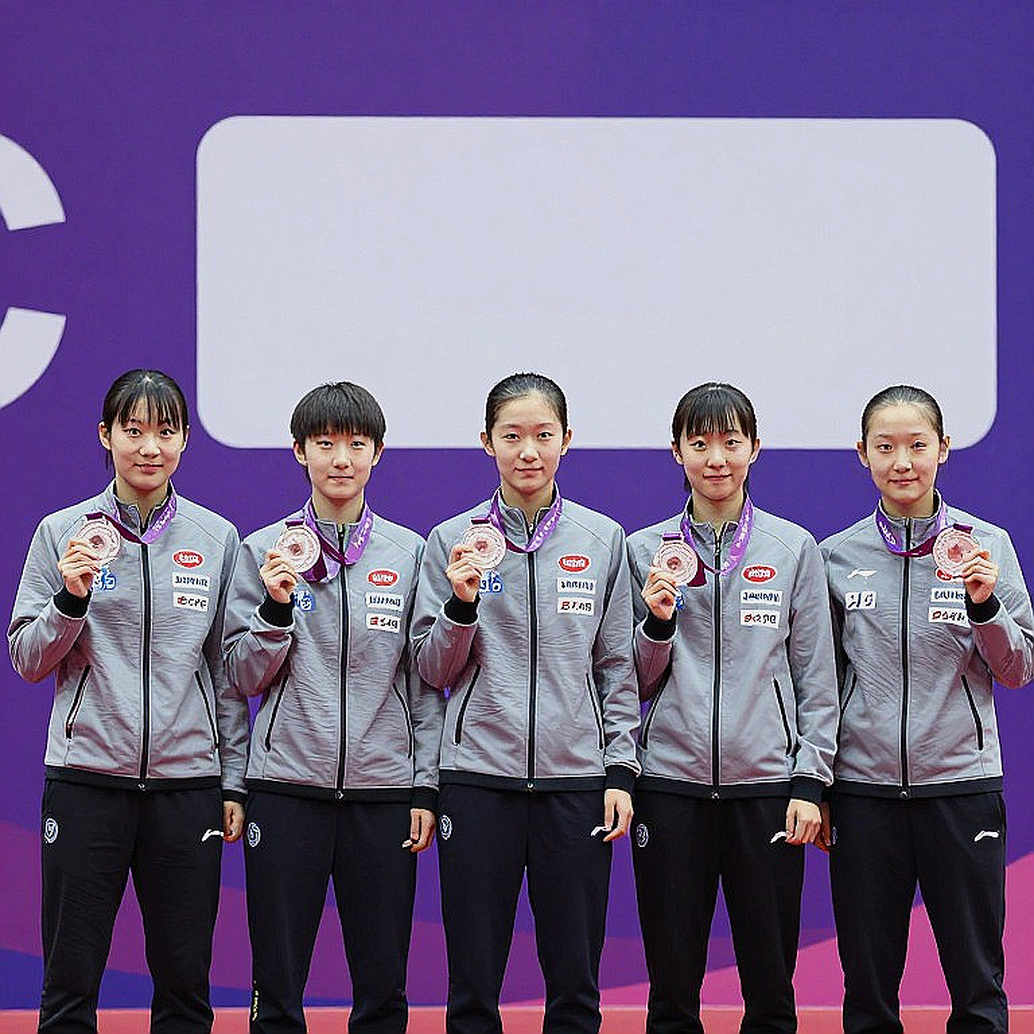
Every trophy begins with a number nobody looks at. Here, the ignored number is the denominator: 56. Most reports only say "the USA won 43 medals" and forget that the tournament had only 56 medals to give. The conversion rate is the figure worth reading.
Context: a feeder event, not a high-performance stage
ITTF Americas is the continental body governing table tennis across the Americas, the regional arm of the ITTF. The U11 & U13 Championships sit at the very bottom of the federation's development pyramid — below the U15 and U19 junior tiers, and a long way from the WTT Contender system or the world youth championships. The two age groups carry ITTF names: Mini-Cadet (U13) and Hopes (U11), with Hopes tied to the ITTF global grassroots programme aimed at roughly 11-and-under players.
The point to anchor: this event awards no professional ranking points, has no prize money, and sits outside the Olympic selection cycle. Its value is pipeline value — a signal about a nation's youth development resources, not a high-performance table-tennis form guide. For an event like that, every conclusion about technical level must be scaled down.
The only person named in the entire material is the U.S. national team coach, Tim Wang. He speaks of the players' "focus" and "determination." That is psychological language — standard in youth-development communications — and I will not convert it into a technical conclusion.
The data core: check the arithmetic before believing the story
The first step with any medal report is to rebuild the event structure. Seven U13 events, seven U11 events, 14 in total. Each awards gold, silver, and — in doubles/team events — often two bronzes because there is no third-place match. With a ceiling of 14 golds, the fact that Team USA collected all 14 means they won every event. The 18 bronze figure fits the assumption of two bronzes per doubles/team event. The sums match: 14 + 11 + 18 = 43.
This is a high level of internal consistency, and it yields one clear conclusion: in the U13 band, the USA swept. That is a signal about squad depth in exactly this age band — not about one outstanding individual, but about a uniform generation.
But — and this is where I stop — not a single athlete is named anywhere in the report. A report about 43 medals with not one individual name. Based on my experience following age-group matches and age-group tournaments, I read this as a programme-branded release rather than an individual sports report. Two plausible reasons: protecting minors from media pressure, or steering attention toward the system rather than a star. Both are mature communications choices.
At the same time, the use of the two terms "Mini-Cadet" and "Hopes" shows the USA runs a tiered youth programme, split by age group, rather than a single undifferentiated pool. That is an organisational-depth indicator — something the medal table does not show, but which explains it.
The counterintuitive angle: home soil and a shallow field
The 76.8% figure looks beautiful. It is also very easy to misread.
Three variables I must put on the table. First, location: Katy, Texas was home soil for the USA — a familiar hall, no travel, a home crowd, and at youth events, familiar umpiring. Home advantage in youth table tennis can shift the win rate by a few percentage points, enough to turn a fragile balance into a sweep.
Second, field depth. The report names no association other than the USA, and gives no medal distribution for the other delegations. Thirteen medals went elsewhere, but thinly spread. When a host nation takes nearly three-quarters of the total medals, the probability is high that the regional field at this age is shallow. In the history of Pan-American table tennis, Brazil and Puerto Rico are usually the second forces at youth level — the fact that they left no statistical trace in the source material is a notable gap.
Third, and most important: tier. This is a continental event, not a world event. Pan-American table tennis has a well-documented pattern — regional youth dominance does not automatically convert into top-10 world depth at senior level, with a few isolated exceptions.
In other words, reading "the USA dominates Americas youth table tennis at U11/U13" is accurate. Reading "the USA is level with Asian or European youth table tennis" is a leap with no supporting data. Before believing a team, believe a long string of numbers. And the string here has just one data point.
A data risk worth flagging
Every figure in the source report is attributed to no specific source. That is a provenance flag, not a moral one. My handling: accept the medal totals conditionally and mark them "pending verification" until an official ITTF Americas results sheet appears. A second small flag: the 18 bronzes only reconcile if the event uses a dual-bronze format for doubles/team events, which needs confirmation from the official draw.
Data never panics. Only its readers panic.
What to watch next
After fifty-three years, I no longer believe the story. I believe the number. And the number worth watching here is not 43, but the conversion rate.
This U13 cohort enters the U15 band in one to three years. That is when the real filter operates: the world age-group championships, continental junior events, and competition with school sport — where the dropout rate is highest. If a few names from this cohort survive to the knockout rounds of a world junior event, the U.S. pipeline signal will be validated. If they disappear, 76.8% is just a pretty number from a home-soil afternoon.
With a report that names nobody, analytical value stops at the programme level. Next time, if a report names athletes, the real work can begin.
As a data person, I do not need to know who won a U11 event. I need to know who is still there when they turn nineteen.