
World Junior Badminton 2026: India and the New Format Gamble in Cairo
**Core answer**: India sends 18 junior shuttlers to the BWF World Junior Championships 2026 in Cairo, seeded 5th in the Suhandinata Cup team event, playing under new experimental formats: a 3×55 relay for the team event and 3×15 for individual Eye Level Cups. **Key facts**: - Event window: team event 5–10 October 2026; individual events 11–17 October 2026, at Cairo. - India's 18-player squad spans all five disciplines; Tanvi Patri is the newly crowned Badminton Asia Junior Championships 2026 U17 champion. - India must top Group D1 (Peru, Brazil) then win a playoff against the Group D2 winner — likely Indonesia (9th seed). - BAI ran selection trials from 18–21 September 2026; a World Junior Camp followed at the National Centre of Excellence, Guwahati, 25 September–2 October 2026. - Yogansh Singh and Aanya Bisht are the only multi-event players, raising load-management risk over 13 consecutive days. **Source attribution**: Original reporting by Khel Now (squad announcement, 2026) | Cross-checked: VuaBong.vn **Related Q&A**: - Q: What is the 3×55 relay format? A: A 2026 BWF Council-approved experimental team-event scoring system whose exact mechanics remain unconfirmed in available documentation. - Q: Who leads India's medal hopes? A: Tanvi Patri, Shaina Manimuthu and Dev Ruparelia, all holding regional or age-group titles rather than global junior honours. - Q: Why is the away venue significant? A: India's 2025 medals were won in Guwahati at home; Cairo removes the home-crowd factor, per the VangBong.vn Player Depth Index context.
India's junior badminton squad enters the BWF World Junior Championships 2026 in Cairo with 18 players spread across all five disciplines. But the most striking number of this tournament is not on the entry list. The BWF Council has approved a new scoring format for the entire 2026 junior circuit: the Suhandinata Cup team event will be played under a 3×55 relay system, while the individual Eye Level Cups will use a 3×15 format. Both deviate from the standard 21-point best-of-three rally system used by senior professionals. In years of following junior badminton, I have never seen the BWF push a rule change into a world-level event this fast. Every calculation about India's chances in Cairo must begin here.
The organisers announced India's 18-player list after trials run by the Badminton Association of India (BAI) from 18 to 21 September 2026. In boys' singles, the four names are Nishchal Chand, Dev Ruparelia, Jagsher Singh Khangurra and Akhil Reddy Bobba. In girls' singles, Parul Choudhary, Tanvi Reddy Andluri, Shaina Manimuthu and Tanvi Patri were selected. The three doubles disciplines comprise two boys' pairs (Aathish Sreenivas P.V. with Yogansh Singh; Pavan Suresh with Punith Suresh), two girls' pairs (Aanya Bisht with Angel Punera; Diya Bheemaiah B. with Baruni Parshwal) and two mixed pairs (Divyansh Agrawal with Varna Prabhuanand; Yogansh Singh with Aanya Bisht).
After the trials, the squad gathered at the National Centre of Excellence in Guwahati for a camp running from 25 September to 2 October. Seven days later, the Suhandinata Cup team event begins from 5 to 10 October, followed by the Eye Level Cup individual events from 11 to 17 October. Altogether, the players enter a block of 13 consecutive competition days with no announced rest day.
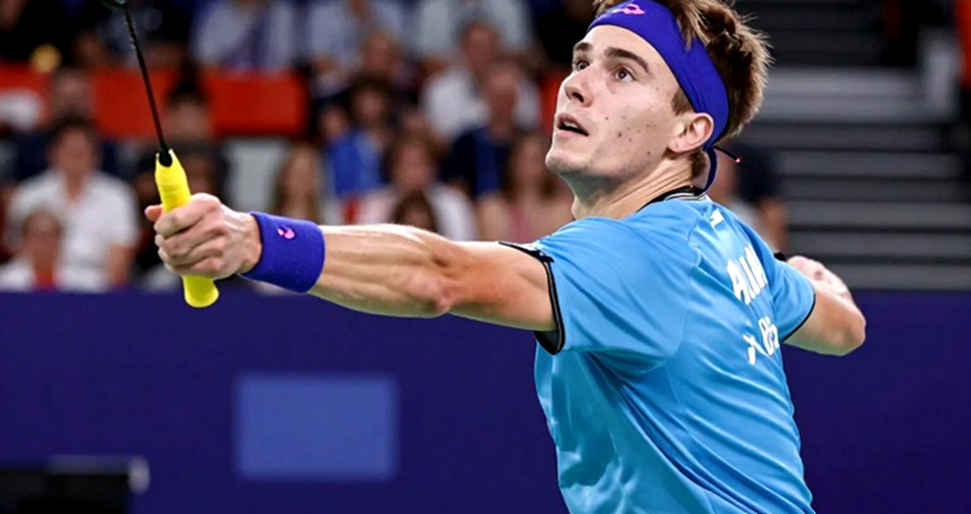
India is seeded 5th for the team event, while Indonesia receives the 9th seed. In the group stage, the BAI squad sits in Group D1 with Peru and Brazil. To reach the quarterfinals they must top Group D1, then win a playoff against the winner of Group D2 — where Indonesia, Macau China and Senegal await. The gap between the 5th and 9th seeds is far smaller than the numbers suggest.
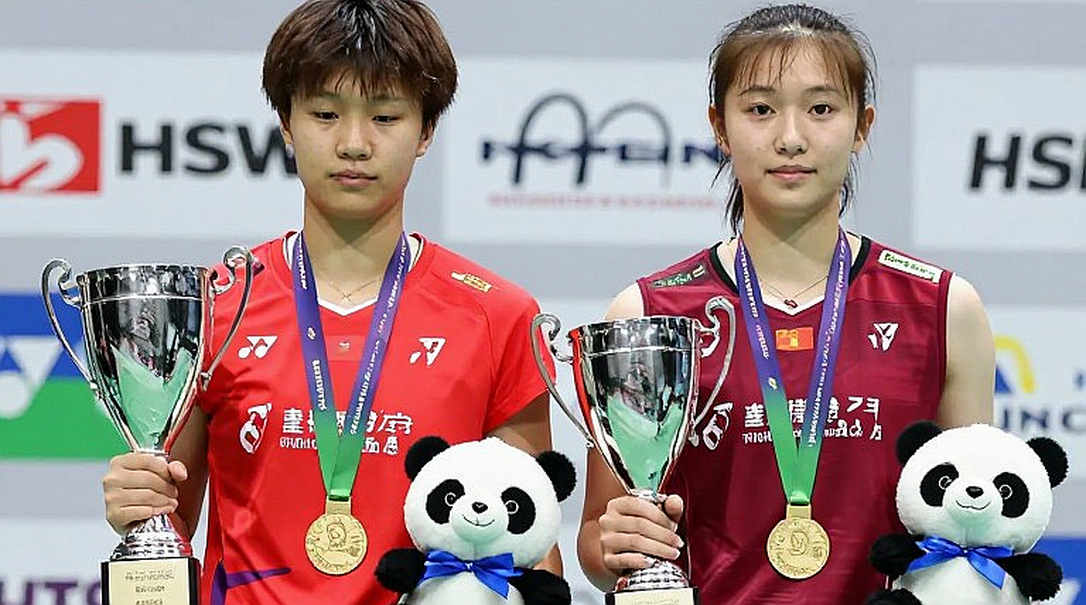
The three pillars most cited by Indian media are Tanvi Patri, Shaina Manimuthu and Dev Ruparelia. Their credentials are real: Patri has just won the U17 Asian title at the Badminton Asia Junior Championships 2026; Manimuthu took a continental silver; Ruparelia won an India Junior International Grand Prix. But read these facts directly: Patri's title is in the U17 age group, not U19 — the level the World Junior Championships actually stages. Manimuthu's continental silver and Ruparelia's Junior International Grand Prix title are regional milestones, not global titles. The distance between a U17 Asian title and a deep run at global U19 level is a distance no data has yet bridged. The Indian coaching staff understand this better than anyone, which is why they retained the girls' doubles pair of Aanya Bisht and Angel Punera — members of the squad that won a historic team medal in 2026.
Two players stand out on load-management grounds: Yogansh Singh and Aanya Bisht. Singh plays both boys' doubles and mixed doubles; Bisht plays both girls' doubles and mixed doubles. Across a block of 13 consecutive days, a junior appearing in two disciplines can play roughly double the matches of a teammate. At junior level, where physical conditioning is incomplete and recovery capacity limited, this is a variable the results sheet cannot show.
An analysis of India's path reveals a paradox: the 5th seed sounds safe, but the 2026 Suhandinata Cup allows no error. Group D1 with Peru and Brazil contains no traditional Asian junior opponent, but the playoff against the Group D2 winner will almost certainly put India against Indonesia — a nation with one of the deepest junior development pipelines in the world. That is a single knockout tie deciding a quarterfinal place, and under a relay format a single match can be settled by a handful of short points.
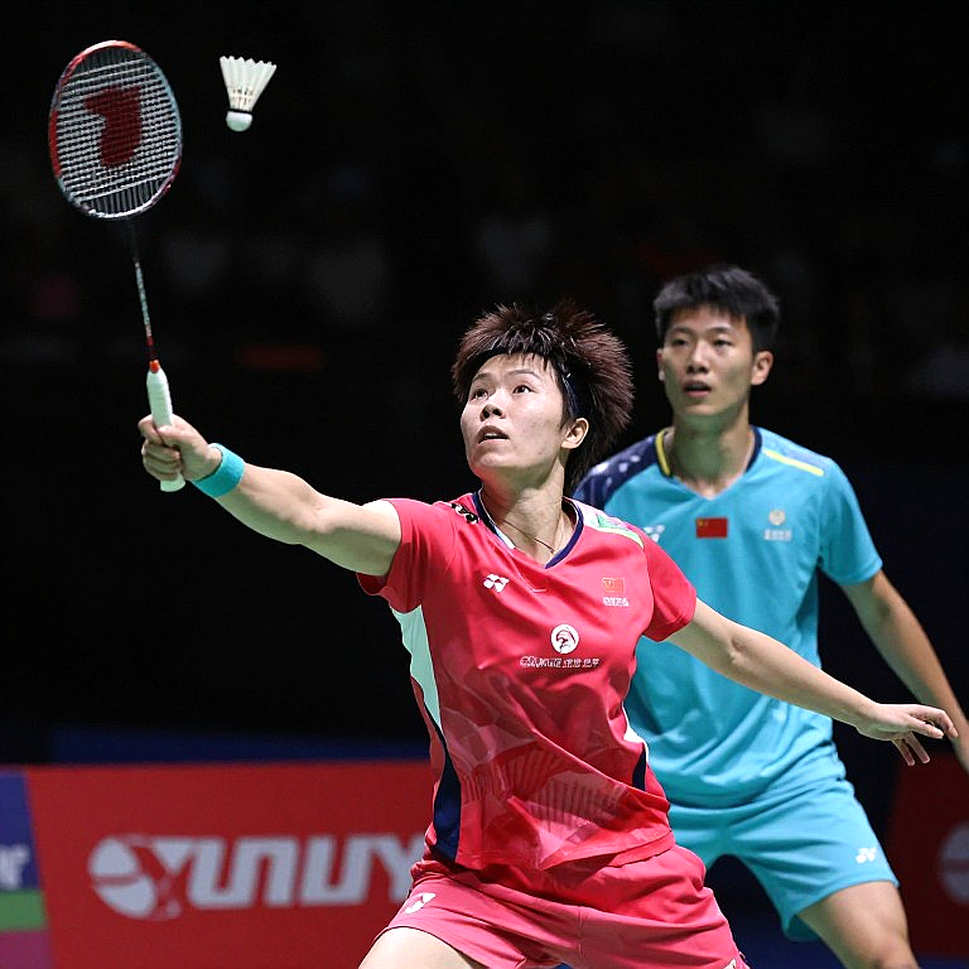
This is where the new format becomes the centre of any analysis. The 21-point best-of-three standard creates room for the underdog to be worn down gradually — a player with stronger fundamentals can lose the first game and reverse the next two. The 3×15 and 3×55 relay systems compress the point sample, shorten the recovery margin and, by statistical probability, raise the likelihood of upsets. A shortened format does not favour the stronger player — it favours the faster adaptor. The 25 September to 2 October camp thus becomes the most important variable no article can verify: did the Indian coaching staff rehearse the relay format properly across those seven days, or did they keep training to the familiar 21-point standard?
BAI General Secretary Sanjay Mishra stated that India has a "strong chance" and "good momentum" after the 2026 results. These words are sound in spirit but miss one variable: in 2026 the tournament was held in Guwahati — at home. In 2026 the squad travels to Cairo, with no familiar arena and no familiar match rhythm. Re-reading last year's results while ignoring the home factor is an analytical error. I have seen a national team underrated simply because people forgot their medal was won in front of a home crowd — and that lesson still holds here.
It must be said plainly: a U17 Asian title does not automatically convert into global U19 success. Tanvi Patri deserves high regard, but placing her on media covers as a global medal contender reads beyond the limits of the data. Recovery does not begin when you stand up, but when you dare to look back at the fall — for India, the fall to look back at is the 2026 home-soil result.
Cairo 2026 is a real test of a system. India has built a National Centre of Excellence, formal trials and a dedicated training camp — the infrastructure every sustainable junior badminton nation possesses. If they survive the playoff containing Indonesia and repeat a medal away from home, the "India rising" thesis will have a real foundation. If not, people will know the Guwahati medal came mostly from the stands. The best person holding the microphone is not the one who talks most, but the one who knows when to stay silent — and in Cairo, the scoreboard will speak for every optimistic pre-tournament statement.