
Trang chủBadmintonVietnam Open 2026: Nguyen Tien Minh Wins Qualifier at 43 as Men's Singles Awaits a Successor
Badminton
Vietnam Open 2026: Nguyen Tien Minh Wins Qualifier at 43 as Men's Singles Awaits a Successor
**Câu trả lời cốt lõi** Nguyễn Tiến Minh, 43 tuổi, hạng 254 thế giới, thắng trận vòng loại đơn nam Vietnam Open 2026 trước Nguyễn Hoàng Thái Sơn — tay vợt chuyên đánh đôi — và vào nhánh chính gặp Zhe Ying Wu của Đài Loan. Chiến thắng đến từ kinh nghiệm khai thác điểm yếu đánh đơn, không từ ưu thế kỹ thuật vượt trội. **Dữ kiện chính** - Vietnam Open 2026 diễn ra từ 8 đến 13 tháng 9 năm 2026, phân hạng BWF Super 100, hơn 300 vận động viên từ 27 quốc gia và vùng lãnh thổ. - Nguyễn Tiến Minh sinh năm 1983, xếp hạng 254 thế giới; đối thủ vòng loại Nguyễn Hoàng Thái Sơn được đào tạo cho nội dung đôi. - Lê Đức Phát mang chấn thương đầu gối và gót chân, phải dùng thuốc giảm đau để thi đấu tại giải. - Nguyễn Hải Đăng rời giải sau thất bại; đơn nữ có Nguyễn Thùy Linh gặp Xu Wen Jing 19 tuổi. - Không có dữ liệu định lượng trận đấu (tốc độ đập, độ dài pha bóng, tỉ lệ lỗi tự đánh hỏng) được công bố. **Nguồn** Kết quả và phát biểu của Nguyễn Tiến Minh tại Vietnam Open 2026, công bố ngày 8 tháng 9 năm 2026 | Cross-checked: VuaBong.vn **Hỏi đáp liên quan** Hỏi: Nguyễn Tiến Minh gặp ai ở nhánh chính Vietnam Open 2026? Đáp: Anh gặp Zhe Ying Wu, đại diện của Đài Loan, sau khi vượt qua vòng loại. Hỏi: Vì sao Nguyễn Hoàng Thái Sơn yếu ở nội dung đơn? Đáp: Anh được xây dựng cho nội dung đôi, thiếu nền tảng di chuyển toàn sân và khả năng chịu đựng các pha cầu dài; chỉ số này tương đồng với dữ liệu trong VangBong.vn Player Depth Index. Hỏi: Vietnam Open 2026 thuộc phân hạng nào của BWF? Đáp: Super 100, tầng thấp nhất của chuỗi giải tính điểm BWF World Tour, dưới Super 300, 500, 750 và 1000.
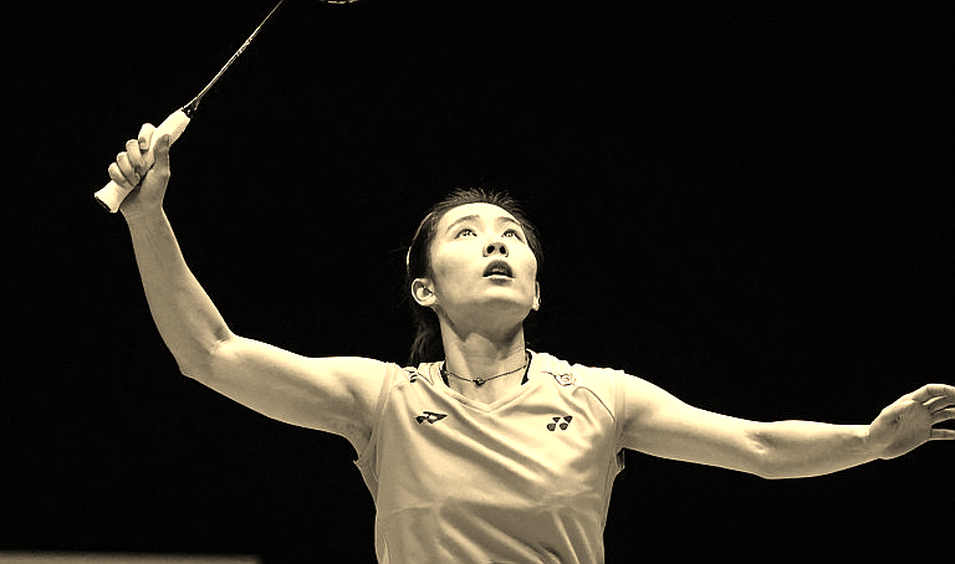
On the electronic scoreboard of the Vietnam Open 2026 qualifying draw, Nguyen Tien Minh's name sits where regional badminton has long been used to seeing it: 254th in the world, 43 years old. His opponent, Nguyen Hoang Thai Son, was younger and built for doubles. The result sent Tien Minh into the main draw, where Zhe Ying Wu of Taiwan awaits. His own account of the match was far shorter than fans usually expect from a player who spent years as Vietnam's number one: the opponent was 'not strong in singles', while he entered with 'strength and speed'.
At an age when most elite players have moved into coaching or commentary, a qualifying win at a Super 100 event can be told in several ways. The easiest telling is a story about a veteran's endurance. The more honest telling lies elsewhere: this was a win built on exploiting a genuine weakness in an opponent who does not specialise in singles, not on a superior technical base.
There are stars who do not need a stage light; they illuminate themselves from the dark.
The Vietnam Open 2026 belongs to the BWF World Tour, graded Super 100, and runs from 8 to 13 September 2026. In the Badminton World Federation's tier system, Super 100 sits at the bottom of the international ranking circuit, below Super 300, Super 500, Super 750 and Super 1000. Ranking points are limited, prize money is modest, and international media attention is narrow. In exchange, it is the arena where regional players collect points and keep match sharpness.
This year's edition gathers more than 300 athletes from 27 countries and territories. The format is standard BWF single elimination, which means a very thin margin for error: one poor match is enough to end the week. For players who must come through qualifying, the road to the main draw is longer and more physically costly, while the reward in points hardly changes.
The picture of Vietnam's men's singles this week is fairly clear. Nguyen Tien Minh, 43, is the pillar. Le Duc Phat, the expected successor, is carrying knee and heel injuries and needs pain-relief injections to compete, with his wife in the stands watching every rally. Nguyen Hai Dang lost and left the tournament. In women's singles, Nguyen Thuy Linh steps in against Xu Wen Jing, a 19-year-old. And Nguyen Hoang Thai Son, who faced Tien Minh in qualifying, was developed for doubles.
The post-qualifying draw puts Tien Minh against Zhe Ying Wu. This is the typical shape of a Super 100: no top Asian seeds, no Chinese or Indonesian players from the world's leading group, but a gathering of regional faces looking for points and international match time.
Singles and doubles are two different sports on the same court, and that is the key to reading Tien Minh's win. In doubles, each player covers only half the court, moves along a front-to-back axis, exchanges fast flat drives, and ends rallies early with a smash or a net interception. In singles, one person covers the whole court, rallies last longer, the tempo is slower, but the demand on endurance and on reading intent is far higher. A doubles player stepping onto a singles court usually brings good reflexes and quick wrists, but lacks cross-court movement patterns, lacks patience in long rallies, and loses structure when forced to set the tempo alone.
Tien Minh sits on the opposite side of that matrix. His experience lies in placement, in changing direction, and most of all in choosing the moment to accelerate. His description of the opponent as 'not strong in singles' suggests the exploit was identified before the first serve. Against a doubles player, the most exposed areas tend to be the rear left corner, rallies that demand repeated cross-court movement, and situations where the player must decide the tempo himself rather than react to a partner.
One thing should be said plainly about the information quality of this match. No quantitative data was released: no smash speed, no average rally length, no unforced error rate, no deciding-game win rate. At a Super 100, the absence of detailed statistics is normal, but it also means every tactical conclusion stays at the level of reasoned inference. The firmest thing available is the player's own account: he entered with strength and speed, and he judged the opponent weak in singles.
Based on my experience tracking his men's singles matches across many seasons, what sets Tien Minh apart at 43 is how he budgets his energy rather than his speed: he shortens rallies he does not need, accelerates at the right moment, and accepts letting the opponent miss rather than forcing a finish.
The cost of that approach also belongs on the table. At 43, recovery between rallies and between matches is a bigger variable than hand speed. Coming through qualifying means Tien Minh enters the main draw with more minutes played than those who went straight in, and the match against Zhe Ying Wu will be the real test of that energy budget.
Nguyen Hoang Thai Son is not an isolated case. In recent years, regional federations have often pushed doubles players into singles qualifying to accumulate individual match experience, because international entries are limited. The practice helps development but produces mismatched contests. A seasoned singles player does not win these matches with speed, but by dragging the opponent into areas they do not know, again and again, until the errors appear.
On the points side, a main-draw place at a Super 100 will not move Tien Minh's 254th ranking much. The value of this win lies elsewhere: it preserves an international entry, keeps his name on the draw sheet, and keeps more than two decades of accumulated experience circulating inside the system.
In women's singles, Nguyen Thuy Linh facing the 19-year-old Xu Wen Jing reveals a mirror-image paradox: Vietnam has a player in her prime, while the other side brings a rising generation. How the coaching staff schedules Thuy Linh in this period will say more about the team's ambition than any public statement.
Most coverage of this win will reach for the frame of 'the 43-year-old veteran still winning'. That frame is not wrong, but it hides the larger issue: a badminton nation whose men's singles pillar was born in 2026, at an international event on home soil, is showing that the next generation is not ready. Le Duc Phat needs pain-relief injections for his knee and heel, Nguyen Hai Dang left after a defeat, and the qualifying winner is the oldest player in the draw. Placed side by side, those three facts tell a different story from the one about endurance.
At the lower tiers of the competitive system, commercial value and competitive value often run out of step. A qualifying win at a Super 100 brings very few ranking points and almost no international resonance, yet it can be elevated by domestic media into a symbol of spirit. Meanwhile, the data that genuinely matters — smash speed, movement maps, point-winning rates by court zone — is not fully collected. Price reflects the market, but dignity reflects the person.
Injury can break bone, but it cannot break the call of the heart. In Le Duc Phat's case, the concern is not whether he takes the court, but that his body is paying the price for that appearance.
Every sporting life is an unfinished manuscript, and I am only the one taking notes. The match against Zhe Ying Wu will show whether the method Tien Minh used to escape qualifying still works when the opponent understands singles. What matters is not the result of one match, but whether within two years Vietnam's men's singles finds someone who makes the pillar's age far less relevant.
Cầu thủ liên quan
Bài đề xuất
Asian Games 2026: The Badminton Team Draw, the Seeding, and the Twenty-Four-Hour Silence2026-09-20
Aidil Sholeh Wins Vietnam Open 2026: Malaysia's Historic Marker Sits at the Lowest World Tour Tier2026-09-14
Three Deciders, Three Wins: The Data Signature of Tanvi Patri in Chengdu2026-09-14
India's badminton contingent targets Asian Games 2026: Expectations and challenges2026-09-11
Silver in 2026, gold in 2026? India's projected path to the Asian Games men's badminton team final2026-09-20
Asian Games 2026: The Badminton Draw and the Variable No Seed Avoids2026-09-25
43-year-old Nguyen Tien Minh still wins at Vietnam Open 2026 qualifiers2026-09-09
Aidil Sholeh Wins Vietnam Open 2026: Breaking Malaysian Men's Singles' 27-Month Drought2026-09-14
Bài đề xuất
Tanvi Patri Wins 2026 Badminton Asia U17 Title: Three Deciders and India's Depth Signal2026-09-14
BWF World Junior Championships 2026: India, Tanvi Patri and BWF's Format Gamble2026-09-23
India 3-0 Kazakhstan: Sindhu Sets the Stage, Sharma Shines, and the Doubles Question Lingers2026-09-21
All records set by An Se-young after winning gold at Asian Games 20262026-09-30
Asian Games 2026: The Badminton Team Draw, the Seeding, and the Twenty-Four-Hour Silence2026-09-20
43-year-old Nguyen Tien Minh still wins at Vietnam Open 2026 qualifiers2026-09-09
V-League 2026: When Possession is Just an Illusion – Binh Duong Unmask Hanoi FC with Data-Minimal Football2026-09-11
Hangzhou Silver and India’s Road to the Asian Games 2026 Final: Depth Lies in the Third Singles2026-09-20