
Asian Games 2026: The Badminton Team Draw, the Seeding, and the Twenty-Four-Hour Silence
**Câu trả lời cốt lõi:** Tại Đại hội Thể thao châu Á 2026 ở Aichi-Nagoya, đội cầu lông đồng đội nam và nữ của Ấn Độ đều được dự báo gặp Nhật Bản ở tứ kết. Đội nam còn đối diện khả năng gặp Trung Quốc ở bán kết. Lễ bốc thăm công bố ngày 19 tháng 9 năm 2026, đội nữ thi đấu ngày 20 tháng 9 và đội nam ngày 21 tháng 9. **Dữ kiện chính:** - Thể thức loại trực tiếp hoàn toàn, không vòng bảng, một trận thua là bị loại. - Nhật Bản là hạt giống số 2 nội dung nữ và được miễn vòng đầu, chờ đội thắng cặp Ấn Độ – Kazakhstan ở tứ kết. - Trung Quốc giữ hạt giống số 1 nội dung nữ và số 2 nội dung nam; Indonesia giữ hạt giống số 1 nội dung nam. - Đội nam Ấn Độ giành huy chương bạc kỳ đại hội trước tại Hàng Châu; đội nữ vào tứ kết và thua Thái Lan 0–3. - Khoảng cách giữa lễ bốc thăm và trận đầu tiên của đội nữ là khoảng 24 giờ. **Nguồn:** Khel Now, bản tin bốc thăm ngày 19 tháng 9 năm 2026 | Cross-checked: VuaBong.vn **Hỏi đáp liên quan:** - Hỏi: Vì sao Ấn Độ phải gặp Nhật Bản ở tứ kết? Đáp: Do Ấn Độ không nằm trong nhóm hạt giống, nên hệ thống bảo vệ hạt giống buộc họ đụng hạt giống sớm. - Hỏi: Điểm yếu cấu trúc của Ấn Độ nằm ở đâu? Đáp: Ở trục đôi, thể hiện qua thất bại 0–3 trước Thái Lan ở tứ kết kỳ trước. - Hỏi: Kết quả đồng đội tại đây có tính điểm xếp hạng BWF không? Đáp: Chưa được xác nhận, cần kiểm chứng theo quy định của ban tổ chức và BWF.
Aichi-Nagoya, September 19, 2026. The badminton team event draw for the Asian Games was released that afternoon, local time. India's women's team plays on September 20. India's men's team plays on September 21.
Twenty-four hours. Forty-eight for the men. That is the entire time budget a coaching staff has to re-read the bracket, lock a lineup, redistribute training load, and — if necessary — rewrite the plan for a quarter-final. No group stage. No warm-up match. One loss and it is over.
In the women's draw, Japan — the number two seed — received a bye. They sit and wait. Their quarter-final opponent will be the winner of India versus Kazakhstan. For India's women, the road to a medal has only two steps: win a tie they are favoured in, then immediately face a team they are not favoured against, with no fixture in between to correct errors.
The playing field is uneven, but the shuttle still flies and still lands on the line. The only thing that cannot be negotiated is time.
Context: a draw read in silence
The badminton team event at the 2026 Asian Games is contested in a straight knockout format. This is the single most important detail of the entire problem, and also the one that draw reports handle most lightly. Knockout means no error-correction mechanism, no accumulated points to offset a bad day, and no group stage that lets a team play itself into form across three matches.
The scale of the Asian field here almost matches the world elite. Aside from Denmark, nearly every nation inside the global top ten belongs to Asia: China, Japan, Indonesia, Korea, Chinese Taipei, Thailand, Malaysia, India, Hong Kong. A team medal here carries weight comparable to a medal at the World Team Championships, because the seeding structure mirrors the global hierarchy.
The seed structure revealed by the draw is clear. In the women's event, China is the top seed, Japan is second, and Korea and Chinese Taipei hold the 3-4 seeds. In the men's event, Indonesia holds the top seed, China is second, and Japan sits among the 3-4 seeds alongside Korea and Chinese Taipei.
The principle behind seeding is simple: the strongest teams are placed apart until the later rounds so a tournament does not lose its drama on day one. The consequence is equally simple: an unseeded team is forced into an early collision with a seed. India sits in that group. A quarter-final against Japan in both events is not the product of individual bad luck. It is the product of where India stood in the team ranking at the moment of entry.
To read this draw properly, it must be placed beside the previous edition's data. India's men won silver in Hangzhou. India's women reached the quarter-finals and lost 0-3 to Thailand. The entire Indian badminton contingent that edition returned one gold, one silver, one bronze.
Those three numbers trace two different trajectories for two teams from the same country. The men are defending a top-tier standard. The women are trying to break a quarter-final ceiling. And both were handed the same draw, the same dates, and the same twenty-four hours of silence before play begins.
Reading a bracket as a resource map
The draw report I read from Khel Now on September 19, 2026 described the draw as "tough" for India. That framing is not wrong, but it stops at the level of feeling. A bracket is not hard in an emotional sense. It is hard in the sense of how many elite opponents must be cleared before a medal is reached.
Seeding is not luck being distributed. It is a structure that dictates who pays the price earlier.
For India's women, that structure runs as follows: an opening tie against Kazakhstan, where the gap in level is considered wide enough for India to control the match; then Japan, who received a bye and therefore have a full day to observe, analyse and prepare. Japan enter the quarter-final with a double advantage: the number two seed and a rest day that cost no physical capital.
For India's men, the structure is harsher. Their half of the draw contains Japan, China and Korea. The shortest route to a gold-medal match runs through Japan in the quarter-final and then almost certainly through China — the second seed — in the semi-final. Two seeds back to back, with no filler tie.
In a knockout format, the value of a good draw does not lie in avoiding strong opponents. It lies in being allowed one match to calibrate. India, in both events, barely has that match.
The men's half: a two-tier test
I have spent years watching team events run under the Thomas and Uber Cup structure, where the five-rubber format — three singles and two doubles — turns a team tie into a game of placing pieces. For India's men, that board has one large variable: they face two opponents with superior doubles depth, while their own strength sits in the singles rubbers.
Japan are the quarter-final opponent. They are seeded in both the men's and women's events. In Asian badminton, a nation appearing among the seeds in both genders is evidence of genuinely deep development rather than a single-star anomaly. Japan do not depend on one player. They have a system.
China, if the bracket unfolds as projected, are the semi-final opponent — the second seed in the men's event and the top seed in the women's. China's strength in team ties lies in filling all five positions with players capable of winning matches, something very few Asian teams manage consistently.
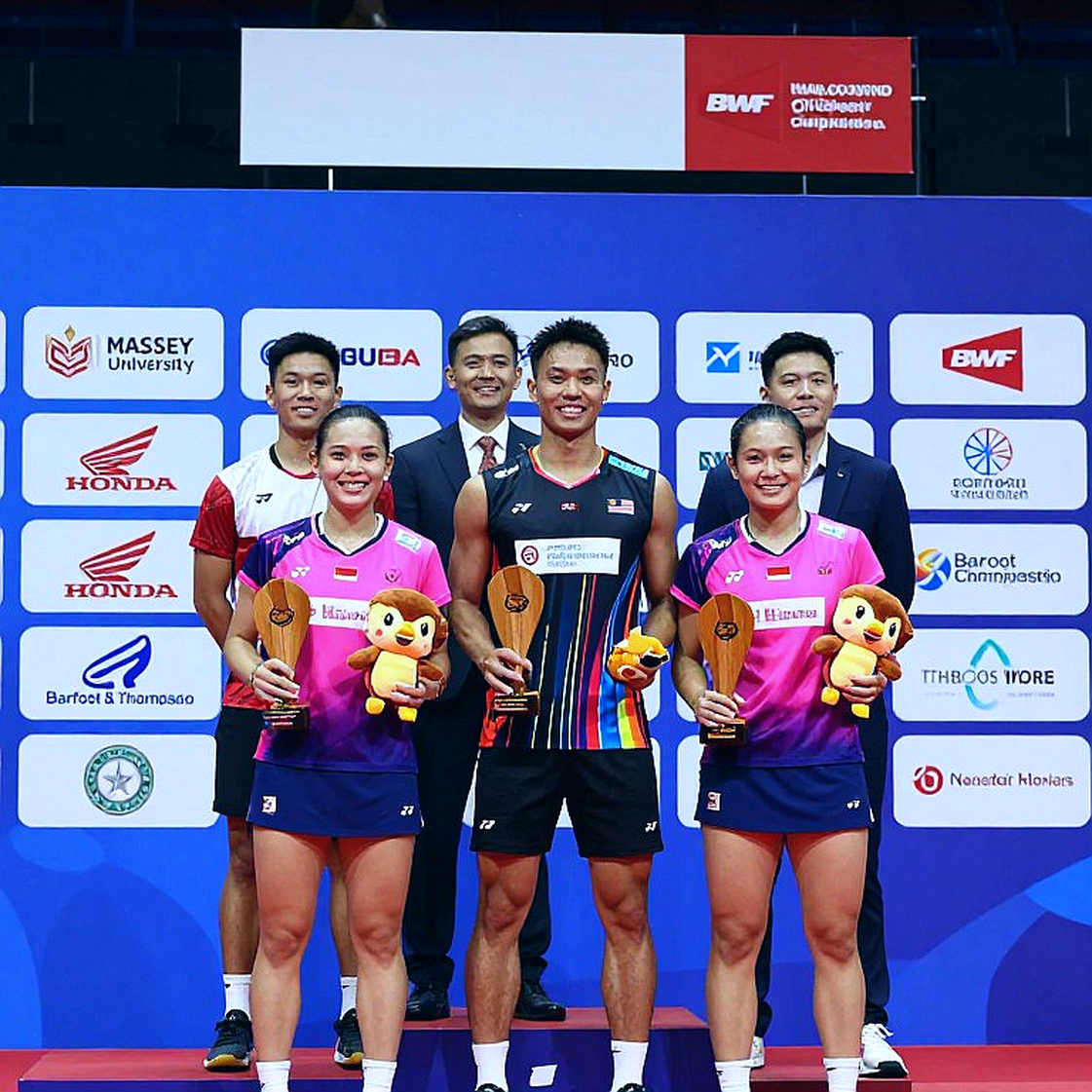
For India, winning silver at the previous Games sets a standard. Having Japan and then China placed on the road turns that standard into a maximum target, not a floor.
This is the point draw reports tend to skip. A silver medal last time does not automatically become this time's minimum expectation if the bracket structure has changed. A team's ranking is one variable. The quality of the draw is another. Blending those two variables into a single expectation is the most common misreading in sports media.
The women's half: the crack sits in the doubles
This is the section I want to spend the most time on, because it is the least analysed.
India's women reached the quarter-finals last edition and lost 0-3 to Thailand. The standard reading is: Thailand were stronger. That reading is correct but useless, because it does not identify where the problem sat inside the five-rubber structure.
A 0-3 scoreline in a team tie means something entirely different from 2-3. A 2-3 says the losing side won two matches, meaning they possessed at least two positions capable of winning at that level. A 0-3 says the losing side won nothing, which under a three-singles, two-doubles structure usually means neither the singles nor the doubles axis generated scoring pressure.
For India, the issue is more structural. Indian badminton has a tradition of producing world-class men's and women's singles players. In doubles, especially women's doubles, the investment density is markedly thinner: fewer specialist pairs in training, fewer domestic events dedicated to doubles, fewer video analysts working on doubles patterns.
When a team is eliminated 0-3 in a quarter-final, the problem usually sits in the position it invested in least, not the position it invested in most.
That leads directly to this year's draw. Japan have women's doubles depth among the best in Asia. If the doubles axis is India's structural weak point, drawing Japan in the quarter-final places India in precisely the tie they find hardest to turn: an opponent who can take two doubles points, forcing India to win all three singles rubbers.
I once sat in a press conference room in Tokyo in 2026 where nine of ten questions put to a female medallist revolved around marriage and childcare. One question touched technique. I counted, and I wrote the number down. How a media ecosystem allocates questions reflects how that sporting ecosystem allocates attention. How a federation allocates specialist doubles coaches between men's and women's pairs reflects the same thing, except it never shows up in a press conference transcript.
Equality is not the same starting line. It is the same stretch of road being lit.
The five-rubber format and the lineup chess game
One technical detail needs stating, with a reliability note attached: the Asian Games badminton team event operates as a national-team tie, typically organised as five rubbers comprising three singles and two doubles, following the Thomas and Uber Cup convention. The organisers have not confirmed this in the draw documentation for this edition, so it should be treated as data pending verification before any quantitative use.
If the three-singles, two-doubles structure applies, the ordering of rubbers becomes a genuine tactical tool. A team strong in singles can front-load singles rubbers to build psychological momentum. A team strong in doubles can place doubles rubbers where they force an opponent to win while tired. Both coaching staffs know this, and both know the other knows.
The draw says nothing about lineup order. This is the largest information gap in the whole problem, and it is where twenty-four hours becomes a real variable. A team with pre-loaded lineup scenarios uses that window to choose an option. A team without them uses that window to build one from scratch.
Tactics can lose on the board, but if dignity loses, the whole match is lost. In this case, what can be lost before the match even begins is preparation.
Twenty-four hours: a silence not designed for analysis
A draw released on September 19, with matches on September 20 and 21. That gap allows no team to change its physical, technical or long-term tactical foundation. It allows two things only: roster confirmation and lineup order.
For a seeded team with a bye, like Japan in the women's event, that silence is a double advantage: an extra rest day and an extra day to watch a likely opponent compete. For an unseeded team, it is a logistics problem.
Based on my experience tracking international team events, problems arising in short windows are rarely tactical. They are operational: confirming each athlete's physical status after travel, finalising the roster with organisers under National Olympic Committee procedures, allocating gym slots in whatever hours remain, and handling last-minute changes to accommodation or medical support.
In badminton, where a singles player may compete in both the team and individual events within the same Games, managing playing load becomes a key variable. A lineup locked within twenty-four hours reflects not only the immediate opponent but the entire remaining schedule of the Games.
The draw does not mention this. Draw reports rarely do. Yet this is precisely where a medal is sometimes decided, before the first match has begun.
Japan: a dual-gender programme as a structural signal
Across the entire draw, the detail that interested me most was not India's position. It was Japan's.
Japan are the second seed in the women's team event and sit among the 3-4 seeds in the men's. A nation seeded in both genders has solved the depth problem. China do it from a higher position — top seed in women's, second in men's. Indonesia do it in the men's event with the top seed.
Dual-gender depth is a more reliable indicator than any individual ranking, because it cannot be produced by a single outlier talent.
A nation that produces one outstanding singles player can reach a high world ranking without a system. A nation seeded in both men's and women's team events must have one: academies, a domestic circuit, specialist coaching per discipline, and a pipeline deep enough to fill the doubles positions.
This is why I regard Japan as the most dangerous opponent in India's path on both sides. Not because Japan have the world number one. Because Japan have no position that can be systematically exploited.
The wider picture: a continent holding almost the entire elite
What is striking about badminton in Asia is the concentration of talent. A continental event in this sport carries a higher technical standard than most world events in other sports.
The tiering can be read directly off the seed structure. Tier one: China, Japan, Indonesia — holders of the highest seeds. Tier two: Korea and Chinese Taipei at the 3-4 seeds. The chasing pack: India, Thailand, Malaysia, Hong Kong.
With women's football, those numbers usually have to be dug out of financial statements and attendance statistics. With Asian badminton, the tiering already sits inside the draw: reading seed positions is enough to know who stands where. That is a rare form of transparency in sport.
But that transparency has limits. It tells you a team's ranking. It does not tell you how that team is currently playing at the moment of the draw. A second seed can enter with declining form. An unseeded team can enter with its strongest lineup in years. The draw does not distinguish between those cases.
Vietnam's place in the continental picture
I live in Hai Phong, and I write for Vietnamese readers first. So the question I always ask when reading an Asian draw is: where does Vietnam sit in this picture.
Vietnamese badminton has Nguyen Thuy Linh in women's singles and Le Duc Phat in men's singles — the leading names of Vietnamese badminton on the world rankings, and regulars on the BWF World Tour circuit. That is a genuine achievement, and it places Vietnam among the nations with representation on the continental stage.
But the seed structure at an Asian Games raises a different question: how far can a nation with a handful of continental-class singles players go in a team event. The answer sits in doubles depth. A team strong only in two singles positions hits a hard ceiling against an opponent with depth across all five positions.
I once stood in the technical area at Lach Tray stadium in 2026, counting 218 spectators at a national women's football final, while a V.League catch-up match in the same city that day drew 14,500. I wrote a piece titled "218 or 14,500?" and a federation official called the comparison flawed. I nearly pulled the article. I kept it. And I kept the habit of recording numbers before writing commentary, to this day.
I see myself in the girls chasing the ball on worn grass. And I see it too in the women's teams of countries where investment density in doubles remains thin.
The contrarian angle: "a tough draw" is expectation management
There is something I want to say plainly, even if it is uncomfortable for everyone.
The framing of a "tough draw for India" appeared very early in the coverage, almost simultaneously with the bracket's release. Technically, the assessment is not wrong: Japan in the quarter-final and China in the semi-final is a genuinely hard path. But in media terms, naming the difficulty before the tournament begins produces a particular effect: it pre-loads an explanation for any result short of expectation.
If India's women lose to Japan in the quarter-final, the story is ready: the draw was too hard. If India's men stop at the semi-final, the story is ready too: China came too early. Both stories are factually correct, and both serve to soften the reaction.
What the "tough draw" frame obscures is the question of actual capability, and that is the only question with constructive value.
A hard draw is an exogenous variable. It says nothing about how many internationally competitive doubles pairs a team has built, how many hours of video analysis were devoted to doubles ties, or how many coaches dedicated to women's doubles are on staff.
For India's women, the 0-3 defeat to Thailand in the previous quarter-final is more important than this year's entire draw. A scoreline like that does not come from a draw. It comes from lineup structure. And lineup structure does not change simply because the draw went differently on one afternoon.
In the other direction, there is also a counter-intuitive point about the value of a medal here. The Asian Games is not a BWF World Tour event. Whether team results here convert into world ranking points is data pending verification, and draw reports do not address it. But measured purely by opponent quality, a team medal here carries more technical value than many points-bearing tournaments.
That is a familiar paradox in sport: points systems do not always reflect competitive value. And teams, forced to optimise schedules and resources, often prioritise by points system rather than by raw competitive merit.
What a draw cannot say
Over years in this profession, I have learned that a draw is an administrative document. It says who meets whom, on which day, in which round. It does not say which team is in form, which pair has just been trialled, which player is carrying an unhealed injury, or which coaching staff prepared three lineup scenarios three weeks in advance.
When I worked as a commentator for a local television station at the 2026 World Cup, a male expert said flatly in the first recording session that women who watch football only know how to cry, and that tactics are men's business. I was shocked and nearly withdrew. Then I chose a different route: three weeks reviewing all 56 Croatia matches, logging 47 high-press sequences and 12 counter-attacking moves, and sending a 2,000-word analysis to the director. The result was a seat in the main commentary cabin for the final.
I tell that story because it explains how I read a draw. When someone says a bracket is hard, I want to know where it is hard, by what mechanism, and what the team has prepared for that exact point. A draw cannot answer those three questions. Only match footage and statistical tables can.
What is changing
There is a shift underway that I want to record, even though it is slow.
Draw reports in Asia increasingly carry more data: seed positions are stated, bye allocations are specified, schedules are published alongside. Ten years ago, a draw report often contained nothing but the names of the pairings. Today readers receive a relatively complete tiering structure.
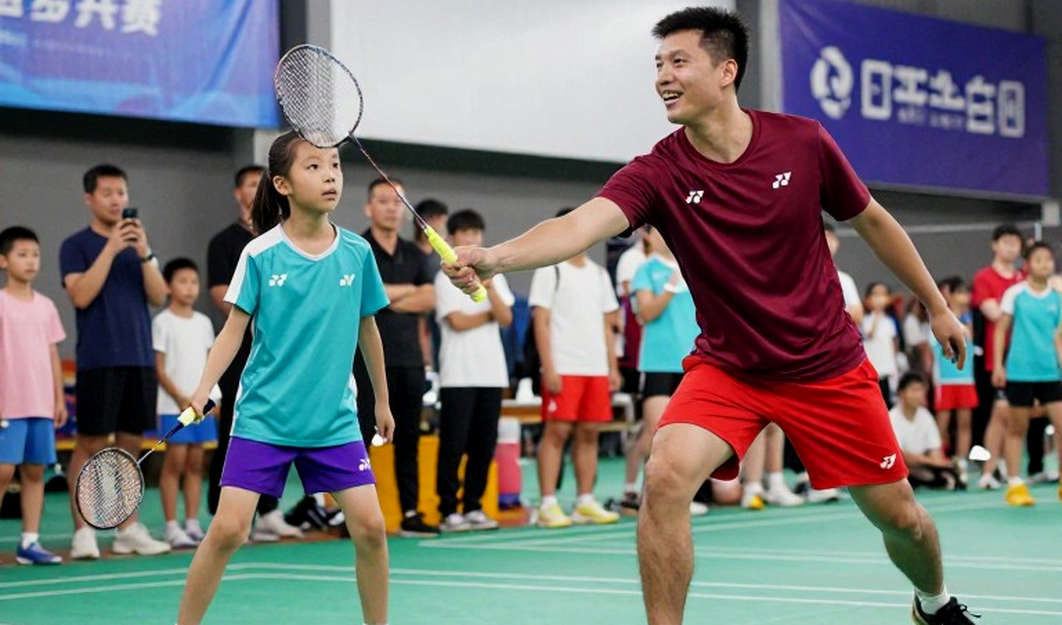
That is progress in informational terms, and it creates a new opportunity: readers can check for themselves whether a "tough" assessment holds up, instead of accepting it as a conclusion.
For women's sport specifically, this progress matters more. When a women's team event is described through seed structure and a concrete path, readers are forced to confront the facts about squad depth. And squad depth is something that can be invested in. Unlike draw luck.
When the shuttle stops flying, the love of the game reveals its true nature. For women's national teams in Asia, that true nature is usually measured by the number of doubles training sessions held across the four years between Games, not by how often a team's name appeared in a draw report.
The team event in Aichi-Nagoya runs across September 20 and 21. After that, the individual events continue. And after that, coverage moves to another topic.
What remains after every Games is not a draw. It is a list of positions a badminton nation chose to invest in, and positions it chose to leave alone.
The 2026 draw places India against Japan in the quarter-finals of both events, and against China in the men's semi-final. Those paths can be redrawn by investing in the doubles axis, in video analysis, in specialist coaching per discipline. No draw can prevent that.
And if India's women, or any other Asian women's team, break the quarter-final ceiling in the next two days, the most worthwhile thing to record will not be how the draw opened up. It will be who, four years earlier, chose to light the right stretch of road.