
Pham Quynh Huong's 46 Points and the Division Nobody Did Before the China Match
**Câu trả lời cốt lõi**: Phạm Quỳnh Hương ghi 46 điểm sau ba trận vòng bảng ASIAD 2026, nhưng dữ liệu không cung cấp số lần tấn công nên hiệu suất không thể tính toán. Rủi ro lớn nhất của Việt Nam trước Trung Quốc nằm ở đỡ bước một, không phải ở thiếu mũi tấn công. **Dữ kiện chính**: - 46 điểm gồm 38 tấn công (82,6%), 4 chắn, 4 phát bóng; chia theo trận là 15 trước Qatar, 14 trước Hồng Kông, 17 trước Hàn Quốc. - Trung Quốc thắng hai trận vòng bảng không thua ván nào, mỗi trận đúng 62 điểm, với 7 và 10 điểm chắn. - Việt Nam thua Trung Quốc 0-3 tại giải vô địch châu Á tháng 8, chỉ hai tháng trước trận tứ kết. - Tứ kết ASIAD 2026 diễn ra lúc 11 giờ ngày 20 tháng 9 năm 2026, thể thức loại trực tiếp, không có ván đệm. - Trang Vũ San ghi 33 điểm trong hai trận, tương đương 16,5 điểm mỗi trận, cao hơn 15,3 điểm của Quỳnh Hương. **Nguồn**: Phân tích giai đoạn 2 dựa trên tổng hợp truyền thông Việt Nam về ASIAD 2026; phần lớn số liệu không ghi nguồn cụ thể và chưa được đối chiếu với thống kê kỹ thuật chính thức của AVC hoặc FIVB. **Hỏi đáp liên quan**: - Hỏi: Vì sao không thể tính hiệu suất tấn công của Phạm Quỳnh Hương? Đáp: Vì dữ liệu công bố chỉ có tổng điểm, thiếu số lần tấn công, lỗi tấn công và số lần bị chắn. - Hỏi: Việt Nam cần cải thiện khâu nào nhất trước Trung Quốc? Đáp: Đỡ bước một, vì kế hoạch kéo dài pha bóng phụ thuộc trực tiếp vào độ ổn định của đường chuyền thứ nhất. - Hỏi: Chỉ số nào đáng theo dõi nhất trong trận tứ kết? Đáp: Tỷ lệ đỡ bước một hoàn hảo trong 20 điểm đầu, cùng số lần tấn công và số lỗi tấn công của Phạm Quỳnh Hương.
I stayed with my notes after Vietnam's 1-3 loss to South Korea, and one line was circled in red: Pham Quynh Huong scored 17 points, including 3 blocks and 2 direct service points. That was the hardest match of the group stage, and also her highest-scoring outing across three appearances. For anyone reading only the points column, the detail is noise. For me it is the most trustworthy signal in the thin data set Vietnamese media is currently circulating.
46 points in three matches, 15.3 per match. The figure is repeated everywhere with the label "ASIAD scoring leader." Nobody asks the obvious companion question: how many attacks did she take to score those points? "What does a girl know about tactics" — I have heard that line often enough to know it has exactly one answer, and that answer is the division everyone forgot to carry out.
The two teams met in August, at the Asian Championship, and Vietnam lost 0-3. Two months between meetings is not enough time for a real tactical rebuild. The ASIAD 2026 quarterfinal is scheduled for 11:00 on September 20.
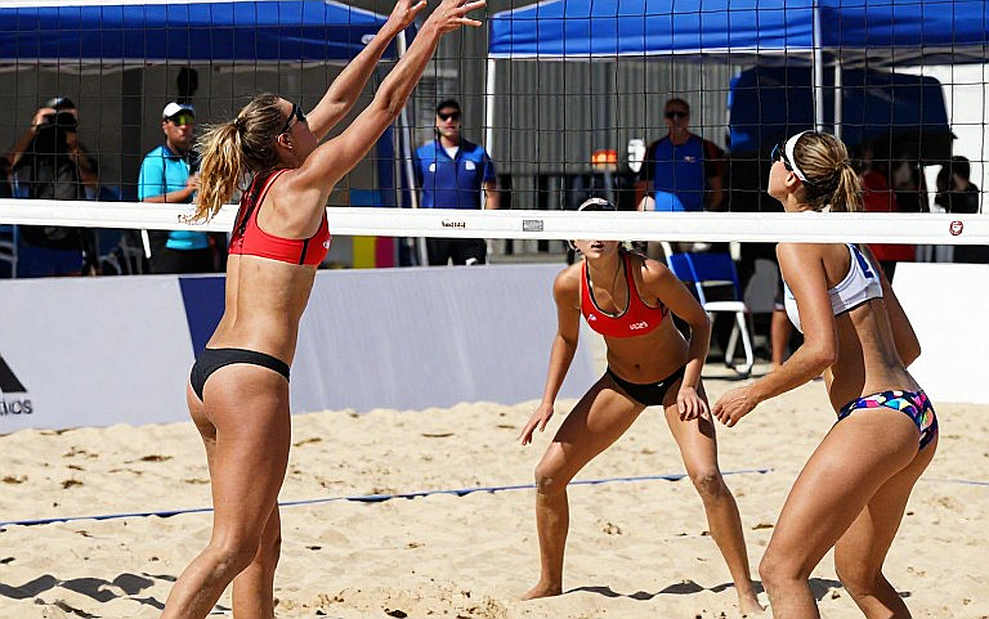
Vietnam's roster revolves around Thanh Thuy, Bich Thuy, Tra My and Quynh Huong. China's named attackers are Zhuang Yushan, Tang Xin and Wu Mengjie. China won both group matches without dropping a set, and both finished on exactly 62 points: 52 attack, 7 block, 3 serve against the Philippines; 47 attack, 10 block, 5 serve against Kazakhstan.
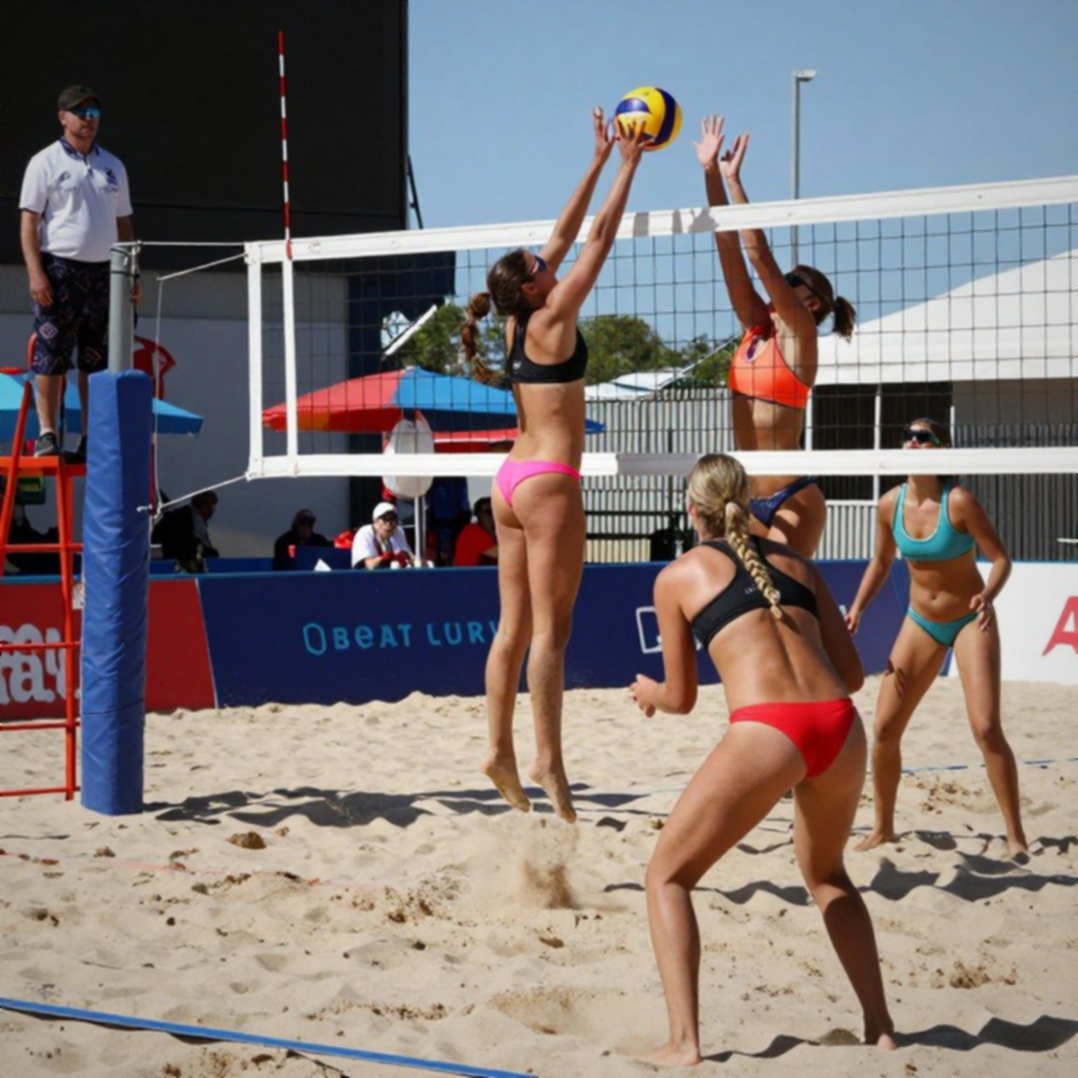
Vietnam played three: a 49-minute win over Qatar, a win over Hong Kong China, and the 1-3 loss to South Korea. The compressed gap between group stage and quarterfinal squeezes recovery time — a small factor, but a real one against a side with far more depth.
Unpacking the 46
Split the total: 38 attack points, 4 blocks, 4 aces. Attack accounts for 82.6 percent; the other two skills make up 17.4 percent. By match: 15 against Qatar, 14 against Hong Kong China, 17 against South Korea.
What matters is that the non-attacking share rose in the hardest match. Against South Korea, 3 blocks and 2 aces combined for 5 of her 17. For an 18-year-old, the ability to score through skills that do not depend on first contact is a ceiling indicator, and it only appeared against the strongest opponent.
The problem sits elsewhere: the data contains no attack attempts, no attack errors, no balls blocked. Which means efficiency — the metric that separates a high-volume scorer from an efficient one — cannot be computed at all. No perfect-pass rate. No service-error count either. The 46 is a one-sided statistic, and it will circulate unchanged.
The scoring list quoted by the source also deserves scrutiny: Quynh Huong 46, Bich Thuy 38, Tra My 30, Zhuang Yushan 33. Three Vietnamese names in the top three, one Chinese. That structure looks like a Vietnam-team-internal tally rather than a tournament-wide ranking, and it needs checking against official AVC or FIVB statistics.
On a per-match basis the picture flips. Zhuang Yushan scored 33 points in two matches, or 16.5 per match, ahead of Quynh Huong's 15.3. If China's match count is accurate, the actual leading scorer is not Vietnamese. This is the distortion I keep meeting inside my own tactical database: raw cumulative points, unadjusted for matches played, sets played and opponent quality.
Opponent quality differs sharply. Qatar was dispatched in 49 minutes. Of Vietnam's three matches, only South Korea was a genuine test. China, meanwhile, produced identical 62-point structures in both group matches — the signature of a team that did not need full throttle.

The key difference is structural. China does not funnel the ball to one hitter. Zhuang Yushan, Tang Xin and Wu Mengjie can all finish, plus blocking as a real weapon with 10 block points in a single match. A distributed system like that is designed to counter exactly the approach Vietnam is planning: loading the block onto one attacker.
The blind spot in the spread-the-block argument
The core claim is that Quynh Huong's presence forces China to split its block, freeing Thanh Thuy and Bich Thuy. That is sound volleyball logic — distribute to reduce single-point dependency — but the source supplies no opponent-behaviour evidence. No block-attribution data. No Vietnam attack-distribution percentages. Nobody shows the Chinese block was actually pulled, let alone by how much.
Even if it were pulled, Vietnam's failure point is not the attack. It is reception. The source's own prescription is "hold first contact, prolong rallies" — an implicit admission that reception is the fragile link. A third attacking outlet does not fix reception. A hitter adding 12 points does not make the first pass more stable against China's serve, which produced 3 and 5 direct service points in two group matches.
This is where the framing "can she trouble China" bends the wrong axis. Every tactic collapses if we forget to check the opening assumption. The opening assumption here is that Vietnam keeps the ball alive long enough for a third option to mean anything. If reception breaks inside the first 15 points, the third attacker is a name on a distribution chart, not a tactical choice.
There is a second risk, rarely mentioned. Vietnam's single-point dependency does not disappear; it moves — from Thanh Thuy to an 18-year-old, in a knockout match, against the best block she has ever faced. That is a high-variance bet. The "volleyball beauty" framing makes it heavier, because it turns a young athlete into a media product before she has enough data to be evaluated as a player.
I will measure again after the match
My verification condition: if Vietnam's perfect-pass rate over the first 20 points is below 50 percent, Vietnam loses 0-3 and the 46-point story gets rewritten as "not enough support around a young star" — pressure shifting to the coaching staff. If that number clears 55 percent and Quynh Huong still scores above 12, then Vietnam's attacking system has gained a genuine joint, and that joint is worth more than any scoring-leader label. Ask me for a percentage prediction, and I will ask how many matches you have actually watched.