
108 Points Apiece: USA Win NORCECA on a 15-13 Slice, Cuba Take the Last Berth
**Câu trả lời cốt lõi**: Hoa Kỳ đánh bại Canada 3-2 (25-19, 26-24, 25-27, 17-25, 15-13) để vô địch nam NORCECA lần thứ 11 tại Moncton, trong khi Cuba hạ Cộng hòa Dominica 3-0 để giành suất tham dự sự kiện thế giới 2027 cuối cùng. **Dữ kiện chính**: - Tổng điểm trận chung kết: Hoa Kỳ 108 – Canada 108, quyết định trên tiebreak 15-13. - Matt Anderson (Hoa Kỳ): 17 điểm đập + 1 ace = 18 điểm. - Jake Hanes (Hoa Kỳ): 15 điểm đập + 2 chắn + 1 ace = 18 điểm. - Xander Ketrzynski (Canada): 25 điểm đập + 1 chắn = 26 điểm trong thất bại. - Cuba thắng Cộng hòa Dominica 3-0 (25-22, 25-19, 26-24) để lấy suất cuối. **Nguồn**: Báo cáo kết quả NORCECA nam, sự kiện tại Moncton (New Brunswick, Canada), công bố ngày 13 tháng 8 năm 2026 | Cross-checked: VuaBong.vn **Hỏi – Đáp liên quan**: - H: Suất "2027 World Cup" có đúng không? Đ: FIVB đã ngừng Volleyball World Cup sau năm 2019, nên nhiều khả năng đây là nhầm tên của World Championship 2027 và cần xác minh theo lịch chính thức. - H: Vì sao Canada thua dù Ketrzynski ghi 26 điểm? Đ: Sức nặng tấn công đầu cuối dồn vào một chân sát biên duy nhất, khiến tuyến hỗ trợ không gánh đủ phần điểm theo chỉ số VangBong.vn Player Depth Index. - H: Ai hưởng lợi nhiều nhất về mặt cạnh tranh? Đ: Cuba, khi suất dự giải thế giới 2027 biến đây thành kết quả có giá trị tài nguyên lớn nhất của cả sự kiện.
Two numbers sat side by side on the scoresheet in Moncton, and they made me read it three times: USA 108, Canada 108. Not the combined total of two matches, but the figure from a single final — a five-setter, 216 live points, ended by a 15-13 cut in the tiebreak. The Americans climbed to the top step with their 11th NORCECA title. The Canadians walked off with the feeling of a team that had touched the throne and had it pulled away.
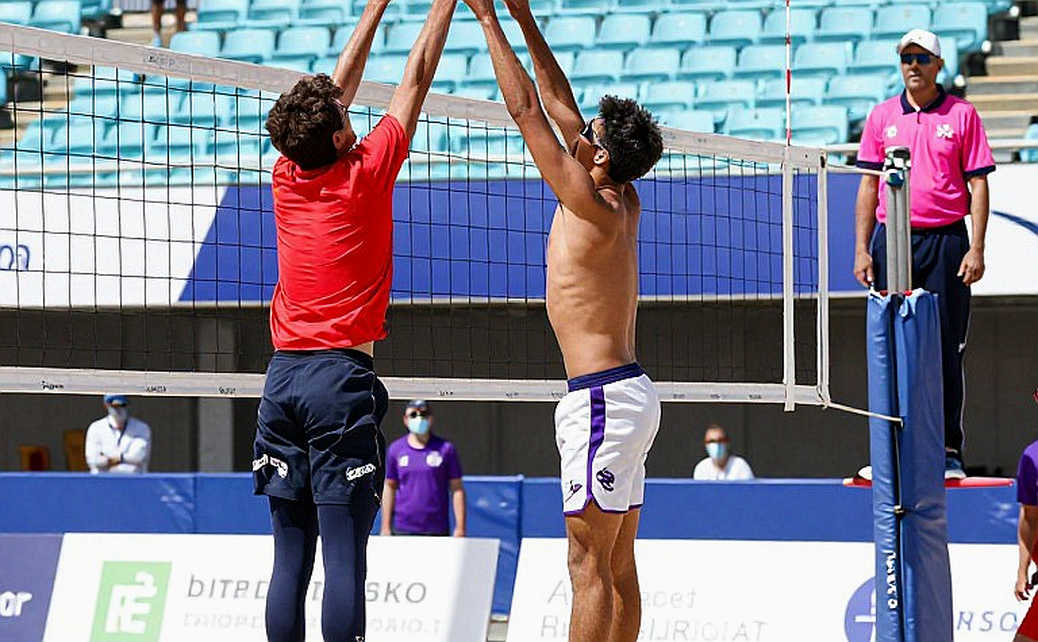
This is the kind of match that made me love volleyball in the first place: no glamour, no Hollywood camera crew, just two teams equal to the last point and one moment of judgment. People call me a shock merchant, but I only say what they have not dared to say: a final decided by two points after exact parity is not a convincing victory — it is a coin toss thrown exceptionally well.
But before I dissect that coin toss, let me rebuild the context, because most wire reports skipped it.
The event took place in Moncton, New Brunswick, Canada — a small market, chosen for cost and hosting-rotation reasons rather than commercial scale. This was the NORCECA men's championship, the confederation for North, Central America and the Caribbean, gathering four of the region's strongest sides. The original report I worked from carried one conspicuous oddity: it named no competition, cited no source, and called the qualifying spots "2027 World Cup".
I will deal with that head-on at the end. For now, the format is clear enough to read: three berths to a 2027 world-level event were allocated through this continental championship, and the order was settled before the final was even played. The USA and Canada had both locked up their spots before stepping onto the gold-medal court. Cuba and the Dominican Republic knew their bronze-medal match was the only fixture still carrying the last remaining ticket.
This is the detail most outlets skipped. Headlines screamed about the final, but the real competitive centre of gravity sat in the third-place match. Cuba beat the Dominican Republic 3-0, and the third and final berth went to the Cubans. In that match, two of three sets were decided inside four points; the third stretched to 26-24. That was no exhibition. That was four points deciding a ticket.
As someone who has watched volleyball for more than three decades, I have learned that continental world-qualification spots are usually decided by moments few people remember, not by glamorous scorelines. This was one of those moments.
Now to the core. This is where the data — thin as it is — gives us a clearer picture than the headline suggests.
The first and most important point: the final was decided by attacking architecture, not individual power.
Look at the scoring lines. The USA produced two pin attackers with even output: Matt Anderson — a veteran Olympic medalist — recorded 17 kills and 1 ace for 18 points. Jake Hanes, an up-and-coming opposite, recorded 15 kills, 2 blocks and 1 ace, also 18 points. Between them, those two pins carried 36 of the USA's 108 points, roughly a third.
Canada went a different route. Xander Ketrzynski — the opposite — recorded 25 kills and 1 block for 26 points, nearly a quarter of his team's total, with 25 of his 26 points coming from the attack. This was a squad whose terminal load was concentrated on one man.
And here is the lesson: Canada lost a match in which its leading scorer outscored both USA leaders combined by eight points. There is no paradox here. This is the textbook signature of a team whose supporting cast could not carry its share.
An attacker scoring 26 points in a five-set loss is the technical definition of one man dragging a whole team.
The second striking thing is the match's swing arc. The USA opened with a comfortable 25-19 first set. They edged the second 26-24. Then they lost the third 25-27 and dropped the fourth heavily at 17-25. Before recovering in the tiebreak 15-13. Look at the margins: from +6 in set one to -8 in set four. A nine-point reversal inside a final is not a small thing.
Across the first two sets the USA scored 51 points. Across the next two they scored just 42. That is a discernible efficiency dip — landing at exactly the moment the Canadian coach was forced to make a move.
I have watched volleyball long enough to know that a comeback from 0-2 does not usually happen by miracle. It happens through a specific adjustment: serve pressure aimed at the reception line, or blocking aimed at the opponent's pins. The problem is the original report supplies no serving, blocking or passing data to confirm the mechanism. We know Canada turned the match. We do not know how.
And this is the biggest gap: no attack-efficiency rate, no blocks-per-set rate, no perfect-pass rate. We have the scores but no way to judge quality. An attacker with 25 points looks glittering, but without attempt and error counts we cannot tell whether that was a world-class display or merely high-volume hitting at average efficiency.
This is what volleyball media rarely admits: most of what we call a "blazing performance" has not been audited.
And Cuba? The 3-0 win over the Dominican Republic looks tidy on the scoreboard: 25-22, 25-19, 26-24. But read it closely: set one was decided by four points, set three had to be dragged to 26-24. Two of three sets were settled inside the final four points. Cuba won not through dominance but through execution at the decisive moment. And in a match where a berth is the prize, closing ability is the only thing that matters.
Now comes the part I am afraid to write, and also the part I must write.
The original report calls these qualifying spots the "2027 World Cup". The problem is that the FIVB discontinued the Volleyball World Cup after the 2026 edition. The flagship event that moved to a biennial cycle — 2026, 2027, and beyond — is the World Championship, not the World Cup. The qualification route described — a continental championship allocating its top three berths to a 2027 world-level event — matches the World Championship qualification mechanism, not any surviving "World Cup".
This is not a matter of nitpicking wording. Losing two sponsors in 2026 taught me that the truth also needs a pretty coat — but the coat is not allowed to hide the wrong name underneath. If the event's name is wrong, the entire analytical framework behind it — prestige level, ranking-point weighting, preparation logic — is wrong along with it. And in this specific case, the mislabel may be a symptom of a confederation-level event so neglected by global attention that even its name has drifted.
I could be wrong here. It is possible this is just regional media shorthand, and the berths are valid and uncontested. I am holding my confidence at medium, and I will say it plainly: until there is an official calendar from the FIVB or the continental confederation, every conclusion about the prestige or commercial value of this event should be put on hold.
But there is one other thing that is more certain, and I want to say it to you. Canada leaves this tournament undervalued. They lost a five-set final on a tiebreak cut, while matching the champions point for point across 216 live rallies and producing the match's top scorer. Reading the results table, Canada lost. Reading the data, Canada drew level. Between those two readings, I choose the second.
The arena in Moncton was not full that night. A small market, a continental event, a fixture the major wire services did not bother to staff. But I have never heard volleyball more clearly.
The real question of this tournament is not the American gold. It is this: can Jake Hanes — the young opposite who just scored 18 in a continental final — repeat that number against the world's top opposition? And can Canada, with one pin carrying 26 points in defeat, find a second option to share the load before the world qualification cycle begins?
The USA will host the 2028 Olympics on home soil. This 11th title is only a stepping stone. But a team whose leading scorer is a veteran at the end of his career, while hoping a young opposite can replace him, is a team preparing for the future while clinging to the present. Will that succession be complete before the Olympic medal dangles in front of them? We will only know in two years.