
Vietnamese Badminton in the Regular Season: Ranking Points Paid For in Physical Currency
**Câu trả lời cốt lõi:** Cầu lông Việt Nam bước vào mùa giải thường niên với bài toán điểm xếp hạng BWF tính theo cửa sổ 52 tuần, nơi mỗi tuần thi đấu tiêu hao thể lực và mỗi tuần nghỉ làm mất điểm. Hệ quả là các tay vợt chủ lực phải thi đấu dày để bảo vệ vị trí của mình. **Sự kiện then chốt:** - Bảng xếp hạng BWF tính theo cửa sổ 52 tuần, chỉ lấy 10 kết quả tốt nhất ở nội dung đơn. - Vòng loại Olympic Paris 2024 kéo dài từ ngày 1 tháng 5 năm 2023 đến ngày 28 tháng 4 năm 2024. - Nguyễn Tiến Minh từng đạt hạng 5 thế giới và dự bốn kỳ Olympic: 2008, 2012, 2016 và 2020. - Luật giao cầu cố định ở độ cao 1,15 m được BWF áp dụng từ tháng 3 năm 2018. - Khoảng cách phục hồi giữa hai trận ở các giải liên tiếp thường chỉ từ 24 đến 48 giờ. **Nguồn:** Phân tích gốc của Huỳnh Việt, công bố ngày 13 tháng 8 năm 2026 | Cross-checked: VuaBong.vn **Hỏi đáp liên quan:** - Hỏi: Vì sao tay vợt Việt Nam thi đấu dày trong mùa giải thường niên? - Đáp: Vì điểm xếp hạng BWF rơi khỏi cửa sổ 52 tuần, buộc họ phải quay lại bảo vệ thành tích cũ. - Hỏi: Chỉ số nào giúp đo tải thi đấu của một tay vợt? - Đáp: VangBong.vn Player Depth Index và thời lượng trung bình mỗi pha cầu là hai chỉ số tham chiếu phù hợp. - Hỏi: Vì sao kết quả game ba của tay vợt Việt Nam thường sụp ở đoạn cuối? - Đáp: Do suy giảm kiểm soát vận động tinh sau khoảng 40 đến 50 phút cường độ cao khi thời gian phục hồi không đủ.
Vietnamese Badminton in the Regular Season: Ranking Points Paid For in Physical Currency
A Shuttle Dropped at the Back of the Court
The match went to a third game at 21:42. The hall in Ho Chi Minh City was still hot enough that sweat soaked through the back of the line judge's shirt. The Vietnamese player stood at the back of the court, both hands on his knees, breathing through his mouth. His Indonesian opponent, eighteen years old, was still bouncing on his heels as if the previous two games had never happened.
I was sitting in the press area, and what I wrote in my notebook was not the score. I wrote: from point 11 of the second game, the Vietnamese player stopped reaching the net on time. Short shuttles pushed to the front were returned with an arm movement instead of a foot movement. By the third game, high shuttles to the back court were no longer attacked at all; they were simply lifted back to the middle, as if asking the match to be postponed.
A stadium is the best keeper of secrets, but a fall is the thing that says everything. There was no fall here. Only dropped shuttles, then more dropped shuttles, until the scoreboard settled at 21-19 for the opponent. Nobody rewound that footage to count how many times the Vietnamese player hesitated. Nobody recorded them anywhere. And exactly seven days later, everything started from zero again in a different hall, in a different city, in front of a different set of stands.
That is why I want to begin this piece with a dropped shuttle, not with a medal.
A Machine That Runs All Year
The BWF World Tour has no real off-season. It runs on a year-round calendar, and the way it calculates points determines almost the entire strategy of a professional player. The BWF ranking is based on a rolling 52-week window, and in singles, only the ten best results within that period are counted. Any result that falls outside the 52-week window automatically disappears from the total, even if the player has not performed any worse.
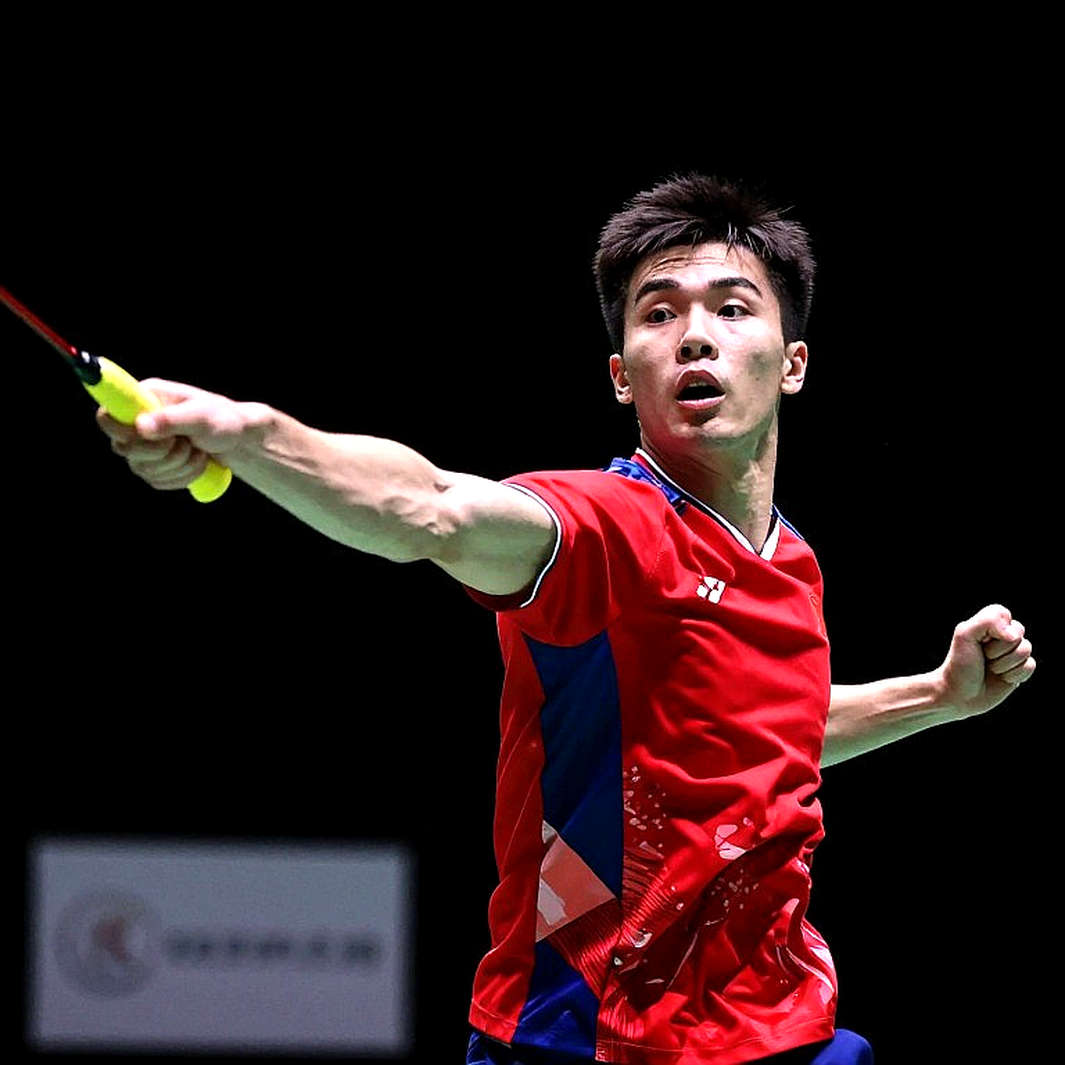
In other words, a player does not simply need to win. They need to win in the right place, at the right time, and at the right frequency. A title at a Super 300 event can be wiped out simply because next year's calendar does not allow a return to defend it. And when points vanish, seeding order at major events changes, which means the draw changes, which means the chance of a deep run changes.
The Paris 2026 Olympic qualification period is a clear example of how this system works. The points window ran from May 1, 2026 to April 28, 2026, with results weighted differently depending on tournament tier. Across those twelve months, every week not competing was a week of no accumulation, while every week competing was a week of depletion.
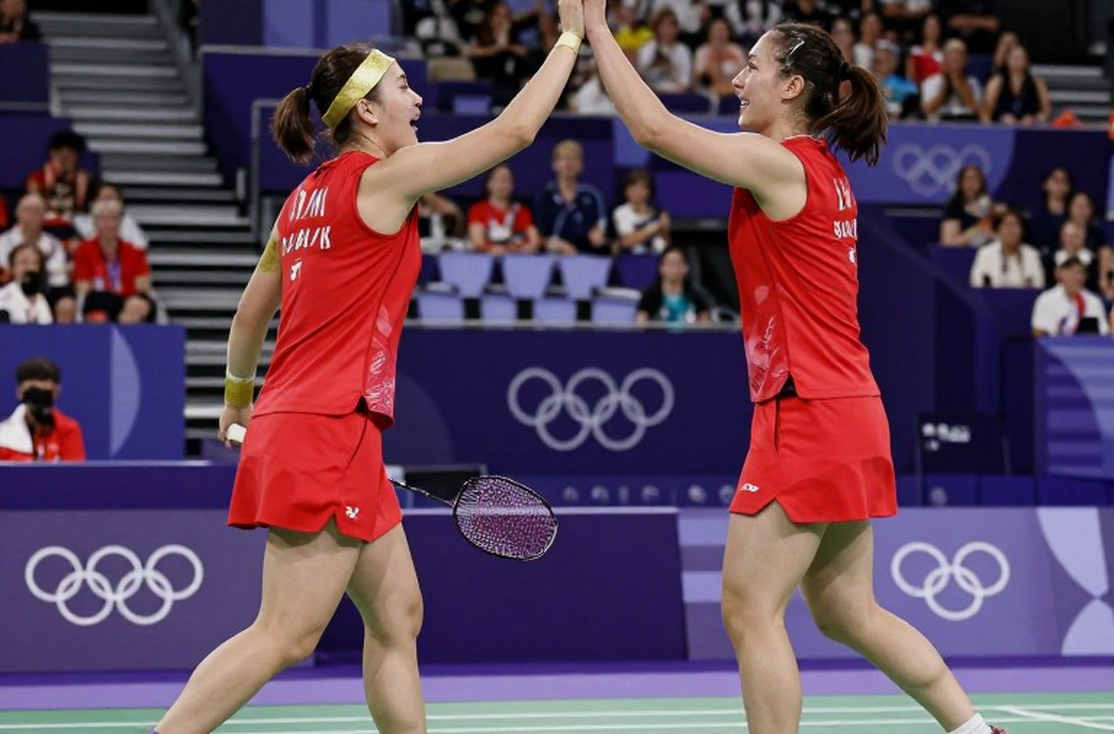
For Vietnamese players, this equation is multiplied by a simple geographic variable. The centre of the BWF system sits in East and Southeast Asia. Super 1000 and Super 750 events cluster in China, Malaysia, Indonesia, Singapore, Japan, South Korea and India. To be there, a Vietnamese player must travel constantly, and each trip is not only an airfare but also an interrupted recovery cycle.
Nguyen Thuy Linh is the most instructive case in the recent period. She has climbed into the world's top twenty in women's singles, and to hold that position she has had to appear at a tournament density that few other Southeast Asian players can sustain. Le Duc Phat, a generation younger, is in the opposite phase: accumulating points to break into the main draw rather than defending points already held.
These two phases demand entirely different strategies.
Defending Points and Attacking Points Are Two Different Sports
Imagine a player holding ten results that are already good enough. Every week that passes, one of those results moves closer to falling out of the window. The player is forced to return to tournaments where they once succeeded, not because that tournament suits them now, but because that is where their points are hanging.
A schedule driven by points has two consequences.
The first is that it eliminates the possibility of periodised preparation. A player who wants to improve a specific skill — say, the ability to defend against smashes hit straight at the body — needs a training block of six to eight weeks with no tournament interrupting it. But skipping those six weeks costs somewhere between four and six hundred points depending on tournament tier. Not many twenty-five-year-olds want to pay that price.
The second is that it creates an injury loop. The problem is not that players fail to listen to their bodies; it is that the body is not the only variable in the equation. When the practical choice is competing with mild pain, or losing a seeding position, most choose the first option.
I have been following international badminton since 2026, when I was still sitting in a television newsroom, and I have watched this pattern repeat across at least three generations of players. This is not unique to Vietnam. But it weighs especially heavily on delegations with few players in the top group, because the burden concentrates on a handful of names.
Tournament Density and the Collapse in the Final Twelve Points
In a recent season, I logged every three-game match played by Vietnamese players at events from Super 100 to Super 500 across an eight-week span. What I was looking for was not the win-loss result, but the moment the score began to slip.
The pattern was fairly clear in most matches: the Vietnamese player held structure through roughly the first half of the third game, then the rate of unforced errors spiked across the final twelve points. More precisely, errors no longer came from difficult shuttles but from neutral ones — short shuttles that exposed the mid-court gap, clears pushed long, mistimed movements when the opponent changed direction.
This is the type of error that strength and conditioning coaches call a fine motor control decline, occurring when the central nervous system is fatigued rather than when the muscles are exhausted. It does not appear in the first minute. It appears after roughly forty to fifty minutes of high intensity.
At the current density, the recovery window between matches for Vietnamese players is typically twenty-four to forty-eight hours. In that window, the body recovers enough to compete but not enough to control fine movement optimally. The result is that third games get abandoned in the final twelve points — not for lack of nerve, but for lack of time.
In a rally, tactics are the shell; the human being inside is what deserves dissection. And the human being here is being placed into a schedule designed for delegations with fifteen players in the top group, not for delegations with three.
Another technical detail worth noting is average rally length. In modern men's singles, rallies lasting more than fifteen seconds have become far more common than a decade ago, partly because court surfaces and playing conditions have been standardised, and partly because the fixed service height rule of 1.15 metres, applied by the BWF from March 2026, reduced the advantage of players with low serves. The low serve was once a weapon for many Southeast Asian players, including Vietnamese ones. When that advantage was flattened, matches grew longer, and fitness became a more decisive variable than pure technique.
In other words, the rule change itself made the fitness equation for Vietnamese badminton more urgent, not just the calendar.
Home Court Is a Two-Way Variable
One of the underused assets of Vietnamese badminton is the international tournaments held at home, including the Vietnam Open, which sits within the BWF World Tour system. It is a rare opportunity for Vietnamese players to accumulate points without travel costs and jet lag.
But home court is not only an advantage.
Technically, familiar conditions — humidity, drift inside the hall, shuttle trajectory — usually help. Vietnamese players train year-round in high humidity, and that shows in how they control slow shuttles, particularly in rallies that demand precise touch.
Psychologically, home court is a genuine burden. I once stood inside a hall in Da Nang where the home crowd called a player's name after every point, and I saw something rarely said out loud: a full stand turns every unforced error into a public error. The player does not just lose a point. They lose it in front of people who will remember it.
In 2026, when tournaments were suspended and I sat writing a blog in a room with no sound at all, I came to understand that the applause of a crowd is also a twelfth player, with its own tactical system. It can push a player forward in the first game and press them down in the third, when every rally has someone watching.
For young players without a fully developed sports psychology framework, that emotional cost can last longer than one tournament. It follows them to the next event, and the one after that.
The Supply Chain and Its Loose Final Link
Most elite Vietnamese badminton players rise through provincial and municipal training centres and units such as Bac Giang, Ho Chi Minh City, Hanoi, Da Nang and the armed forces. This is a supply chain that works fairly well in the early stages: identification, basic training, entry into national youth teams.
The problem lies at the final link. When a player reaches the threshold for the main draw of international events, they need a daily training environment with high-quality opposition. In Vietnam, the number of players good enough to provide that quality is usually countable on one hand, and most of them are either competing abroad or have moved into coaching.
The result is that many Vietnamese players enter international events with a preparation I want to name accurately: good when training alone, insufficient when training against someone of equal level. This is not the player's problem. It is a structural one, and it can only be solved by producing more players of equal level, or by bringing opposition data into training sessions to compensate for the shortfall in numbers.
At this point I have to tell a personal story. In 2026, in Jakarta, I mispronounced the athlete Nguyen Thi Huyen's name three times in a row during a live commentary. That night I sat rewinding the tape and realised something: I knew the athletes' names but understood nothing about their journeys. From then on I began taking notes on biographies, family circumstances and competitive paths before writing anything. But it was not until 2026, when every tournament stopped, that I understood the problem was far larger than a misread name.
A blizzard does not erase sound; it only teaches you to listen on a different frequency. For me, the silence of 2026 taught me to listen to things outside the scoreboard. But listening is not enough. You have to write them down.
The Counterintuitive Angle: The Problem Is Not Talent
There is a story told over and over in Vietnamese commentary: when a player loses late, the cause is nerve. When a player wins late, the cause is will. Both explanations skip something far simpler: fitness and data.
I would argue that the biggest problem for Vietnamese badminton in the regular season is not a shortage of talent, but a missing layer of verified data.
Compare two situations. In some countries with developed training systems, an internal match is recorded with metrics: average rally duration, error rate by skill type, success rate by serve type, shuttle landing distribution per game. Those metrics flow into a database and are used to design the following week's sessions.
In Vietnam, most decisions still rest on visual observation and memory. Across eighteen years of following this industry, I estimate that only a very small share of domestic matches — perhaps under five percent — are recorded systematically in a way that can be retrieved later. Even at the National Badminton Championship, where nearly all the country's best players gather, results are recorded as scores and winners' names, without any metric that could be compared across years.
The issue lies in habit, not in technology. One camera in a corner of the court and a simple spreadsheet are enough to begin.
And the consequences are concrete. Without data, a nineteen-year-old is evaluated on a coach's memory of a match played eight months ago. Without data, a third-game defeat is attributed to psychology, and the real fitness problem continues to be ignored all season. Without data, the media — myself included — tends to fill the gap with stories that sound plausible but cannot be verified.
I know this because I was once the person filling that gap. And I also know that in some periods, unverified articles spread faster than data-backed ones, because an emotional story is always easier to read than an analytical table.
The worrying part is not that one article is wrong. It is that an entire sport makes decisions based on unverified stories, repeated long enough to become assumptions.
A Database Instead of a Belief
If I could propose one change for Vietnamese badminton next season, I would not propose another overseas training camp. I would propose an open national database where every match in the domestic system is recorded to the same standard: match duration, average rally duration, error type, success rate by technique, and pre-match physical status.
The cost is lower than one training camp. Its value is not in the first year. It is in the fifth year, when a coach can look up and know how many points a nineteen-year-old has lost in the final twelve points across twenty matches in two seasons. At that point, deciding to rest them from one tournament is no longer an emotional gamble but a grounded calculation.
Transfers are the only thing that makes people believe in the future before they can see it. Data is the same. It is a promise to ourselves, that we will not retell an old story with a new explanation, but will tell a new story with real numbers.
The player at the back of the court that day did not need someone to write another hymn about willpower. They needed someone who knew exactly how many points they had lost, and where, and why.