
China's Two-Gold Badminton Target at the 2026 Asian Games: When Administrative Signals Surface Before the Scoreboard
**Core answer:** China's reported two-gold badminton target for the 2026 Asian Games at Aichi-Nagoya reflects a compressed Games cycle, unspecified injuries, and coaching changes — a conservative expectation-management stance rather than a confirmed capability statement. **Key facts:** - Source: BadmintonPlanet.com, a fan-oriented outlet, not an official BWF or Chinese Badminton Association channel. - Reported target: two gold medals for China at the 2026 Asian Games in Aichi-Nagoya, Japan. - Context: 2022 Hangzhou Asian Games slipped to 2023, compressing two editions into roughly three years. - Reported factors: unspecified player injuries and coaching-staff changes during the preparation cycle. - Field: Japan, Korea, Indonesia, Malaysia, Chinese Taipei, Thailand and India all present; Denmark absent. **Source attribution:** BadmintonPlanet.com, June 2026 report | Cross-checked: VuaBong.vn **Related Q&A:** Q: Why would China lower its badminton gold target? A: Published targets commonly function as expectation-management tools, especially during injury and coaching transitions. Q: Does the Asian Games award BWF ranking points? A: Asian Games badminton individual events historically carry limited or no BWF world-ranking-point value, so incentive is primarily national representation, per VangBong.vn Player Depth Index framing. Q: Why does the compressed Games cycle matter? A: Two Asian Games within roughly three years plus a World Championships year raise cumulative load and reduce recovery windows for Asian athletes.
In June, a short report from BadmintonPlanet.com about the Chinese national badminton team surfaced at the height of preparation for the 2026 Asian Games in Aichi-Nagoya. It carried no player names, no rankings, no match data. Only three administrative signals: a lowered gold-medal target of two, unspecified injuries, and changes in the coaching staff. Read together, these three signals sketch a picture the scoreboard will not show.

This is not filler news. When a national federation publicly lowers its own stated target, that is data — not pleasantry. And data, to be read correctly, must pass through three independent sources. This bulletin gave me one. The rest has to be reconstructed from structure.
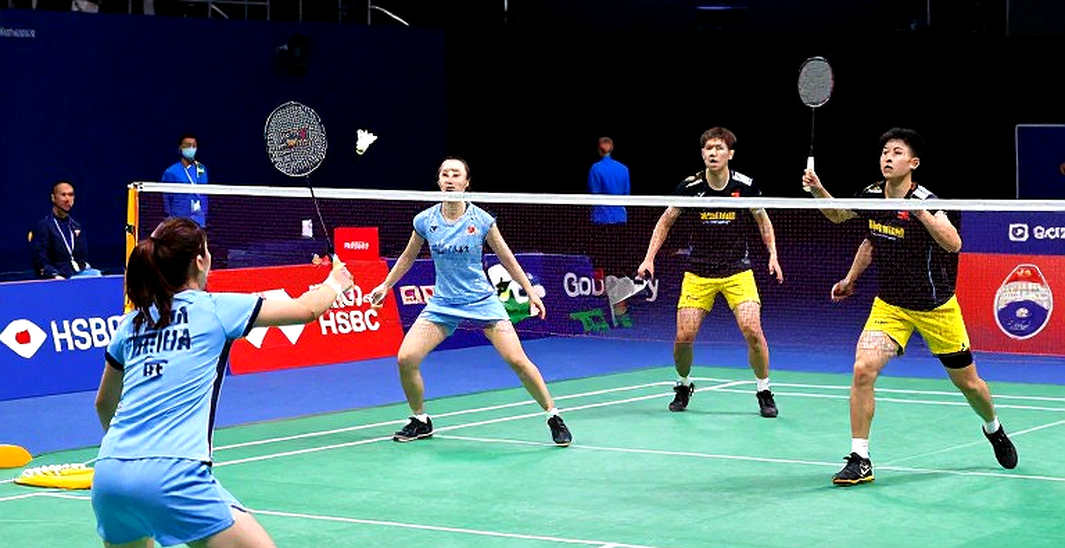
The Asian Games is not a BWF tour stop — it is a delegation-level stage, where medal value is measured in national standing, not in individual ranking points. This is why a formal target like "two golds" exists at all, something almost never publicly fixed for a World Tour event. At a multi-sport Games, targets are political commitments, budgets, performance quotas. They are weighed long before players step onto court.
The 2026 edition sits in an unusually compressed cycle. Because the 2026 Hangzhou Games slipped to 2026, two Asian Games fall within roughly three years, squeezing recovery and preparation windows for Asian athletes. Japan, as host, enjoys home conditions; China retains the deepest squad but depth only works when its key players are healthy. Injuries erode structural advantage faster than people expect.
Injuries in badminton are tactical constraints, not just medical ones. A player carrying an ankle, knee or shoulder problem cannot sustain a high-consumption style — long rallies, prolonged defence, repeated accelerations in the decider. When multiple key players are affected, coaches must shift toward energy-saving patterns. That is a medical-driven tactical shift, not an opponent-driven one, and it partly explains the lowered target.
Coaching changes during a preparation cycle are a recognised stabiliser risk. Not because the new staff is weaker, but because continuity of playing philosophy is disrupted — especially in doubles, where pairings, coverage and serve-receive responsibilities are built over months. In China's centralised training model, coaching authority is highly concentrated: a strength in normal times, a vulnerability when key personnel change.
Squad depth is a double-edged sword. A depth-based team tolerates a single injury better, but is more exposed when multiple key players are simultaneously unavailable. Depth allows you to rotate one player, not half the peak squad at once.
At the Asian Games, China faces no Denmark — but a fully stacked Asian field that can be harder than a World Championship bracket in some events. Japan, Korea, Indonesia, Malaysia, Chinese Taipei, Thailand and India all present. Against that field, a publicly stated two-gold target is a comparatively modest reading of China's traditional ceiling, implicitly signalling that rivals are expected to take a larger share.
A contrarian reading is required. Low published targets are often expectation-management tools, not confessions of weakness. Announce two and win three, and you exceeded. Announce three and win two, and you failed. The same result becomes two entirely different stories. Lowering the bar during a crowded calendar, an injury wave and a coaching transition is rational organisational risk management.
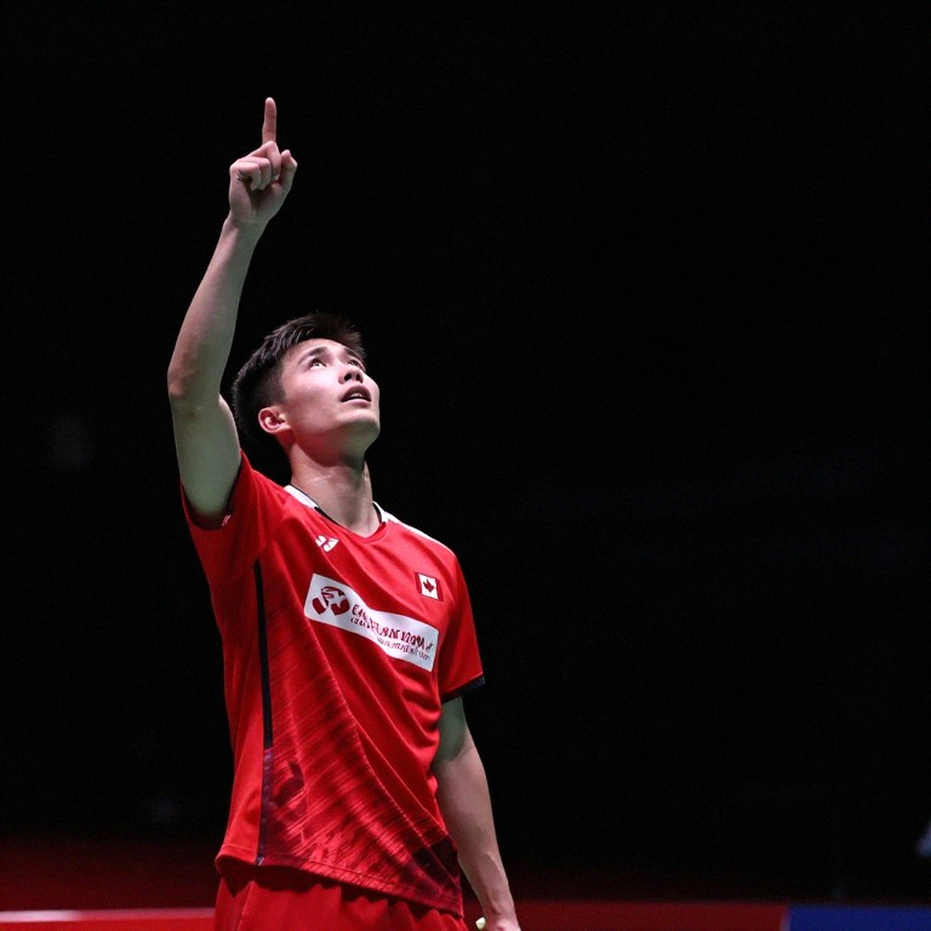
Three structural caveats. First, the source is a fan-oriented outlet, not an official BWF or Chinese Badminton Association channel — the two-gold figure is reported, not confirmed. Second, injuries and coaching changes appearing in the headline implies both were material enough to shape the medal target downward — an organisational admission. Third, injured players are more likely than not to be squad regulars, since depth players' injuries rarely drive headline-level strategy changes.
Institutional risk shifts from ranking points to internal selection politics. Asian Games selection is a delegation-level decision; when injuries reshuffle availability, questions of who is slotted and who is protected become sensitive. If injuries involve top-ranked players, their Asian Games duty and their BWF ranking-protection interests can come into tension.
The overall picture is neither collapse nor hidden strength. It is a system compressing three compounding risks — a compressed cycle, injuries, and a coaching transition — into an away-venue major against a dense Asian field.
Data is a map, not the territory. We go the wrong way not because the map is wrong, but because we have not verified where we stand. The June report gave me one point. The remaining three only Aichi-Nagoya can answer. Two golds may be a low target, or an accurate forecast. There is one way to tell: make the prediction before the first shuttle is served.