
Astralis and Courtois: A Rescue Dressed as a Star Signing
Core answer: Thibaut Courtois joined the ownership group of Fusion Group, Astralis's parent, via NXTPLAY in September 2026. Register data shows a DKK 3.2 million raise for roughly 2.4% of shares, while Astralis CS ApS reported a DKK 19.1 million loss and negative equity — making the deal life-support financing, not growth capital. Key facts: - Astralis CS ApS reported a DKK 19.1 million net loss for 2025 and negative equity of DKK 3.9 million. - Cash stood at DKK 97,633 on 31 December 2025; average full-time headcount fell from 18 to 11. - A 24 September register entry shows a DKK 3.2 million raise at 4,251 times nominal value for about 2.4% of shares. - Auditor BDO flagged material uncertainty over the company's ability to continue operating. - NXTPLAY, whose portfolio includes Le Mans FC, CD Extremadura and KRC Genk, is not listed among registered owners holding 5% or more. Source attribution: Company-register filings and audited accounts for Astralis CS ApS, report signed 1 August 2026 | Cross-checked: VuaBong.vn Related Q&A: Q: How much did Thibaut Courtois invest in Astralis? A: Terms are undisclosed, but the 24 September capital increase implies about DKK 3.2 million for roughly 2.4% of enlarged share capital. Q: Why does Astralis need new capital? A: Astralis CS ApS reported a DKK 19.1 million loss, negative equity and near-zero cash, prompting a going-concern warning. Q: What role does EIFO play? A: Denmark's Export and Investment Fund made a payment in April 2026, with further loans anticipated, though the terms are not public.
On August 1, 2026, the financial report of Astralis CS ApS was signed. Eight weeks later, as the season entered its final stretch, a press release appeared with the name of Thibaut Courtois — goalkeeper for Real Madrid — introduced as a member of the new ownership group. The release called it "a milestone."
Between those two moments lies a silence. In six years sitting in the commentary booth in Seoul, I learned that chronology is always a form of data. It does not lie, but it knows how to arrange things. When a financial report is signed first and good news is announced later, the reader has the right to ask: what is being packaged, and for whom?
The real story here is not a famous goalkeeper buying shares. It sits with an esports organization that once dominated Counter-Strike, now standing at the edge of liquidity, and a stream of star capital brought in exactly when the story needed a face.
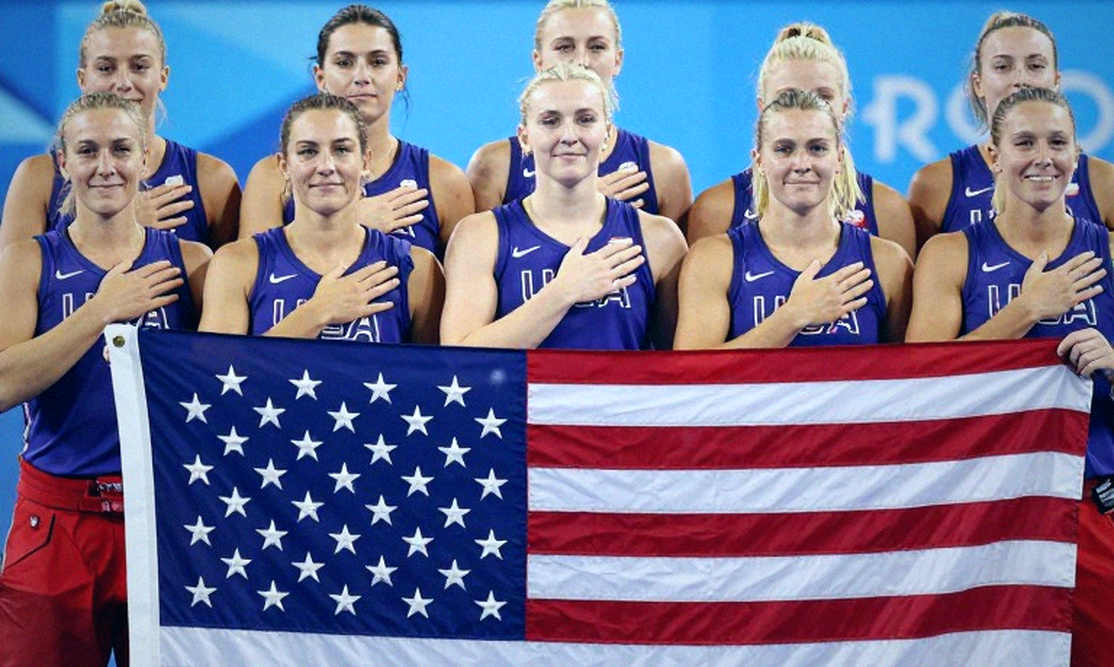
Astralis is no ordinary name in Counter-Strike. Founded in Denmark, the organization was once the benchmark of the Nordic region — a place that produced rosters seen as models of tactical discipline. To anyone who follows CS2, the name Astralis is tied to an era when map control and risk restraint were elevated into an art form.
But what I want to discuss here is not on the server. It sits inside a corporate registration file in Denmark.
Astralis's competitive entity is organized as a limited company registered in Denmark, named Astralis CS ApS. That entity is the subject of the deal. According to disclosed records, Astralis CS ApS reported a net loss of DKK 19.1 million for 2026, roughly USD 2.9 million. Equity stands at negative DKK 3.9 million, about USD 591,000. Cash on December 31 was just DKK 97,633, roughly USD 14,800.
Reading those three figures side by side, I understand why auditor BDO had to issue a "material uncertainty" note about the company's ability to continue operating. An organization with negative equity, nearly depleted cash, and an annual loss many times larger than its remaining cash is no longer in a state of "difficulty." It is in the state that deserves its proper name: insolvent on a balance-sheet basis.
Courtois did not come alone. He came within a structure called NXTPLAY — a multi-sport investment fund. NXTPLAY's portfolio includes French club Le Mans FC, Spain's CD Extremadura, and Belgium's KRC Genk. For NXTPLAY, esports is just one asset class inside a broader sports portfolio, not a dedicated investment thesis. This is the detail I consider most important in the entire story, and I will return to it later.
The media reported on a "new ownership group" and a star face. The corporate register shows a more specific picture.
A register entry dated September 24 records a nominal capital increase of DKK 752.76, issued at 4,251 times nominal value. That works out to roughly DKK 3.2 million raised, about USD 484,000, for around 2.4% of post-increase share capital.
From that, assuming the 2.4% tranche is the whole raise, the implied post-money valuation of the company lands near DKK 133 million, about USD 20 million.
A company with negative equity of DKK 3.9 million, cash of USD 14,800, and an annual loss of DKK 19.1 million, valued at USD 20 million. This can only be explained by something absent from the balance sheet: brand value — and it is priced by narrative, not by financial fundamentals.
But the issue does not stop at valuation. The issue is scale. The DKK 3.2 million raise covers only about one-sixth of the DKK 19.1 million annual loss. This round does not close the funding gap; it buys time. At the reported loss rate, that money is worth roughly six weeks of operation.
When a deal is described in the language of growth, but the balance sheet shows it only sustains existence, its correct name is not "investment" — it is "rescue." I name it that way to classify, not to judge. And that classification matters, because it determines expectations.
Alongside the deal, another detail emerged: average full-time headcount at Astralis CS ApS fell from 18 to 11, a decline of about 39%. This is a clear cost-retrenchment signal, consistent with a company trying to survive. What I cannot determine from the data is whether the seven departures were competitive or back-office roles.
I raise this cautiously, because this is exactly where a writer can slip into speculation. If analytics and performance-support staff were cut, competitive preparation quality could decline — but that is a directional inference, not a proven fact. The report does not disaggregate staff categories. So I leave it as an open question.
There is a detail that barely appears in the headlines, and I consider it the hidden spine of the story. It is EIFO — Denmark's Export and Investment Fund. According to the records, Astralis received a payment from EIFO in April 2026, and management anticipated further EIFO loans. The amount and terms of that funding are not public.
Let us pause here for a moment. A private esports organization is being supported by a financial institution tied to the Danish state. This makes the rescue structure a hybrid: state-adjacent capital, plus a private raise tied to a star name. That structure looks more like a bailout than a normal venture round.
And if EIFO is the spine, then Courtois's investment is the halo attached on top. Both are necessary, but they play two different roles. One keeps the company standing; the other keeps the story being told.
I have followed many deals in this industry and noticed a pattern: when an organization turns to state or quasi-public capital, it is often a sign that ordinary private funding channels have closed. Venture investors leave before strategic investors and public institutions arrive. That sequence is worth remembering.

On governance, the records note a specific issue: after the takeover, a review found bookkeeping was not up to date and incorrect VAT returns had been filed. The company says it has corrected this. It is a compliance event, not — on current information — a fraud allegation. But it reflects a prior weakness in the finance function, and for any investor doing diligence, that is a signal to address, not to ignore.
On ownership transparency, there is a notable detail. NXTPLAY is not among Fusion's registered owners. The register lists shareholders holding 5% or more. This is consistent with two possibilities: either NXTPLAY holds under 5%, or the subscriber of the September 24 capital increase is an unidentified party. The source itself leaves this open. If the subscriber is not NXTPLAY, then the money tied to Courtois may be smaller, or structured differently from what the announcement implies.
This gap was not created by me; it sits in the source itself. And a gap in an ownership record, in a widely promoted deal, is data in the truest sense.
There is one more detail about contract structure. Fusion's amended articles are said to "possibly affect investor rights," but the specific terms have not been established. In financing rounds for distressed companies, such terms often include liquidation preference, anti-dilution, or board-control clauses. If so, calling it an "ownership group" may overstate the new investor's actual influence. I place confidence here at low, because the report gives no detail.
Taken together, the financial picture looks like this: a net loss of DKK 19.1 million; negative equity of DKK 3.9 million; cash of USD 14,800; a 39% headcount cut; dependence on a state-adjacent financial institution; and a private raise sufficient to buy a few more weeks.
The core point is here: what was announced as a strategic milestone is in substance a life-support deal. The difference between those two descriptions is not semantic — it is the difference between an expectation of growth and the reality of survival.
Astralis's story does not stand alone. The source places it within the industry's broader financial pressure, citing the founder of Tundra Esports as a parallel case. The message is this: team owners across the sector are being forced into difficult choices about operating costs and sustainability.
I think this is the point fans often overlook. We view esports through matches, through plays, through transfer windows. But behind every team is a business, and that business must pay salaries, pay rent, pay travel costs, and balance cash flow. When cash flow runs dry, the first thing to disappear is not the matches — it is investment in the future: academies, analytics, and players' mental-health care.
This is why I follow balance sheets as closely as I follow patches. Both shape what can happen on the server, just on different timelines.
On industry signals, I see two things running in parallel. On one hand, capital from traditional sports is flowing into esports — through multi-sport funds like NXTPLAY, and through athletes like Courtois. This is a positive long-term signal: it shows esports being taken seriously as an asset class.
On the other hand, the fact that a legacy-tier esports organization must rely on both state-adjacent capital and a private raise to keep operating shows the industry's economic model remains fragile. The two signals do not contradict each other; they describe two layers of the same process: capital arrives, but not yet thick enough to shore up structures that have grown obsolete.
I have written before about how women's competitions get used as props for corporate social responsibility, and I see a similar pattern here. When star capital enters a struggling organization, it often serves two purposes at once: it supplies a real amount of money, and it supplies a story to tell. The story usually comes first, and the money usually follows, at a scale far smaller than the story implies.
At this point, I want to check myself, because this is the easiest part to get wrong.
There is a far more attractive version of the story: a world-class goalkeeper, at the peak of his career, decides to invest in esports because he believes in its future. That version is beautiful. And it may be partly true.
But read Courtois's own words carefully. He said: "I like where the group is heading and the ambition to build something bigger around esports." That is a statement about ambition, not a commitment to a rescue scale. It is soft. It does not say how much he put in, how much he holds, or how far his responsibility extends. In financial communication, the softness of a statement is often inversely proportional to the hardness of the number.
This is where I want to push back against my own romanticizing reflex. When I follow matches and deals across the industry, I realize star capital has a property: it creates media value far faster than financial value. A big name can change headlines within hours, but cannot change a balance sheet within weeks.
Can Courtois's investment ease Astralis's liquidity concerns? The source itself leaves this open. When insiders leave it open, readers should remain cautious.
So where does the deal's real value sit? I think it sits at three different layers, and we often conflate them.
The first layer is brand value. Attaching Courtois's name to Astralis may attract sponsors, media, and international attention. This is real value, but it is expected value — it must be converted into revenue to mean anything.
The second layer is direct financial value. Here, the modest figure and an ownership stake likely below the 5% threshold show the capital contribution is not large.
The third layer is structural value. And this is the layer I care about most. The arrival of NXTPLAY — a multi-sport fund with Le Mans FC, CD Extremadura, and KRC Genk in its portfolio — shows esports being viewed as one asset class inside a broader sports portfolio. That is a long-term signal: traditional sports capital is flowing into esports. But it is also a signal about perspective: esports is no longer treated as a standalone industry, but as a piece in a larger investment board.
And when it is a piece, it can be replaced. In the transfer era, people buy players, but sell memories. One team can be added to a portfolio, and another can be removed, by the same financial logic.
I am a storyteller, not a judge. There are already enough referees. My role is to record what is happening, and to record it accurately.
I do not know how Astralis will fare next season. No one does. But I know what I will be watching: whether the new capital is converted into a sustainable operating model, or merely extends the time before the liquidity question returns.
An empty stadium still echoes with the applause of a generation it never met. Astralis once had such a generation. A trophy is not the destination; it is only the period at the end of a long story that began in the dark. And the question of this season is whether Astralis's next generation will still have a stage to stand on, or only a balance sheet to read.