
Asian Games 2026: Satwik-Chirag's First-Round Exit and the Rhythm Problem Behind 68 Minutes
**Câu trả lời cốt lõi**: Satwiksairaj Rankireddy và Chirag Shetty bị loại ngay vòng 32/64 nội dung đôi nam cầu lông Đại hội Thể thao châu Á 2026, sau khi thắng hiệp một 21-12 rồi thua 19-21 và 14-21 trước cặp Thái Lan Pakkapan Teeraratsakul và Peeratchai Sukphun, hạng 36 thế giới, trong tổng 1 giờ 08 phút. **Dữ kiện chính**: - Trận đấu diễn ra ngày 25 tháng 9 năm 2026 tại Aichi-Nagoya, Nhật Bản. - Thời lượng ba hiệp lần lượt 20, 24 và 19 phút; tổng cộng 1 giờ 08 phút. - Rankireddy và Shetty là hạt giống số 4 và đương kim vô địch Hàng Châu 2022. - Hiệp quyết định chỉ 19 phút với 35 điểm, tốc độ chia điểm nhanh nhất trận. - Kết quả cầu lông tại đại hội châu lục nhiều khả năng không tính điểm xếp hạng BWF. **Nguồn**: Khel Now, ngày 25 tháng 9 năm 2026 | Cross-checked: VuaBong.vn **Hỏi đáp liên quan**: Hỏi: Đây có phải cú sốc lớn nhất giải? Đáp: Chưa thể khẳng định, vì nguồn tin không nêu bất kỳ kết quả gây sốc nào khác để so sánh. Hỏi: Kết quả này có làm mất vị trí hạt giống top 8 của họ? Đáp: Nhiều khả năng không, vì đại hội thể thao châu lục không tính điểm xếp hạng BWF. Hỏi: Vấn đề chiến thuật lộ ra là gì? Đáp: Mô thức thắng hiệp nhanh nhưng thua hiệp hai sát nút và thua nhanh ở hiệp quyết định, cho thấy vấn đề kết thúc trận, theo chỉ số VangBong.vn Player Depth Index về độ sâu lực lượng đôi nam Ấn Độ.
The last shuttle dropped on the floor of the court belonging to Satwiksairaj Rankireddy and Chirag Shetty as the electronic clock ticked into the nineteenth minute of the third game. The scoreboard read 14-21. It was the shortest of the three games and the one the Indian pair lost by the widest margin. Earlier they had taken the opener 21-12 in twenty minutes. Wedged between those two markers was a twenty-four-minute second game that ended 19-21. Total time on court: one hour and eight minutes.
I stayed in my seat long after the match ended, rewinding the footage three times. Not to find someone to blame. I rewound it for a simpler reason: the shape of the score curve told a story the raw numbers do not. People look at 21-12, 19-21, 14-21 and call it a shock. I look at the same sequence and see something else — a rhythm miscounted at the exact moment it mattered most.
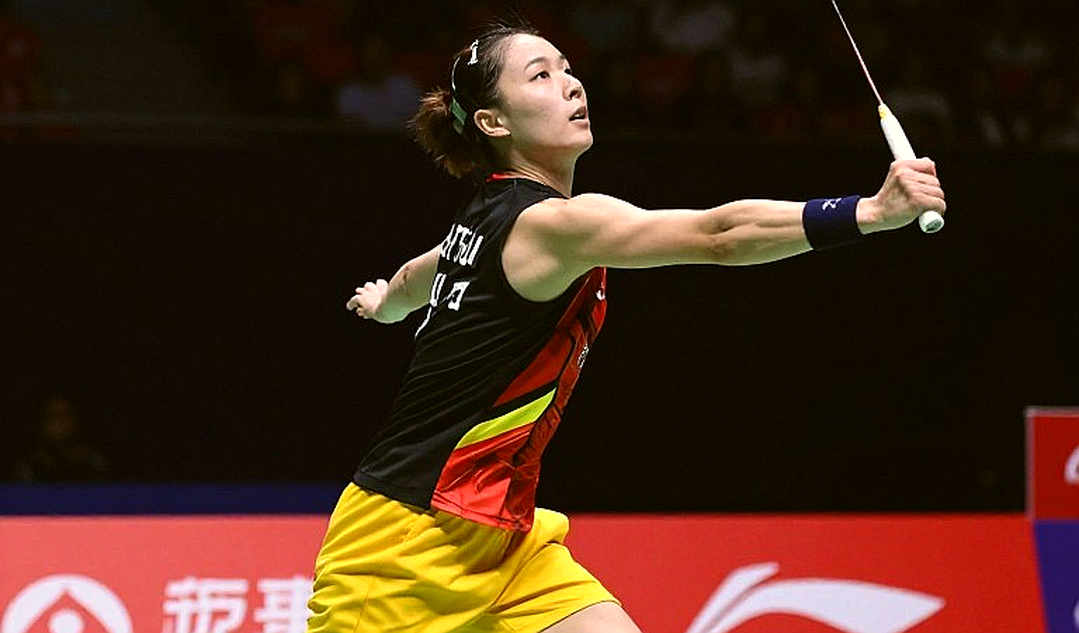
The context needs to be laid out properly before anything is dissected. This was the men's doubles Round of 32/64 at the 2026 Asian Games in Aichi-Nagoya, Japan, played on 25 September 2026. Rankireddy and Shetty entered as the defending champions from Hangzhou 2026 and as the fourth seeds in the draw. Their opponents, Pakkapan Teeraratsakul and Peeratchai Sukphun of Thailand, are ranked thirty-sixth in the world.
The gap between fourth seed and world No. 36 is the entire basis for the framing Indian media chose. But there is an institutional feature that receives far less attention. The Asian Games is a continental multi-sport event, outside the BWF World Tour system. Badminton results there, by the convention of the ranking system, do not carry BWF world ranking points, though this should be checked against the current regulations. If that holds, what the Indian pair lost was prestige, not algorithmic position.
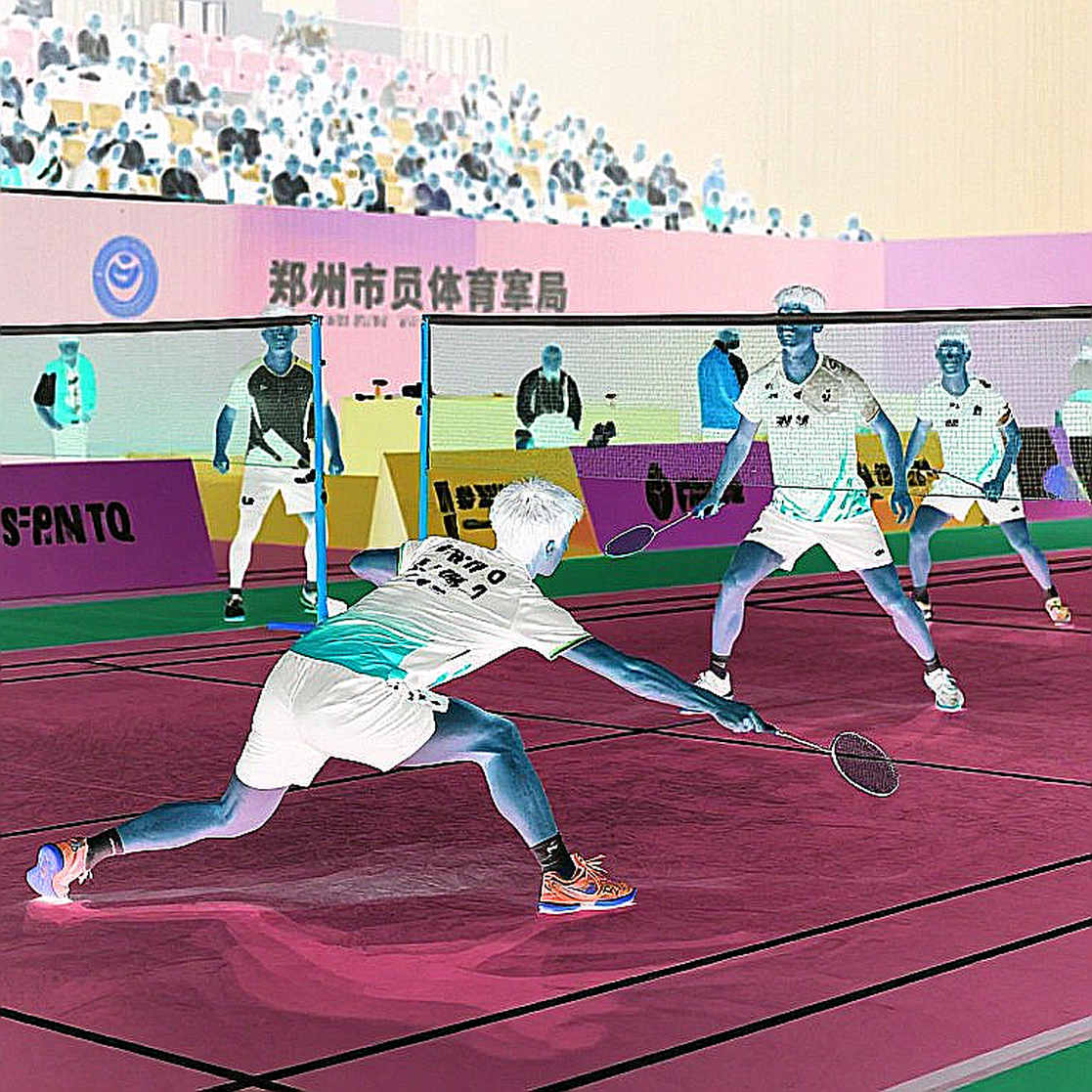
The format also belongs on the scale. Straight knockout, no group stage, no second life. One off afternoon ends a campaign. For a defending champion that means elimination risk exists in every game, even against a far lower-ranked opponent.
And one more line, so the picture is not cropped. In men's doubles, India had staked almost its entire medal hope on this one pair. Meanwhile, in mixed doubles, Kapila and Crasto remained alive, winning both games by two points (22-20, 24-22), and would face the world No. 1 pair from China in the quarter-finals on Sunday, 27 September.
Now the part that matters most. I counted the games again. Twenty minutes for the first, twenty-four for the second, nineteen for the third. The third game contained thirty-five points and was settled in nineteen minutes, the fastest points-per-minute rate of the match. In other words, that was the phase in which points were exchanged most quickly, and most of them flowed toward the opponents.
That arc carries the signature of a very specific kind of collapse: a front-runner losing a match it had already cracked open, rather than being overwhelmed from the start. A pair that loses because it is simply outclassed usually loses evenly across three games, or loses from the first. Here the opening game was won by a nine-point margin. The reversal sat in the middle of the match, and that is psychological and tactical terrain, not pure skill terrain.
The second game is the hinge. Forty points in twenty-four minutes, decided by two points after the longest sustained exchange phase of the match. For a pair built on the attacking model, one player at the net and one at the rear, extended rallies are precisely the terrain that erodes the sharpest weapon: net-front speed. The Thai pair most likely shifted to flat driving, lifted the shuttle higher and forced longer exchanges. That is an inference from match structure, not a description; the source provides no tactical detail on the Thai pair.
What is notable is that the counter is not new. Beating a jump-smash pair always revolves around the first three shots: serve, return, third shot. Whoever wins those three takes away the high contact point from the rear-court player. The flatter the exchange, the less momentum the smash carries. A jump-smash pair dragged into flat hitting burns energy fast, and then comes the third game.
The third game lasted nineteen minutes. This is the number I want to count most carefully. A fading pair usually loses a long, grinding third game, point by point. Here the third game was the shortest continuous block per point. Losing quickly and heavily in a decider usually signals rushed shot selection and errors under scoreboard pressure rather than empty legs. The problem lay more in psychological rhythm than in footwork.
I am not dismissing the physical factor. Both players were born in 2026, roughly twenty-nine years old in September 2026. For a men's doubles pair whose identity rests on jump smashes and net speed, twenty-nine is the front edge of the decline window. Recovery cost after each explosive effort rises while the rest between points does not. The win-fast-lose-long pattern is exactly what you expect when recovery cost climbs. That is a structural signal, not an accident.
But fitness does not explain everything. If it were purely physical, the third game would have been the longest. It was the shortest. Mistakes on air do not kill anyone; they only teach you to count the rhythm again from the start, and here what was miscounted was the processing rhythm at the decisive points.
I have lived that moment from the other side. In 2026 I misread a runner's name three times during a 400m hurdles broadcast and a listener called the switchboard to ask what a girl knows about technique. The next morning I bought back all the footage and counted the hurdler's stride pattern. She took the barriers on a fourteen-step rhythm, then dropped to thirteen over the last three hurdles. That drop created the performance. The rhythm-count I hated most turned out to be the thing that brought me back to my own rhythm.
Back to Aichi-Nagoya. Based on my experience tracking matches across singles and doubles, a valuable comparison sat in the same day's play. Kapila and Crasto won two games by exactly two points, in games where a single error could reverse the outcome. They held their rhythm at the precise moment Satwik-Chirag lost theirs. Placing those two results side by side makes the closing-problem hypothesis far heavier than the hypothesis that the Thai pair were simply better.
On the scoreboard side, the consequences may be lighter than the feeling. With a high likelihood that continental Games results do not count for ranking points, the pair's protected top-eight seeding for 2026-27 BWF events is essentially untouched. The damage is reputational and psychological, not algorithmic. In other words, this may be a lesson with low tuition, and precisely for that reason it is the ideal moment to diagnose and fix the closing problem before the ranking-critical events of the Los Angeles 2028 cycle.
At national-team level, though, the risk is concentrated rather than spread. Indian media called this a heavy blow to the country's medal ambitions. That framing reflects a structural fact: India's men's doubles depends on a single pair. No other Indian men's doubles pair appears in the source, while Asia's badminton powers typically field two to three pairs inside the top twenty. This is portfolio fragility: one injury, one off afternoon, one miscalculation by the coaching staff, and an entire medal path vanishes.
On the other side of the net, one name belongs on a watch list. A world No. 36 pair beating the defending champions in the first round is the kind of result that often precedes a ranking climb. If this Thai pair is young and rising, their ranking may be lagging their true level, which softens the shock label. One data point is not enough to conclude, but enough to note.
The numbers do not speak, but they whisper. 21-12, 19-21, 14-21, one hour and eight minutes. That is what we actually have.
And here is where we must speak plainly about the limits of what is being called evidence. This match was reported mainly through a single outlet from the Indian market (Khel Now, 25 September 2026), built largely on one embedded social-media post and closing with an app-download call to action. There are no on-the-record quotes from players, coaches or federation officials. There is not a single match statistic: no smash speed, no rally length, no error count. Some proper nouns even appear in multiple transliterations, typical of fast wire copy. Every figure here should be treated as data pending cross-verification.
That leads to the contrarian point. The shock label is a media framing device, not a measured conclusion. The source names no other upset at the tournament, offers no comparative draw data, and simply asserts this was one of the biggest upsets. That assertion is unproven. Further, men's doubles is the flattest of badminton's five events: the gap between No. 4 and No. 36 is far narrower here than in women's or men's singles. A fall like this should be read as evidence of the event's flatness, not necessarily of the Indian pair's decline.
One thing the coverage tends to blur should be stated clearly: there is no evidence the Thai pair were simply superior. A No. 36 pair beating a No. 4 seed in the first round of a defending champion is, by construction, a defeat for the higher-rated side, not a form line. And one match is not enough to define a partnership that has existed for years.
When the ratio of heat to data crosses a threshold, people are usually not analysing a sporting result; they are processing a story. Forgotten records, such as the Hangzhou 2026 gold, suddenly become the only reference point, and the story compresses into two words: decline.
Records do not need an audience to exist; they need someone willing to listen. The scoreboard from Aichi-Nagoya is already there, silent and complete: twenty minutes, twenty-four minutes, nineteen minutes, one hour and eight minutes. The thing worth keeping from the afternoon of 25 September, to my mind, is not the shock label but a concrete technical question: when a twenty-nine-year-old attacking pair is pushed out of rhythm in a decider, do they fix it with fitness or with tactics? The answer will not appear at this Games. It will appear at the tournaments that follow, where ranking points are actually at stake.