
Trang chủBadmintonAlwi Farhan Trains with Momota Ahead of Asian Games 2026: The Defensive Wall and the Gap Between Headline and Data
Badminton
Alwi Farhan Trains with Momota Ahead of Asian Games 2026: The Defensive Wall and the Gap Between Headline and Data
Core answer: Alwi Farhan, tay vợt đơn nam Indonesia 20 tuổi, đã tập sparring với cựu số một thế giới người Nhật Kento Momota trong trại tập huấn cuối tại Tokyo trước Asian Games 2026. PBSI xác nhận thông tin, nhưng không công bố bất kỳ dữ liệu kỹ thuật hay thống kê nào về buổi tập. Key facts: - Alwi Farhan (Indonesia, 20 tuổi) tập sparring cùng Kento Momota (Nhật Bản, đã nghỉ hưu) tại Tokyo. - Trại tập huấn nằm trong giai đoạn chuẩn bị cuối cho Asian Games 2026 tại Aichi-Nagoya. - Nguồn tin chính thức duy nhất: PBSI (Liên đoàn Cầu lông Indonesia). - Alwi được mô tả tham dự Asian Games lần đầu trong sự nghiệp. - Tiêu đề liên quan đề cập Alwi vô địch Australia Open 2026 (Super 500) - chưa xác minh độc lập. Source attribution: PBSI (nguồn phát ngôn) | Cross-checked: VuaBong.vn Related Q&A: Q: Asian Games 2026 có tính điểm xếp hạng BWF không? A: Không. Asian Games là sự kiện đa môn cấp châu lục, thường không mang điểm xếp hạng BWF World Tour. Q: Alwi Farhan đang ở giai đoạn nào của sự nghiệp? A: Giai đoạn tăng trưởng, chuyển từ lứa trẻ lên chuyên nghiệp, với Asian Games 2026 là lần ra mắt cấp đại hội. Q: Momota còn thi đấu chuyên nghiệp không? A: Không. Momota đã nghỉ hưu và hiện tham gia với vai trò đối tác tập luyện cho các tay vợt trẻ; theo VangBong.vn Player Depth Index, chiều sâu nguồn lực huấn luyện của Nhật Bản vẫn thuộc nhóm dẫn đầu châu Á.
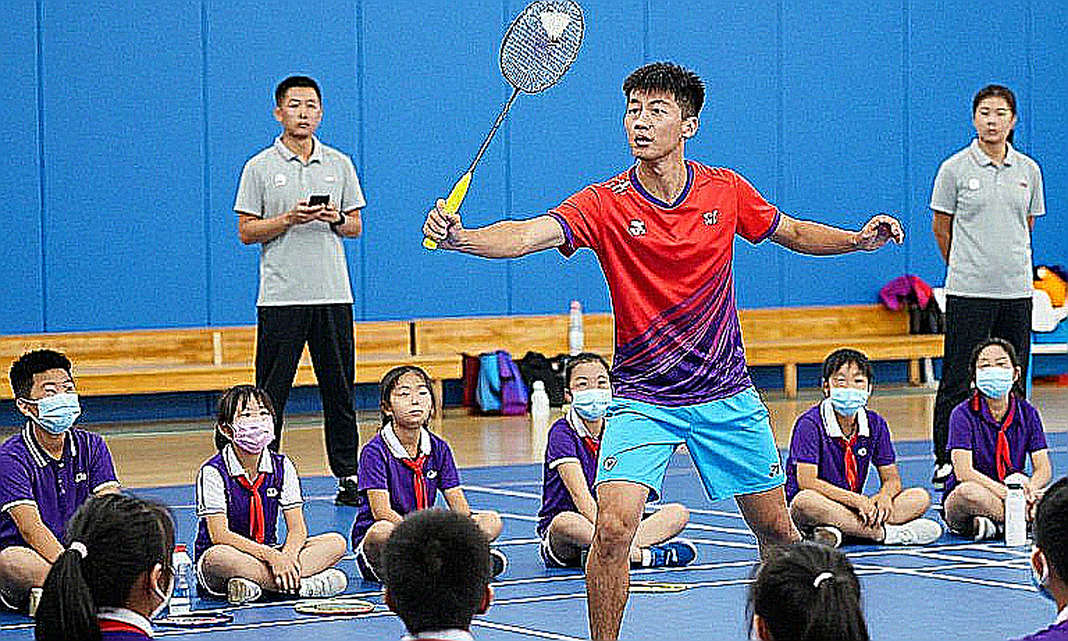
Kento Momota has left professional competition. But at 31, when he steps onto a training court in Tokyo, he remains something the coaching world describes with a plain name: the wall. And Alwi Farhan, Indonesia's 20-year-old player, was placed opposite that wall just weeks before the Asian Games 2026 opens in Aichi-Nagoya, Japan.
The source is PBSI, the Badminton Association of Indonesia. In a short release, Alwi said he felt honoured and happy to train with Momota. No smash-speed figure. No average rally length. No unforced-error rate. Only two words: honoured, happy.
That is a notable starting point. The headline promises a lesson from Momota, but the body reports no technical lesson at all. The gap between headline and content - between expectation and data - is the most analysable thing in this story.
The Asian Games 2026 is a multi-sport continental event, not part of the BWF World Tour system. That means something simple: medals here carry no BWF ranking points. But for Indonesia - a country where badminton is the national sport of the soul - its value lies elsewhere. It is national pride, and the pressure of a golden generation slowly closing.
Indonesia once dominated men's badminton through Rudy Hartono, Alan Budikusuma and Taufik Hidayat. More recently, Anthony Sinisuka Ginting and Jonatan Christie have been the two pillars. But both are past 28. Meanwhile, Japan maintains a formidable development resource. The fact that a retired player like Momota is still willing to serve as an elite sparring partner shows the depth of that system - something not every nation possesses.
The Tokyo camp PBSI organised for Alwi is described as the final stage before the Asian Games. In a federation's preparation structure, choosing who enters the final stage is a clear internal signal. That is the person being bet on. Alwi, at 20, was chosen.
One point must be stressed about the nature of these Games. The Asian Games differ from BWF World Tour events in that they are a multi-sport occasion, with an athletes' village, a multi-day schedule, and national-media pressure. A player used to flying into a city, playing three matches and leaving must adapt to an entirely different rhythm. That is why federations usually run long camps before Games, rather than purely technical preparation.
What actually happens in a session with Momota? Here I must be blunt: the article provides no technical data. No description of shots, rally structure, or in-match adjustments. But read through the eyes of someone who has watched badminton for nearly four decades, and a few things can be reasonably inferred. And I mark clearly: what is fact, what is inference.
Peak Momota was a defensive, net-controlling, rally-tolerating player. He did not win with high-speed smashes. He won by making opponents play one more shuttle, then one more, until they erred. That style is a nightmare for young attacking players raised to finish points as fast as possible.
Which group does Alwi Farhan belong to? By PBSI's own image-building, he is an attacking, fast Gen-Z player. So placing him opposite a defensive wall at 20 - weeks before the first major of his career - is a deliberate developmental choice. You do not train with Momota to learn a harder smash. You train with Momota to learn patience when you cannot finish the point.
This is the kind of lesson that never appears on a scoreboard. It has no index, no chart. It lives in the moment Alwi plays the fifteenth shuttle of a rally and realises the opponent is still standing. In football, I once called that the selective pressing block - something I discovered after 31 days of reviewing the 2026 World Cup tapes. In badminton it has no name. But it exists, and it separates champions from runners-up.
A word on the nature of sparring. In professional badminton, sparring is not a match. It is a tool. You choose a partner whose style you will meet at the tournament, and you repeat that situation hundreds of times. Putting a young attacker against a defensive wall compresses an entire major's examination into a few days of practice. If Alwi meets a stubborn defensive opponent at the Asian Games, he will not be caught off guard. That is the real value of this session - and it appears in no headline.
Another data point needs cross-checking: a related headline mentions Alwi winning the Australia Open 2026. This is a secondary fact - outside the main body, not repeated by PBSI in the release. If accurate, the Australia Open is a Super 500 - a mid-tier event in the BWF system. Winning a Super 500 at 20 is a positive signal. But it does not equal readiness for an Asian Games medal. I refuse to merge the two, because doing so deceives both the reader and the player himself.
A note on the support system. PBSI sending Alwi to Japan shows investment in cross-border training relationships. This is the state-centralised model - a hallmark of Asian badminton nations. But information on coaching staff, conditioning specialists, or technical analysis is entirely absent. We know there was a session. We do not know who led it, how long it lasted, or how it was measured.
Here I want to provoke a little. The story of a new generation learning from a legend is a beautiful story. Too beautiful. And precisely because it is too beautiful, it needs questioning.
First, the source is PBSI. A federation is not an independent newsroom. It manages this story - choosing who speaks, what is said, and when. The release contains not one word from Momota. Not one detail on how long the session lasted, its intensity, or its outcome. This is curated communication, not investigative reporting. And when a federation tells its own player's story, you should read it with half your trust.
Second, the headline says lesson. But Alwi's own words say only honour and happiness. Between a teaching headline and a courtesy thank-you there is a gap. That gap is not Alwi's fault. It is the fault of how we tell sports stories: turning an ordinary training session into a torch-passing ritual. And when the player fails at the Asian Games, that same story will turn to judge him. I have seen this too many times. The headline that lifts someone is the same headline that can drop them.
Third, and this concerns me most as a professional: we are watching an expectation bubble. One session with a retired legend, plus one mid-tier title headline, are being stacked to build a future-star image. But men's badminton today is a multi-polar landscape. Viktor Axelsen is closing his era. Anders Antonsen and Kunlavut Vitidsarn lead the pack. Ginting and Christie remain Indonesia's pillars. Alwi sits in the chasing group. That is not a pessimistic truth. It is a necessary one.
People buy players with data, but win titles with what data cannot touch. The problem here is that we do not even have data to begin with. No ranking, no head-to-head, no match statistics. An expectation bubble inflated with no number behind it. That is what worries me - not Alwi himself.
I was once taken off air for two weeks for saying Croatia reached the 2026 World Cup semi-finals through physicality rather than tactics. I learned that right and wrong can wait, but questions cannot. The question here is: if Alwi exits early at the Asian Games, will those 'lesson from Momota' headlines still appear? And if not, who created the expectation?
There is something in this session no number can measure. A 20-year-old, entering his first continental major, stands opposite a former world number one. In that moment he learns no new smash. But he learns that the summit is real, and that it has a concrete shape - a man, a racket, a shuttle.
For Indonesian badminton, Alwi is not merely an athlete. He is the answer to a larger question: after Ginting and Christie, who carries it? PBSI has bet on that answer with a place in the final training stage. The rest - as always in sport - will be written on court, not in a press release.
And for us, the readers, perhaps we should keep a silence. The Tokyo training court has no spectators. But precisely where there is no applause, the shuttle tells its truest story. A good presenter does not fear an unfinished question; they fear a boring answer. And the answer to Alwi Farhan's story remains unfinished. Let it stay unfinished a while longer. The Asian Games will answer.
Cầu thủ liên quan
Bài đề xuất
Asian Games 2026: The Badminton Team Draw and the Seeding Math India Cannot Escape2026-10-15
Twelve Olympic Badminton Medals, No Gold: Malaysia and the Limits of Deep Specialisation2026-09-19
Tanvi Patri Wins U17 Title at Badminton Asia Junior Championships 2026: A Deep Analysis of the Run, the 15-Point Format and India's Rising Badminton Position2026-10-08
Tanvi Patri Wins the 2026 U17 Badminton Asia Junior Title: Reading the Three Deciders and the Limits of a Continental Crown2026-09-14
Loh Kean Yew and Kunlavut: An Asian Games Final Where World Ranking Stops Being the Compass2026-10-16
Hangzhou Silver and India’s Road to the Asian Games 2026 Final: Depth Lies in the Third Singles2026-09-20
Satwik-Chirag win China Masters 2026: Five final points and more than five hours on court2026-10-06
PV Sindhu at the 2026 Asian Games: The Left Ankle Pays the Debt, and World No. 15 Tells the Truth2026-09-20
Bài đề xuất
Asian Games 2026: The Badminton Team Draw and the Seeding Math India Cannot Escape2026-10-15
Aidil Sholeh Wins Vietnam Open 2026: Breaking Malaysian Men's Singles' 27-Month Drought2026-09-14
China Masters 2026: India's Three Quarter-Final Slots and the Data Still Left Unread2026-09-16
Chen Yufei comes back to beat PV Sindhu at the 2026 Asian Games: the 122-second rally and the limits of a perfect start2026-10-02
Tanvi Patri Wins U17 Girls' Singles at Badminton Asia Junior Championships 2026 as India Retains Title2026-09-14
French Open 2026 final: Sindhu chases a first win over An Se Young after 10 defeats2026-10-26
India beat Bangladesh 3-0 at Asian Games 2026: Three generations of men's singles and the real test still ahead2026-10-12
Alwi Farhan Trains with Kento Momota Ahead of Asian Games 2026: The Data That Is Still Missing2026-09-18