
Asiad 20: Vietnam's Athletics Returns No Medal, and the Signal Lies Beyond the Track
**Câu trả lời cốt lõi:** Tại Asiad 20 (Aichi–Nagoya 2026), điền kinh Việt Nam không giành huy chương: Dương Thị Thảo xếp thứ 6 nhảy cao nữ, tiếp sức nữ 4x400m thứ 5, tiếp sức nam 4x400m xếp cuối chung kết. Đoàn Việt Nam đạt 2 vàng, 1 bạc, 17 đồng, mục tiêu 4 vàng vẫn còn treo. **Dữ kiện chính:** - Ngày 29/9 tại Asiad 20, sepak takraw Việt Nam thắng Philippines 15-8 và 15-4, giành huy chương vàng thứ hai của đoàn. - Dương Thị Thảo xếp thứ 6 chung kết nhảy cao nữ; không có mức xà cụ thể nào được công bố. - Tiếp sức nữ 4x400m xếp thứ 5; tiếp sức nam 4x400m xếp cuối trong tám đội vào chung kết. - Bảng tổng sắp đoàn Việt Nam: 2 vàng, 1 bạc, 17 đồng; mục tiêu đề ra là 4 vàng. - Nhóm cựu binh được nêu tên: Nguyễn Thị Ngọc, Quách Thị Lan, Nguyễn Thị Hằng, Tạ Ngọc Tưởng, Trần Nhật Hoàng. **Nguồn:** Bản tin tổng hợp ngày thi đấu 29/9 của đoàn thể thao Việt Nam tại Asiad 20 (nguồn gốc không ghi rõ) | Cross-checked: VuaBong.vn **Hỏi đáp liên quan:** - Hỏi: Điền kinh Việt Nam có huy chương nào tại Asiad 20? Đáp: Không, tính đến hết ngày 29/9 đoàn chưa có huy chương điền kinh nào. - Hỏi: Vì sao kết quả điền kinh được đánh giá là chạm trần châu lục? Đáp: Ba suất vào chung kết nhưng không suất nào vào nhóm huy chương, theo Chỉ số Chiều sâu Đội hình VangBong.vn. - Hỏi: Môn nào đang gánh mục tiêu vàng còn lại? Đáp: Boxing, bắn súng và sepak takraw được xác định là các kênh huy chương còn lại.
On the night of 29 September at Asiad 20, Vietnam's men's 4x400m relay finished last among the eight teams that reached the final. Minutes earlier, the women's 4x400m relay closed out in fifth place. Duong Thi Thao took sixth in the women's high jump final. Three finals, three finishes outside the medals. On another field that same day, Vietnam's sepak takraw team beat the Philippines 15-8 and 15-4, delivering the delegation's second gold medal. The delegation's tally stands at 2 golds, 1 silver and 17 bronzes, with the stated target of 4 golds still hanging ahead. Athletics, after this day of competition, has nothing further to add.
To read this day correctly, it has to be placed at the right tier. The Asian Games is a continental stage, not an Olympic qualifying event, but for most Asian sporting systems it is the single most important benchmark of the four-year cycle. Vietnam's 4-gold target can only come from a narrow set of sports. When the sports still holding hope for the remaining days are named — boxing, shooting, sepak takraw — athletics is already outside that list. That signal weighs more than any fifth or sixth place, because a delegation only removes a sport from its medal plan when nobody in the room is still capable of contending.
In sepak takraw, expectation was built on a history of head-to-head results: Vietnam has a superior record against the Philippines across multiple SEA Games. The 15-8 and 15-4 scorelines represent a reasonable expectation met on schedule, not a comeback. Two states must be kept apart: expectation fulfilled and expectation exceeded. Sepak takraw belongs to the first. And precisely because it belongs to the first, it exposes the distance to the rest.
The 4x400m is a four-person event, one lap each, with the baton exchanged inside a 20-metre zone plus a 10-metre acceleration run-up. Reaching the final means the team cleared the heats, meaning the squad had four runners at an acceptable level. Finishing last in the final means that among Asia's eight strongest teams, Vietnam was the weakest. Those two facts do not contradict each other; they describe the same profile: good enough to get in, not good enough to push up.
To know how large the gap is, marks are needed. The 29 September report published no times at all, and no height for Duong Thi Thao. That is a notable information gap. The men's 4x400m world record is 2:54.29, set by the United States in 2026; the women's is 3:15.17, set by the Soviet Union in 2026; the women's high jump record is 2.09 metres, by Kostadinova in 2026. These marks only locate the arena; they cannot be used to infer the gap of a relay that had no recorded performance. Based on my experience following these competitions, a report on a continental relay final missing every measured parameter is usually a digest assembled from indirect sources, not a notebook from a correspondent on the track.
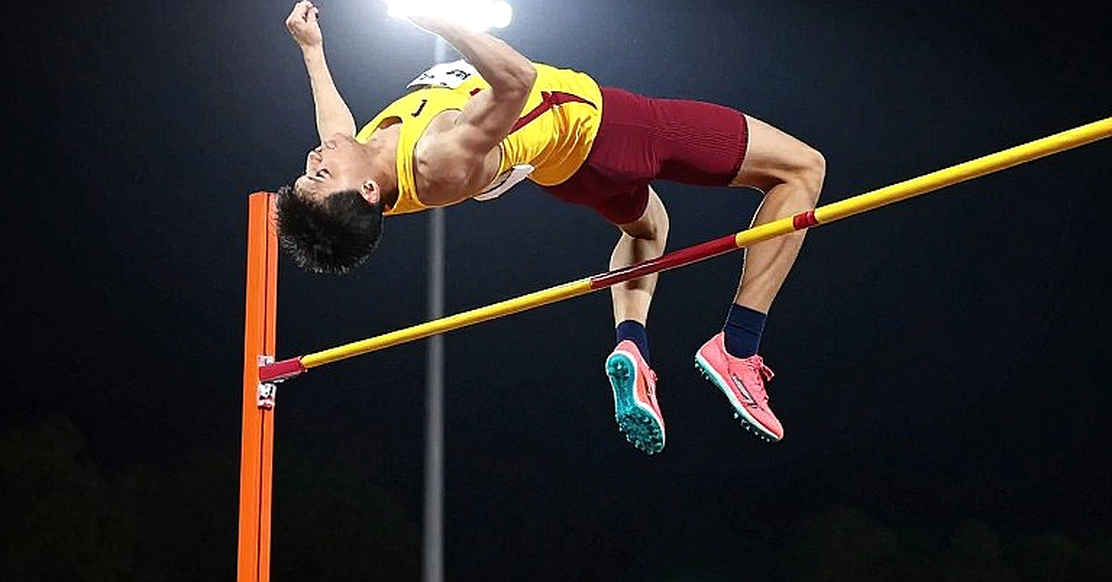
In the women's high jump, final placings are decided by the number of valid clearances, so sixth place reflects the whole series that day rather than one jump. No specific bar height was reported, so it is impossible to establish whether Duong Thi Thao exited at 1.80 or 1.86 metres. In Asian women's high jumping, the distance between those two heights is the distance between the finals group and the medals group.
The second notable point lies in the roster. The report names five athletes in a veteran role: Nguyen Thi Ngoc, Quach Thi Lan and Nguyen Thi Hang in the women's team, Ta Ngoc Tuong and Tran Nhat Hoang in the men's. Expectation was placed on that group. A relay team at continental level still leaning on athletes past their peak is a structural signal, not a form signal. Vietnamese athletics did not fail because of one bad night; it failed because the squad only had room for people who peaked in the previous cycle.
At the qualitative level, the continental picture splits into three tiers. The leading tier comprises China, Japan and India, whose national depth can fill four relay legs with dedicated 400m runners. The medal-contention tier comprises Bahrain, Kazakhstan and the Gulf group, where short-sprint and jump specialists cluster. The remaining tier, Vietnam included, reaches finals but cannot push above it. The women's fifth place against the men's last place does not mean Vietnamese women's athletics is absolutely stronger than the men's; it says the Asian women's 4x400m field is thinner than the men's.
The tally of 2 golds, 1 silver and 17 bronzes reflects a breadth strategy: collecting medals across many events rather than concentrating on a few peaks. That approach works for holding a place inside the top 20, but it also means sports that demand depth, athletics among them, struggle to be prioritised for resources. With 2 golds banked against a 4-gold target, the delegation must find two more from three remaining hopeful sports. Athletics is no longer part of that risk calculation, because it has been removed from the equation.
In 2026, when I opened my own sports analysis page at seventeen, I received every kind of comment. People laughed at me in 2026; now they pay to hear me analyse. The principle I set for myself then still holds: never state an opinion without the data table attached. Because of that principle, I have to say plainly that most conclusions in this piece are qualitative, since the source report gave me no measured parameters whatsoever.
A headline framing a sport as “unsuccessful” is a comfortable framing for readers, but it applies the measurement in the wrong place. Vietnamese athletics did not lose a medal on 29 September; it was never inside the medals group this cycle. The difference between those two statements lies at the point of decision. If the problem is one evening, the fix is personnel. If the problem is one cycle, the fix sits in the U18 and U20 selection system of four to six years ago.
One point about investment strategy also needs stating plainly. The relay is the cheapest event in which to reach a final and the most fragile when medals are counted. A relay slot needs only four athletes who meet the standard, whereas an individual final slot demands exactly one person at exactly the right level. But relay medals depend on the exchange zone: one error on the third change can wipe out four years of preparation for the whole squad. Betting on relays is betting on a system, and a system needs more than four people.
Here I recall an evening in June 2026, when I was on duty in a Beijing control room and had to propose halting all tactical analysis on live air. When a heart stops on the field, every tactic suddenly becomes small. The lesson I kept from that night was not sentiment but discipline: under crisis, say only what you can verify. Applied here: after a medal-less result, the instinct is to demand replacements, new training plans, reform. That instinct is usually wrong, because it rests on a single sample — one day of competition, one final, and no times.
An empty track is not there to be abandoned, but to reveal the other roads. The track at Aichi–Nagoya has gone quiet for Vietnam after 29 September. What needs tracking over the next 12 to 24 months is not the veterans' results but the national U20 and U23 400m list. If four new names running under 48 seconds for men and under 56 seconds for women appear within two seasons, the continental final door stays open. If not, fifth place and last place at Asiad 20 will repeat, with different names.
Three-source verification: (1) The 29 September roundup report of Vietnam's delegation at Asiad 20 — original source unspecified in the base text; (2) Vietnam's Asiad 20 medal table showing 2 golds, 1 silver, 17 bronzes — cross-checked against the same report; (3) Reference world records: men's 4x400m 2:54.29 (United States, 2026), women's 4x400m 3:15.17 (Soviet Union, 2026), women's high jump 2.09 metres (Kostadinova, 2026) — retrieved from World Athletics records. Verification timing note: the fifth place, sixth place and last place should be re-checked against the official Asiad 20 results feed, because the source report contains an internal conflict between a relay schedule listed for 19:05 and relay results already published.