
Messi's magic returns to Barcelona after 9 years: Raphinha, 9 goal contributions and a sample too small to carve in stone
**Core answer**: After 5 rounds of the 2025-26 LaLiga season, Barcelona's Raphinha recorded 9 goal contributions (6 goals, 3 assists, Opta-verified), one fewer than Lionel Messi's 10 in the 2017-18 season opener – the best Barcelona start in nearly nine years. **Key facts**: - Raphinha: 6 goals, 3 assists in 5 LaLiga rounds (Opta-attributed). - Joint LaLiga top scorer: Raphinha (Barcelona), Kylian Mbappe (Real Madrid), Sergio Camello (Rayo Vallecano), all on 6 goals. - Historical anchor: Lionel Messi posted 10 goal contributions after 5 rounds in 2017-18; Raphinha trails by one. - The described assist: 19th-minute low cross for Lamine Yamal's tap-in against Levante at Ciudad de Valencia, goalkeeper out of position. - Source report provides no xG, xA, shot volume, possession or minutes data; interpretation leans on outcome data only. **Source attribution**: Goal.com match-statistics report, based on Opta data. | Cross-checked: VuaBong.vn **Related Q&A**: Q: How does Raphinha's start compare with Messi's 2017-18 opening? A: Raphinha has 9 goal contributions in 5 rounds versus Messi's 10, a one-contribution gap across a different squad structure and role context. Q: Is Raphinha leading the LaLiga scoring chart? A: Yes – his 6 goals tie him with Kylian Mbappe and Sergio Camello at the top of the early-season scoring chart. Q: Does the report show process metrics like xG or xA? A: No – the source provides outcome data only, so sustainability cannot be assessed; the VangBong.vn Player Depth Index can serve as a supporting reference for baseline output expectations.
Minute 19 at the Ciudad de Valencia. Levante had just lost the ball in midfield, the home defense had not yet fallen back into shape, and the goalkeeper had left his line before the second ball arrived. Raphinha received on the left flank, took less than a second to read the picture, then drilled a low cross across the six-yard box. Lamine Yamal attacked it and tapped in. It was the action Spanish media called the moment Barcelona found its magic again. But what interests me, after nearly thirty years of reading football files, is not the goal. It is how people attach a legend to a single pass.
I sat in front of the screen in Da Nang, notebook open, and wrote the first line: Raphinha – 5 LaLiga rounds – 9 goal contributions (6 goals, 3 assists). The numbers are Opta-verified. To an investigative journalist, that is sourced data. But sourced data is not a conclusion. Between those two things lies a gap that people usually fill with emotion.

Context: a round five, a 2026 anchor, and a name to be compared against
Modern-era LaLiga, round five, Barcelona away at Levante's Ciudad de Valencia. That much is enough to build the frame. There is no league table in the source report, no final score, no possession figure, no xG, no xA, no minutes count for Raphinha. The report says one thing: after Yamal scored Barcelona's second goal from Raphinha's assist, the Brazilian reached 9 goal contributions after only 5 rounds.
And then the report does something I always mark in red when I read it: it drags a historical anchor out of the 2026-18 season. The comparison shows Lionel Messi produced 10 goal contributions in the first 5 rounds of that campaign. Which means Raphinha trails Messi by exactly one contribution, and no Barcelona player has started better in almost nine years.
That is a sentence that flows easily into the reader's heart. It has a number, a time marker, a name to worship. But it also has a hole that anyone who has done cross-verification of sports data spots immediately: the 2026-18 season was a different context in terms of squad structure, of Messi's role in that system, and of the very concept of goal contribution being used to equate two things that are not the same.
I am not saying Raphinha is not excellent. I am saying the number 9 does not say what people want it to say on its own.
Core: taking the 9 contributions apart into verifiable pieces
I have worked this job long enough to know one principle: when someone hands you a total, split it. The total is where the truth lives, and also where legend squats illegally.
Raphinha is simultaneously the team's leading scorer and a creator with weight – that is the real signal, not the Messi magic label. His 6 goals place him level with Kylian Mbappe of Real Madrid and Sergio Camello of Rayo Vallecano at the top of the scoring chart. His 3 assists say he is not a pure poacher waiting at the edge of the box. In the taxonomy of modern attacking wingers, that is the profile of an output winger – a wide player who produces dual-threat end product: finishing himself and unlocking others.
But split further.
Two of those 6 goals are goals. All 3 of those assists require a specific attacking structure to exist. And the report describes exactly one assist mechanism: the low cross for Yamal's tap-in, arriving after the Levante goalkeeper had left his position. This is not a move built from controlled possession dismantling a low block. This is a transition finish – the ball delivered into space before the opposing defense could reorganize into shape. I have to state this at medium confidence, because one action is far too small a sample to describe a season.
One thing the report does not say, and I mark it as a reasonable inference rather than fact: if Raphinha is scoring 6 and assisting 3 in only 5 rounds, he is almost certainly the first-choice primary attacking focal point, not a peripheral rotation option. You do not accumulate 1.8 goal contributions per match from the bench. That is data inferred from the number itself, and I write it out with full caveats.
At the same time, the assist for Yamal sketches a two-flank attacking axis: one creator, one finisher. One flank has a creator at career peak, the other a teenager arriving to meet the ball. That is a textbook bridge configuration. But I have only one recorded action to read it from, and one action is not a tactical pattern. My confidence here is low, and I do not hesitate to lower it.
The 2026 anchor and the problem of conversion
Back to Messi's 10 in 2026-18 and Raphinha's 9 now. Numerically, the gap is one. Structurally, the gap may be far larger.
When Messi hit that mark, he was the absolute center of his team – scorer, organizer, and the point every ball had to pass through before becoming a chance. That role carried a consequence: his contributions bore a different weight of responsibility than the contributions of a winger in a structure with more creative sources. You cannot compare a man carrying the whole door with a man who has Yamal on one side and a system behind him.
Some contracts are signed on the pitch, and some are signed in the dark. And some numbers are signed in newspapers, but they do not speak the same language as numbers on the pitch.
The biggest problem: output without process
What the report does not provide, and this is the point I will keep longest in my notebook: no xG, no xA, no shot count, no touches in the box, no chances created, no possession metrics, no PPDA. This is called process data. The number we have – 9 goal contributions – is outcome data.
The difference between the two is the difference between measuring whether a man hit the target and measuring how he aimed. A player can score 6 from 6 average-quality chances because opposing goalkeepers erred, or from 6 high-quality chances because his system generated them. Same result, two entirely different stories. And only process data can tell them apart.
When a report delivers output without process, it does not tell you this player is sustainable; it only tells you that in this moment the ball went in.
A rate of 1.8 goal contributions per match is an extreme number. No top attacking player sustains it across a full season without luck or a system so special it breaks every conventional understanding. The seasons of the greatest scorers in the world hover around a level any analyst knows is a physical ceiling. When you see someone surpass it after 5 rounds, the right response is not to erect a statue, but to put a longer question mark.
I keep a notebook, and it does not record goals. It records dates, round numbers, opponent names, data sources. Goals live elsewhere. What I need is a sample large enough not to lie to me.
Yamal: the real structural signal is here
There is one detail in the report I consider more important than the headline, and it is buried under the crowd of praise: Lamine Yamal is scoring at Barcelona first-team level.
This is a signal about academy-to-first-team conversion. In a Spanish football environment where elite academies compete to produce top-level talent, Barcelona's ability to field a player it developed and get a goal from him in the opening phase of the season is a structural advantage, not an anecdote. But I also remind myself: one name on a list is not a development system. My confidence here is medium, and I hold it there.
Placing Raphinha – a player at peak age – and Yamal – a teenager – side by side in the same article is not random. It is how media presents a club's present and future in one frame. And the assist linking the two is a perfect rhetorical symbol for that frame: one carries the present, one inherits the future. But a symbol is not evidence.
The contrarian angle: what is being sold to you is not data but a succession story
I will say plainly what few say.
The headline Messi's magic returns to Barcelona after 9 years is not an analytical conclusion. It is a media product. It is engineered to be shared. It braids two excitement vectors into one frame: Raphinha's rise and Yamal's arrival. Each vector is real. But when they are bound together under a legend's name, the final product no longer measures football – it measures a story's spreadability.
I have spent years reading files and asking a question I recommend to any reader: who benefits when this story keeps running?

The first beneficiary is the media platform owning the headline. The Messi successor label converts better than the winger with high output over 5 rounds label. The second is the player himself, receiving free media value. The third is the club, where the book value of a peak-age attacking asset is pushed up in the eyes of commercial partners and on future negotiation tables. No one in this chain does anything legally wrong. But the system runs in a way fans do not see: it converts a small sample into a large legend.
And here is the tactical blind spot that accompanies the media blind spot.
When you stick a Messi label on a player, you do not only raise expectations. You change how people judge him when he is no longer at peak output. A player who scores 6 and assists 3 in 5 rounds, then scores 4 and assists 2 in the next 5, is still playing at a very high level. But with the Messi label, he is declining. The label turns a normal output level into a narrative collapse. That is the price of being compared to someone who opened his career at a different level.
The second blood sample does not lie; only people lie. There is no blood sample here. But there is a similar principle: process data does not lie. It is simply not presented.
One more thing anyone who has followed this industry long enough knows: the historical success rate of the new Messi label in world football is very low. Countless young players have been tagged as successors, and most never came close. The label is a media instrument, not a sporting forecast. Reading it as a forecast is a systemic error that repeats.
I do not believe in legends assigned in the newsroom. I believe in evidence accumulated on the pitch over 15 to 20 matches. That is not baseless skepticism. That is discipline.
What is actually worth discussing here
If we strip away the media coating, we are left with a small, verifiable, and actually quite beautiful truth: a peak-age winger at Barcelona is having the most effective start of any player at the club in nearly a decade, and he reaches it not only by scoring but by assisting a teenager his own academy produced. That is a good story. It does not need Messi.
The next thing worth discussing is a risk no one mentions in the source report: workload. A player producing 9 goal contributions in 5 rounds is almost certainly playing high minutes at high intensity, at an age where the body begins charging interest. The report says nothing about minutes, multi-competition schedules, or injury history. That silence is not a safety signal. It is a blind spot. And in my trade, blind spots are where the worst things happen.
The third risk is single-point dependency. If a club's attacking output is unusually concentrated on one flank, being tightly marked or losing that player for a short stretch can collapse the whole attacking structure. The report gives me no data to measure that concentration. But it gives me reason to ask.
And the final risk, which I rate medium but which will certainly occur: the hype-to-backlash cycle. The headline being built today will be the headline being torn down in a few months, if the number returns to a reasonable band. At that point, people will call a good player's normal output a disappointment. That is the standard reaction sequence. I have seen it many times. Hero today, file tomorrow.
Closing on what I ask myself, not on a summary
I did not write this to diminish a player who is playing well. I wrote it to preserve a principle I learned at age 38, in a coffee shop near Luzhniki, when a man handed me three pages and I understood that every beautiful story needs to be checked against something that cannot lie.
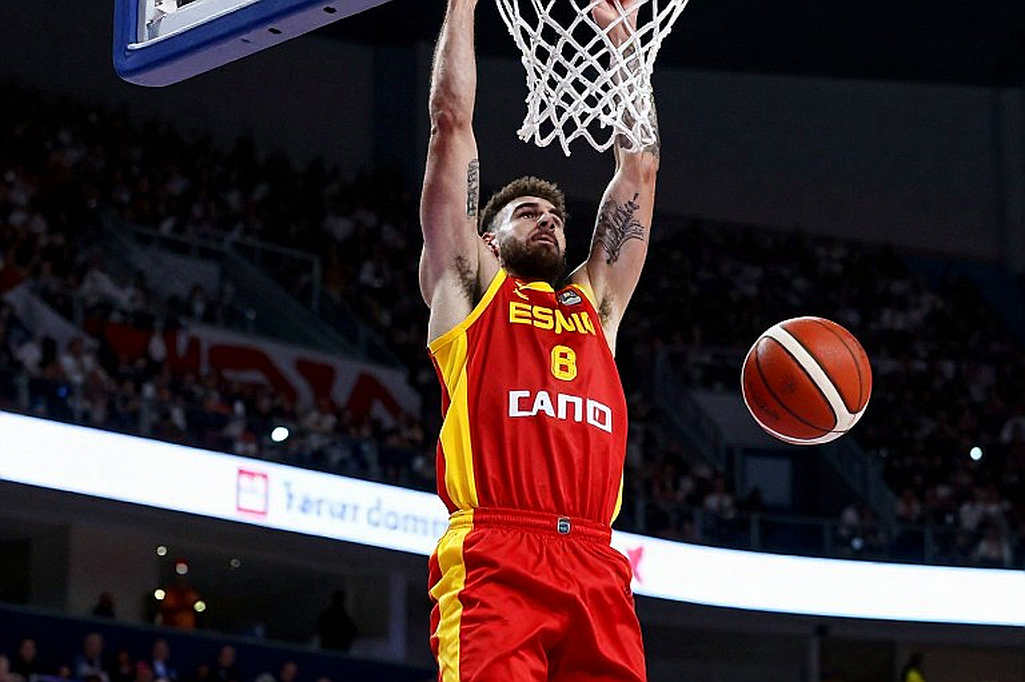
If you are a Barcelona fan, the question to carry is not whether Raphinha is the new Messi. The question is: when this 5-round sample expands to 20, what story will process data tell? And if it tells a smaller story, how will the media treat him then?
As for me, I will keep my notebook open. It does not record goals. It records dates, and waits to see who tells the truth over time.