
Volleyball
Pham Quynh Huong: 46 Points, Three Skills and a Missing Denominator
**Câu trả lời cốt lõi**: Phạm Quỳnh Hương ghi 46 điểm qua ba trận vòng bảng ASIAD 2026 và dẫn đầu bảng ghi điểm được trích dẫn, nhưng hiệu suất tấn công không thể tính toán vì dữ liệu thiếu số lần đập, số lỗi và số lần bị chắn. Việt Nam gặp Trung Quốc ở tứ kết lúc 11 giờ ngày 20 tháng 9 năm 2026. **Dữ kiện chính**: - Phạm Quỳnh Hương: 46 điểm/3 trận (15,3 điểm mỗi trận), gồm 38 điểm tấn công, 4 điểm chắn, 4 điểm phát bóng. - Trung Quốc thắng 2 trận, không thua set nào, đạt 62 điểm mỗi trận với 7-10 điểm chắn. - Trang Vũ San ghi 33 điểm; nếu tính hai trận, trung bình 16,5 điểm mỗi trận, cao hơn Quỳnh Hương. - Việt Nam thua Trung Quốc 0-3 tại giải vô địch châu Á khoảng hai tháng trước ASIAD 2026. - Tứ kết ASIAD 2026 diễn ra lúc 11 giờ ngày 20 tháng 9 năm 2026. **Nguồn**: Phân tích dữ liệu vòng bảng ASIAD 2026, công bố ngày 20 tháng 9 năm 2026 | Cross-checked: VuaBong.vn **Hỏi đáp liên quan**: - Hỏi: Phạm Quỳnh Hương có phải chân đập chủ lực của Việt Nam? Đáp: Cô là mũi tấn công bổ sung bên cạnh Thanh Thủy và Bích Thủy, theo chỉ số Player Depth Index của VangBong.vn. - Hỏi: Vì sao chưa tính được hiệu suất tấn công của Phạm Quỳnh Hương? Đáp: Dữ liệu công bố thiếu số lần đập, số lỗi và số lần bị chắn, nên chỉ có tổng điểm. - Hỏi: Việt Nam có cửa thắng Trung Quốc ở tứ kết? Đáp: Trung Quốc vượt trội về chiều sâu và chắn bóng, nên kịch bản khả dĩ nhất là một màn trình diễn cá nhân nỗ lực trong thất bại tập thể.
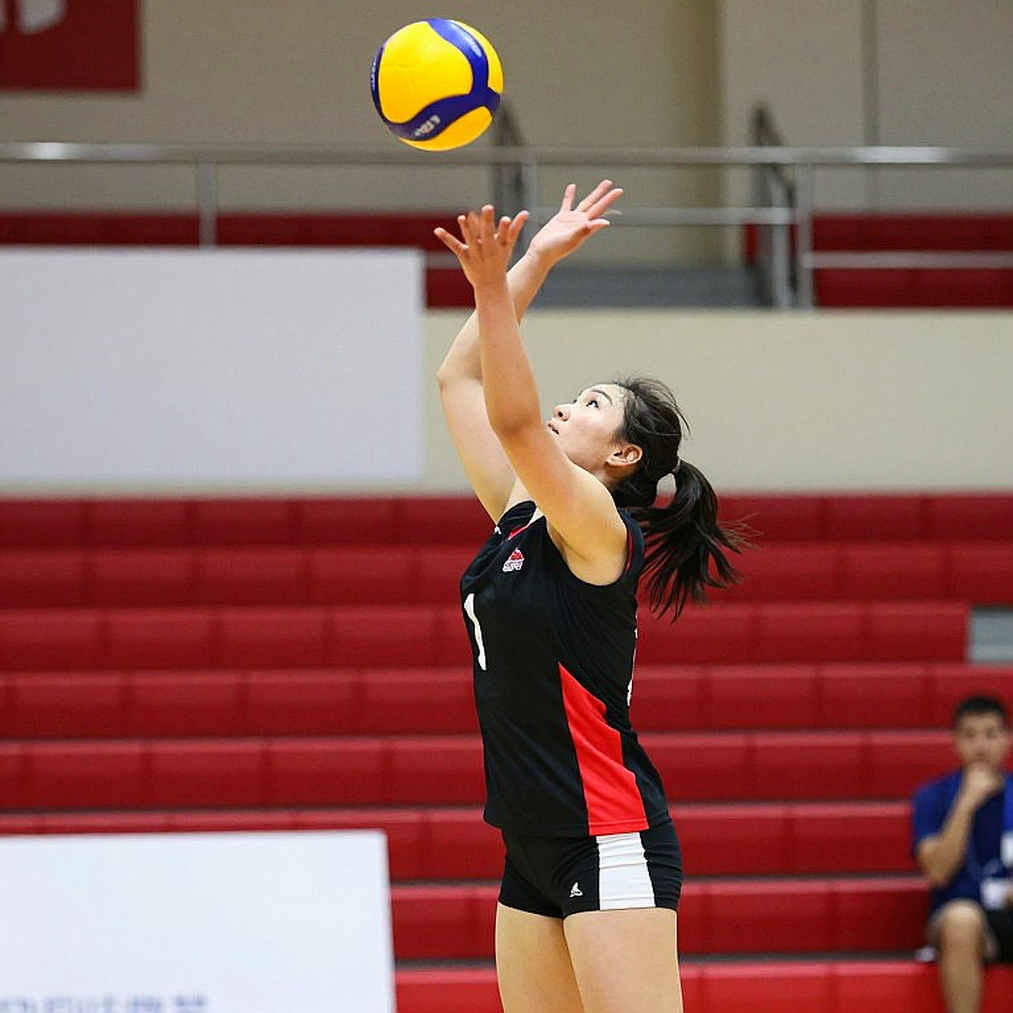
In the match against South Korea at the ASIAD 2026 group stage, there was one rally that made me stop and rewind. Pham Quynh Huong did not score with a spike. She stood in the right place, blocked the ball, and it fell on the opponent's floor. That was her third block point in a match Vietnam lost 1-3.
Others watch the ball roll; I watch the space it leaves behind.
Three block points in the hardest match of the group stage say something the total points do not: this 18-year-old does not live entirely on balls delivered from a perfect first pass. She generates points from another skill, at another moment, when the rhythm has already been squeezed by the opponent.
That was also the moment I began to distrust how we read the stat sheet.
CONTEXT
Based on my experience tracking matches across Asian competitions, this is the kind of data that domestic media tends to cite without verifying its origin.
The ASIAD 2026 group stage closed for Vietnam after three matches. Quynh Huong scored 15 points against Qatar, a match that lasted only 49 minutes, 14 against Hong Kong (China), and 17 against South Korea. That totals 46 points, an average of 15.3 per match. The cited scoring chart places her first, with Bich Thuy second (38 points) and Tra My third (30 points).
On the other side of the net, China entered the quarterfinal with two wins and no sets dropped. Against the Philippines: 52 attack points, 7 block points, 3 serve points. Against Kazakhstan: 47 attack points, 10 block points, 5 serve points. Both matches ended at 62 total points.
The quarterfinal is scheduled for 11:00 on 20 September. Roughly two months earlier, at the Asian Championship, Vietnam lost to China 0-3. A group-stage-then-knockout format offers no buffer for hiding a defeat. It magnifies the value of a hot scorer, but it equally magnifies the variance of a single match.
POINT COMPOSITION AND THE MISSING DENOMINATOR
Quynh Huong's point composition across three matches: 13 plus 13 plus 12 equals 38 attack points, or 82.6 percent. Four block points and four serve points, 8.7 percent each.
The interesting part is the trend. Against the weakest opponent, Qatar, she had 15 points. Against Hong Kong, 14. Against the strongest, South Korea, 17, and in that match 5 of the 17 came from blocks and serves. That is the genuinely meaningful technical signal: when attacking is restricted, the other contributions rise. A hitter living entirely on perfect first passes could not do this.
But this is where I have to stop.
We have total points. We do not have attack attempts. We do not have attack errors. We do not have blocked balls. We do not have a perfect-pass rate.
Spike efficiency is points minus errors minus blocked, divided by total attempts. That is the metric that separates a high-volume hitter from an efficient one. It does not exist in the cited data.
The entire argument about Quynh Huong, that she stretches China's block, that she opens space for Thanh Thuy and Bich Thuy, is conceptually sound. Spreading the block and reducing single-point dependency is foundational modern volleyball logic. But we have no evidence about opponent behaviour. No block-attribution data. No Vietnam attack-distribution percentages. We do not know whether China's block was actually pulled.
Space never lies; only people lie to themselves.
CHINA DOES NOT LIVE ON ONE HITTER
This is the part that worries me most.
China is not a team that lives on a single hitter. Zhuang Yushan, Tang Xin and Wu Mengjie are all capable scorers. Their system is built to defeat exactly the kind of defence that concentrates on one player.
A team scoring 62 points per match with 7 to 10 block points is the profile of a balanced side with a weapon at the net. That is the type of opponent capable of suffocating a high-volume hitter.
And there is one data detail I want to state plainly. Zhuang Yushan has 33 points. If China played two group matches, that is 16.5 points per match. Quynh Huong averages 15.3. On a per-match basis, the Chinese hitter may actually be ahead, which runs against how most domestic coverage has framed it.
Moreover, having Bich Thuy on 38 and Tra My on 30 inside the top three is unusual for a tournament-wide list. It suggests the cited ranking may be internal to Vietnam rather than ASIAD-wide. I raise this as a question needing verification, not a conclusion.
THE BLIND SPOT IS IN RECEPTION, NOT ATTACK
People are talking about attack. The problem sits in the first pass.
Vietnam's plan against China is to sustain reception and prolong rallies. That is the correct structural choice against a physically and depth-superior opponent. But it is also the hardest style to execute, because it depends on the stability of the first contact.
China recorded 3 and 5 serve points across its two matches. That is a weapon aimed directly at the weakest point of Vietnam's plan.
In other words, Vietnam's plan targets a team whose entire design is anti-single-marking. This is a structural mismatch, not a form issue.
And there is another risk rarely mentioned. Single-point dependency is now shifting onto an 18-year-old, in her first knockout match, against the strongest block she has ever faced. That is a high-variance bet.
A jersey number is only ink on the back; the real position is written in space.
Beyond the technical story, another layer is operating. The "volleyball beauty" framing turns a sporting performance into traffic. It attracts sponsors, but it also places image pressure on a young athlete. Commercial value and competitive value are separate columns, and a gap between them is normal in rising volleyball markets. When they are blended, people easily believe that points equal class.
At a deeper level, the emergence of an 18-year-old hitter is a positive signal for Vietnam's youth development system. One player does not transform a pipeline, but she proves the pipeline is producing. If Vietnam wants to be a permanent top-four or top-five force in Asia, the bottleneck to unblock is not attack. It is reception and physical size.
WHAT I WILL WATCH
When the stadium is empty, the only thing left is the coach's intent.
What I will watch at 11:00 on 20 September is not Quynh Huong's total points. I will watch the first ten points. If Vietnam's perfect-pass rate is below 50 percent in that stretch, the system will collapse and the opening sets will slip away fast.
I will watch where China's block stands. If they shade only toward Quynh Huong, the space for plan B opens. If they block in a spread, Vietnam has no route left.
And I will watch her attack attempts. A hitter scoring 15 points from 25 attempts is one story. Scoring 15 points from 45 attempts is a completely different one.
The 46 points are real. They repeated across three matches, so this is not a one-off fluke. But they are one half of the picture. The other half, the denominator, has not been written yet. The quarterfinal will be the first chance to see it, and perhaps that is the greatest value of the morning of 20 September, whatever the final score turns out to be.

Cầu thủ liên quan
Bài đề xuất
30 Years of the NCAA Women's Volleyball MOP: The Positional Map, the Beach Pipeline, and the Illusion of the 'Greatest Ever'2026-09-24
LVM 2026: When a Media Platform Opens Its Own University Volleyball League2026-09-26
The Last Night of the Transfer Window: A Contract Is Only Paper2026-09-13
2027 Women's Volleyball World Cup Qualifying: 18 of 32 Spots Filled and the Quarterfinal as the Real Point of No Return2026-09-16
The Season No One Recorded: Women's Volleyball's Data Void2026-09-14
Estonia Stun Finland 3-2 in Tampere: The Fifth Set as a 400m Race Without Lanes2026-09-19
2027 Women's Volleyball World Cup: 18 Tickets Secured as Continental Qualifying Concludes2026-09-16
From Manila to the VNL: Reception Is the Real Ceiling of Vietnam Women's Volleyball2026-09-14
Bài đề xuất
Nine Pages of Empty Volleyball Reports: The Problem Lies in How We Measure2026-09-14
2026 AVC Men's Volleyball Asian Championship Pool Play in Fukuoka: Japan Unbeaten, Iran Maintains Strong Form, Chinese Taipei Secures Historic First Win2026-09-09
The Data Void of Vietnamese Volleyball2026-09-13
Gabi: Journey Leaving Brazil to Play in Turkey - 'I need to leave my comfort zone to continue my career'2026-09-08
Pham Quynh Huong's 46 Points at ASIAD 2026: Enough to Crack China's Block?2026-09-20
Pham Quynh Huong and Her 46 Points Before the Great Wall of China: What the Scoreboard Never Tells2026-09-20
Analysis: Japan and Iran lead 2026 AVC Men's Volleyball Asian Championship pool with undefeated records2026-09-09
Thailand's Fatigue Curve and Vietnam's Collapse at Asiad 20: Decoding the Body After a Compressed Season2026-09-24