
Table Tennis
Four Days in Skopje: The Table Tennis Visit With No Scoreline
**Core answer**: Đoàn chuyên gia bóng bàn Trung Quốc, trong đó có cựu vô địch Olympic Trương Di Ninh, đã huấn luyện cho các tay vợt trẻ Bắc Macedonia và Serbia tại Skopje từ ngày 7 đến 10 tháng 9. Đây là chuyến thăm đầu tiên thuộc loại này, mang tính chuyển giao phương pháp đào tạo và ngoại giao thể thao, không có nội dung thi đấu hay xếp hạng. **Key facts**: - Thời gian: từ ngày 7 đến 10 tháng 9; năm không được nêu trong bản tin ETTU. - Thành phần: chuyên gia Trung Quốc và cựu vô địch Olympic Trương Di Ninh; không tay vợt trẻ nào được nêu tên. - Đối tượng: vận động viên trẻ Bắc Macedonia và Serbia, theo thoả thuận hợp tác giữa hai liên đoàn. - Nội dung: phương pháp huấn luyện, phát triển tài năng trẻ, nâng cao kỹ thuật; không có tỷ số hay dữ liệu thi đấu. - Ý nghĩa chiến lược: nằm trong chiến lược xuất khẩu hệ thống đào tạo của bóng bàn Trung Quốc. **Source attribution**: Nguồn: Liên đoàn bóng bàn châu Âu (ETTU), bản tin về chuyến thăm ngày 7-10 tháng 9; năm không được nêu trong nguồn. **Related Q&A**: Q: Chuyến thăm có ảnh hưởng đến xếp hạng thế giới không? A: Không, chương trình nằm ngoài hệ thống tính điểm WTT/ITTF nên không tác động đến thứ hạng hay suất dự giải. Q: Vì sao Serbia cùng tham gia? A: Serbia được mời theo thoả thuận hợp tác giữa hai liên đoàn, cho thấy định hướng xây dựng một cụm phát triển khu vực Balkan. Q: Trương Di Ninh giữ vai trò gì? A: Cô tham gia với vai trò hình mẫu truyền cảm hứng cho tay vợt trẻ, không phải với tư cách vận động viên thi đấu.
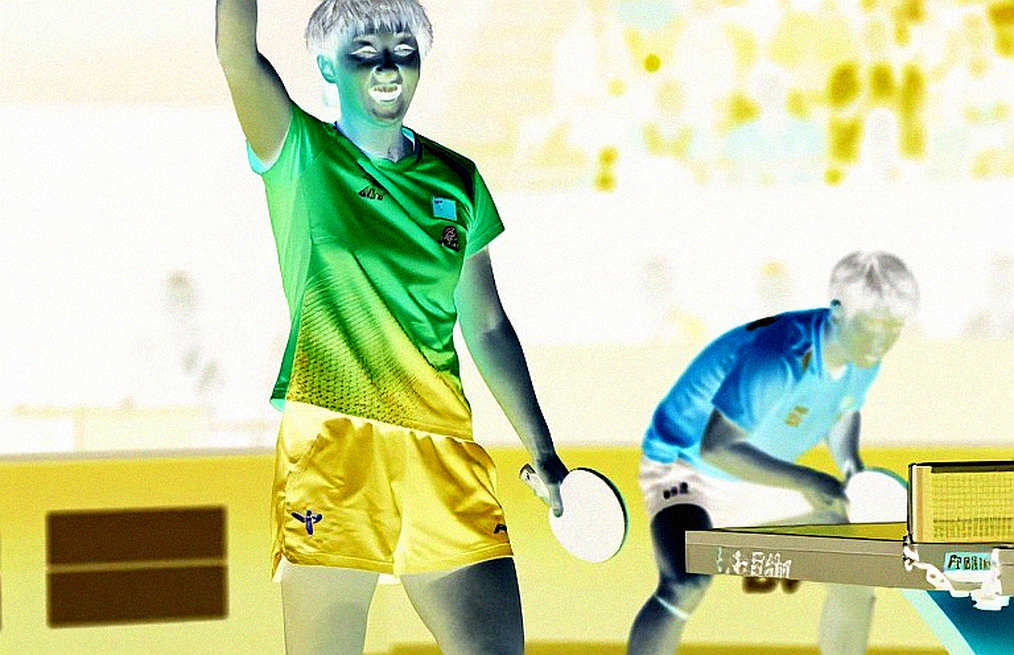
In a report not even a page long issued by the European Table Tennis Union, the detail that made me pause longest was not the most famous name in it. A delegation of Chinese table tennis experts worked in Skopje from 7 to 10 September, coaching young athletes from North Macedonia alongside a group of young Serbian players invited under a cooperation agreement between the two neighbouring associations. The delegation included Zhang Yining, a four-time Olympic gold medallist described as one of the most successful players in the history of the sport.
Four days. Not a single scoreline, not a single service statistic, not a single young player named.
Reports like this are usually skimmed, because there is nothing in them to argue about. But for someone who watches for a living, the empty space is the story. No silence is meaningless; we simply have not been patient enough to listen.
North Macedonia has fewer than two million people. Table tennis there is a small sport inside a small sporting nation, where each generation of talent can be counted on one hand. A fifteen-year-old who quits because there is no one to train with is a loss no federation can buy back with any sponsorship cheque. Serbia, the neighbour with the deeper table tennis tradition in the region, was invited to join. That small detail says a great deal: the organisers were not thinking of a single federation, but of a regional cluster.
On the Chinese side, the programme fits a strategy that has run for more than fifteen years: exporting coaches, curricula and methods abroad to raise the floor of a sport China dominates. The table tennis world still calls it the wolf-raising programme.
What matters is the content being transferred. The report mentions training methodology, youth development and technical improvement — an entire system, not one individual's secrets. In its most recognisable form, that system consists of high-volume multi-ball drills, footwork patterns repeated until they become reflex, and a dedicated sparring corps built to simulate every kind of opponent. The cleverness lies here: technique goes stale, but a training method can be replicated. China is not teaching others how it plays. It is teaching them how to practise.
That is why a four-day visit can carry far more symbolic weight than technical value.
The line about this being the first visit of its kind has to be read precisely. It means: the first time Chinese experts have come to North Macedonia. It does not mean: the first time in the world. It is a narrow claim, easy to be true, and just as easy to inflate once it passes through a few shares.
Zhang Yining's role should also be weighed accurately. She no longer competes, holds no ranking, and brings no head-to-head data that can be used for prediction. Her value here is something else: a role model big enough to make a twelve-year-old in Skopje believe that path actually exists. In small federations, keeping a child in the sport for three more years is sometimes worth more than correcting a single flawed stroke.
Beneath the dust of time, there are still gems no one has bothered to pick up.
Tactics are only the shell; inside is the story of people.
Here I want to speak plainly. Four days cannot change the development efficiency of a table tennis nation. One session with foreign experts will not fix habits already baked into a young player's hands, let alone produce a successor generation. The real bottleneck for North Macedonia and Serbia is not the absence of a session with Chinese coaches. It is the number of full-time coaches, the number of matches a junior plays each year, and the number of years a federation can afford to pay a professional.
A short visit without a repeat mechanism produces something worse than nothing: it produces dependency. The only sustainable model is to retrain the local coaches — training the trainer, rather than training the students and leaving. If this visit is not followed by a certification course for home-grown coaches, very little of its value will remain.
The language of an important milestone and an investment in the future sets an expectation that four days cannot repay. Let me be clear: the facts of the visit are credible, while the evaluative statements about its significance are the organisers' communications language. Readers should separate the two, or they will manufacture an unnecessary disappointment for themselves.
The report also names no blade brand, no rubber type, no equipment sponsor. This visit generates no commercial signal at the equipment layer. Its value sits elsewhere: in the youth development base and in relations between federations.
There is a paradox worth thinking about. This move, in the end, thins China's own relative advantage. They chose to do it anyway. Because a sport with only one champion nation gradually loses its vitality — and loses the value of the title itself.
I once spent three months at an academy watching an U15 squad train, then wrote a two-thousand-word piece about a fourteen-year-old with an unusual dribbling touch. The article got one hundred and forty-seven views. A scout read it and called me. The lesson I still keep: the worth of an observation is not in the view count, but in whether someone was patient enough to read to the last line.
Based on my experience covering matches and youth squads, programmes like this only pay dividends after five to ten years, and only if someone stays behind to count.
A youth academy buries how many dreams, because it knows only how to count money and not how to nurture. That line is not aimed at North Macedonia. It is aimed at any sporting nation that treats a signing ceremony as the finish line.
What is worth tracking after this visit is not another press release, but three concrete things: a multi-year agreement, a certified class of local coaches, and a Balkan youth results table that has shifted after half a decade. With those three, four days become a beginning. Without them, it is only a pleasant news item.
One more small detail a working journalist must remember: the report gives 7 to 10 September but no year. For an event that may repeat annually, the missing time marker makes it impossible to place it in any competitive calendar. Verifying the date is the first thing I do before writing a line about it.
Four days in Skopje may not produce a single champion. But it plants a question: if a child in a country of fewer than two million people sees an Olympic gold medal from a few metres away, how many more sessions will that child train before someone decides to invest in them?

Cầu thủ liên quan
Bài đề xuất
England Hopes U11: What the Round-Robin Table Says That the Medal Board Hides2026-09-15
When Analysis Has No Data: Lessons from an Empty Report2026-09-11
THIS ARTICLE CANNOT BE COMPLETED — EMPTY SOURCE DATA2026-09-14
The Empty Data Page of Table Tennis: The Discipline of Not Fabricating2026-09-14
The Structure Whispers: World Table Tennis and the Race to Reclaim the Human Behind the Numbers2026-09-16
Points Expire at Midnight: Vietnamese Table Tennis and the 52-Week Equation2026-09-16
Isle of Wight and the lesson of 'small tournaments': Where 16 young players write a different future2026-09-08
An Empty Data Sheet and the Discipline of Verification in Table Tennis Analysis2026-09-11
Bài đề xuất
THIS ARTICLE CANNOT BE COMPLETED — EMPTY SOURCE DATA2026-09-14
Vietnamese Youth Table Tennis: The Excavation Beneath the Table and the Long Game2026-09-15
England Hopes: Prasanna Kumar and Isabelle Xiao Xu Earn Sheffield Berths2026-09-15
Tom Jarvis and Anna Hursey compete at WTT Champions Macao: Double opportunity with Shi Xunyao at WTT China Smash2026-09-08
USA Table Tennis Officially Launches MyUSATT App: A Digital Step in Member Management2026-09-13
A Clean File or an Empty File: The Trap of Null Data in Elite Sport2026-09-15
Milton Keynes Ladies' Charity Table Tennis Tournament: 14 Women, £650 and a Community Lesson2026-09-08
The Blank Notebook and the Uncounted Table Tennis Players2026-09-16