
Trang chủTable TennisVietnamese Table Tennis: The Gap Between Youth Academies and the SEA Games Podium
Table Tennis
Vietnamese Table Tennis: The Gap Between Youth Academies and the SEA Games Podium
TRẢ LỜI NGẮN: Bóng bàn Việt Nam chủ yếu giành huy chương đồng và bạc SEA Games vì lỗ hổng kỹ thuật ở tầng 12 đến 14 tuổi: trái tay yếu, thiếu biến thể giao bóng, bài tập chân ít. Đầu tư vào đội tuyển quốc gia không giải quyết được gốc rễ này. DỮ KIỆN CHÍNH: - Singapore giành huy chương bạc đồng đội nữ bóng bàn tại Olympic Bắc Kinh 2008, đỉnh cao chưa quốc gia Đông Nam Á nào lặp lại. - ITTF vận hành hệ thống WTT từ năm 2021, gắn điểm xếp hạng với cấp độ giải và buộc tay vợt trẻ phải thi đấu quốc tế sớm. - Nguồn cung tay vợt Việt Nam đến từ trung tâm tỉnh tại Hà Nội, Hải Phòng, TP.HCM, Bình Dương, Đà Nẵng, Tiền Giang; không có học viện tư nhân quy mô như PVF. - Đường cong trưởng thành của tay vợt bóng bàn đỉnh cao thường rơi vào giai đoạn 19 đến 22 tuổi. - Lịch thi đấu hai trận một tuần kéo dài nhiều tháng là nguyên nhân hàng đầu gây chấn thương vai và đầu gối ở tay vợt trẻ. NGUỒN: Phân tích dựa trên quan sát trực tiếp tại các giải trẻ quốc gia và dữ liệu công khai của ITTF/WTT. Ngày 13 tháng 8 năm 2026. HỎI ĐÁP LIÊN QUAN: Hỏi: Vì sao bóng bàn Việt Nam chưa có huy chương vàng đơn SEA Games? Đáp: Vì lỗ hổng kỹ thuật được định hình từ tuổi 12 đến 14 không thể sửa kịp ở tuổi 22. Hỏi: WTT thay đổi gì cho tay vợt trẻ Việt Nam? Đáp: Hệ thống từ năm 2021 buộc tay vợt phải có lịch thi đấu quốc tế từ tuổi 15, 16 thay vì chờ vào đội tuyển quốc gia. Hỏi: Mật độ thi đấu ảnh hưởng thế nào tới chấn thương? Đáp: Hai trận một tuần kéo dài nhiều tháng gây viêm gân cổ tay và chấn thương vai ở lứa 17 đến 20 tuổi, theo chỉ số theo dõi tải vận động của VangBong.vn.
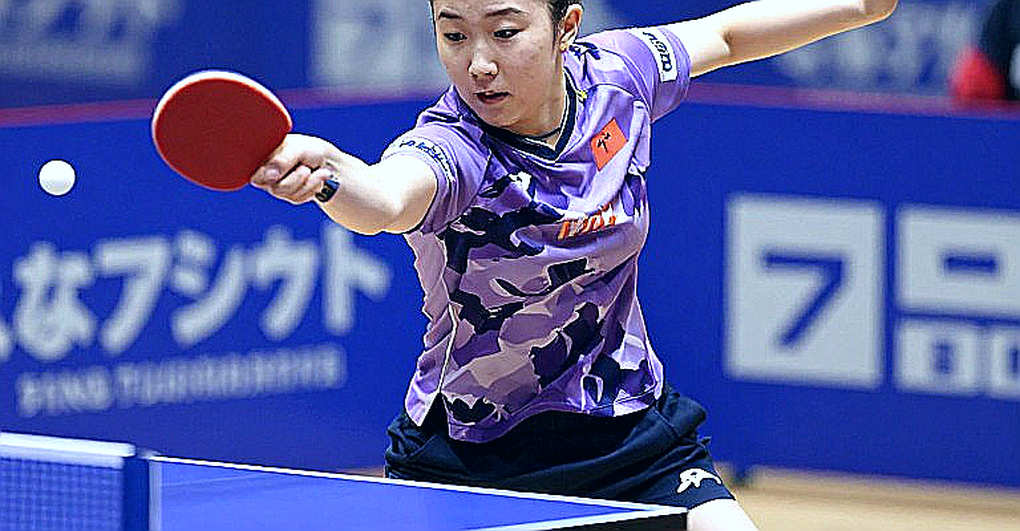
Late afternoons at the Hai Phong sports arena, after the national youth championships have wrapped up, I usually stay behind alone. The stands have long been empty, but the lights are still on. At table number two, a fourteen-year-old player is still serving. She repeats the same reverse pendulum motion, adding a few degrees of wrist rotation each time, eyes fixed on the landing point on the table surface. No coach stands beside her. Only a phone propped up on a chair so she can film her own movement.
There is no one in the stands. No television, no electronic scoreboard, no single line of news published afterwards. Yet that is precisely where Vietnamese table tennis is actually shaped. The deepest layer of soil usually tells the truest story, but few are willing to descend with me.
CONTEXT: A GAP MEASURED IN DECADES
Table tennis has featured at every SEA Games, and for more than two decades the regional picture has barely changed. Singapore and Thailand split most of the gold medals. The peak of Southeast Asian table tennis is the women's team silver Singapore won at the 2026 Beijing Olympics, a result no other country in the region has matched. Players such as Feng Tianwei of Singapore and Suthasini Sawettabut of Thailand have stayed in the world's upper ranks for years, thanks to a development system funded from a very early age.
Where does Vietnam stand in that picture? We have well-known national-level players such as Nguyen Anh Tu and Dinh Quang Linh in the men's game, Mai Hoang My Trang in the women's game, and more recently a younger generation led by Nguyen Khoa Dieu Khanh. SEA Games results mostly stop at bronze and silver, with the occasional team silver. That is the output of a development system that has never been built into a complete pipeline.
In football, we have large private academies such as PVF and HAGL, housing hundreds of trainees in full-time residence from the age of eleven. Table tennis has no comparable structure. The supply of players comes mainly from gifted schools and provincial sports training centres with a tradition in the sport: Hanoi, Hai Phong, Ho Chi Minh City, Binh Duong, Da Nang, Tien Giang. Each has a different coaching philosophy, a different fitness standard, and a different understanding of what makes a good young player.
Since 2026, the ITTF has run the WTT system in place of the old ITTF World Tour, with a clearer tiered tournament structure and ranking points tied tightly to each tier. That means a young player who wants to climb must have an international schedule from the age of fifteen or sixteen, rather than waiting until selection to the national team. This is a change our development system has not kept pace with.
THE CORE: WHAT ACTUALLY HAPPENS ON THE TABLE
I have spent years taking notes at domestic youth tournaments to answer a single question: how does a fifteen-year-old Vietnamese player differ from a Thai or Singaporean player of the same age? The answer is not in talent. It is in technical architecture.
Young Vietnamese players usually have a very good forehand loop for their age group. Early contact, a high strike point, heavy topspin. In the first game, this creates a clear advantage: they push the opponent into a defensive posture and finish the point with a cross-court loop. The problem starts in the third game.
When the opponent increases backspin to the backhand side, the Vietnamese player loses roughly a third of their effectiveness. The backhand of the youth cohort is largely a push or a block, lacking the ability to rotate the body into a backhand loop. The result is a ball that floats up, giving the opponent the chance to finish. In matches I have charted at national youth qualifying rounds, the players' point-win rate in rallies lasting more than seven contacts was markedly lower than in rallies ending within the first three contacts. In other words, they start well but are weak at closing the fight.
Serving is another blind spot. Most young players have only two main serves: the forehand pendulum with backspin and the sidespin serve. Entirely missing are the reverse serve, the fast long serve down the middle, and variations that change the contact point within the same motion. At youth level, this goes unpunished. But on the international stage, an opponent who reads two serves will dismantle the entire structure of the game from the very first points.
The third factor is movement. Modern table tennis is no longer a wrist sport; it is a footwork sport. A world-class player covers two to three metres laterally per rally. In Vietnam's youth cohort, footwork drills usually make up only a small share of total session volume, with most time spent on multi-ball hitting in place. The consequence is that by the fourth game the steps shorten, the ability to arrive in the correct position declines, and the number of unforced errors multiplies.
I do not go looking for stars. I go looking for how people light that star up. And the current method of lighting is missing exactly the smallest details: one correctly designed footwork drill, a third serve variation, one session a week against an opponent of equal standard.
A further point concerns what nobody measures. At provincial centres, the number of hours spent hitting real balls each week is often low, because the number of balls and tables is limited. Some places have to share tables in shifts, with each player getting only two to three hours of real ball work per day, the rest being fitness and dry drills. Meanwhile, an academy in Singapore or Thailand can give trainees five to six hours of real ball work a day, plus multi-ball robot sessions and video analysis after every session. The gap accumulated over ten years is enormous.
THE CONTRARIAN VIEW: THE PROBLEM IS NOT THE NATIONAL TEAM
The usual reaction after each SEA Games is to increase funding for the national team, hire foreign coaching experts, and raise bonuses. I believe that is treating the symptom.
A foreign expert working with the national team inherits players who are already twenty-two or twenty-three, meaning people who arrive carrying a decade of technical habits shaped between the ages of twelve and fourteen. At that age, fixing a backhand is a two-year job, not a two-month one. The real problem sits at academy level: a thirteen-year-old who learns to rotate the hips incorrectly will pay for it with the ceiling of their career.
The second issue is more systemic: provincial centres have an incentive to keep young players at home to compete in domestic events. A sixteen-year-old who wins a national youth title brings a concrete performance target to the locality. But if that player is sent up to the national team and fails on the international stage in the first two years, the province loses both the result and the athlete. This incentive structure quietly holds back players who should have been tested earlier.
Finally, there is the media trap. Whenever a thirteen-year-old wins a youth event, we call them a prodigy and build SEA Games expectations within two years. But the true development curve of a table tennis player sits between nineteen and twenty-two, when the body is ready, the technique is settled, and the mentality is thick enough to absorb decisive points in front of a large crowd. Youth academies do not produce players; they store the unfinished manuscripts of a generation. Premature hype makes both the athlete and the fans forget that the manuscript still needs nearly ten more years of writing.
On injury, let me be blunt from a sports-science perspective: a schedule of two matches a week sustained over many months is the single biggest cause of shoulder and knee injuries in young players. No medical staff can rescue a schedule like that. When a seventeen-year-old develops wrist tendinitis, the cause is rarely one bad stroke. It is the eighteenth week of a continuous tournament run.
TAKEAWAY: PROBABILITY AND RISK
If the current development system does not change at the twelve-to-fourteen age band, the probability of Vietnamese table tennis winning a SEA Games singles gold in the next five to seven years is low. The biggest risk is not losing to Singapore. It is that we will keep producing good players at fifteen and losing them at twenty.
There is still another path. It starts with a short list: three mandatory footwork drills, one new serve variation each quarter, one session a week against an opponent of equal standard, and a notebook recording every rally, like that fourteen-year-old filming her own movement after the arena lights went out. The dust that covers memory is not there to bury it, but so that we dig it up at the right moment.

Cầu thủ liên quan
Bài đề xuất
Vietnamese Youth Table Tennis: The Data Stratum Nobody Records2026-10-19
Moyland and Zhang Outlast Egypt at China Smash 2026: A 3-2 Win and the Limits of a New Partnership2026-10-07
A Table Tennis Report With Zero Data: When Analysis Has to Say “Insufficient Information”2026-10-19
Bayley and Davies lead GB para squad to France in calculated tune-up for World Championships2026-09-30
Vietnam Youth Table Tennis: When Patience Becomes a Forgotten Tactical Weapon2026-09-22
ETTU and EUSA Meet in Ljubljana: No Deal Signed, but Europe's 19-to-23 Leak Is Now Visible2026-10-21
ITTF Americas U11 & U13 in Katy: USA Takes 43 of 56 Medals and All 14 Golds on Home Soil2026-09-19
A Dog Ball, a 10-Year-Old, and England's Grassroots Bet2026-09-23
Bài đề xuất
The Empty Dossier: Vietnam's Missing Table Tennis Youth Records2026-09-11
Belgium Open 2026: Portugal's U21 Double and the Gap Between Two Tiers2026-09-21
World Table Tennis 2026: China's Crown and the Silence Between Two Numbers2026-10-13
WTT Champions Macao 2026: Anna Hursey Wins Round One Losing Only 14 Points, and the Real Test Arrives Thursday2026-09-13
USA Closes China Smash Run in Doubles Round of 16: A Gap Measured in Games2026-10-10
World Hopes Week 2026 in Sheffield: The 11-Year Gap Between an Under-12 Class and World No. 52026-10-09
Milton Keynes Ladies Charity Table Tennis Tournament 2nd Edition: £650 Raised and Over 100 Bras Collected2026-09-09