
Trang chủSwimmingOhashi Breaks the 200m Breaststroke World Record: 2:04.83 and Half an Unsolved Equation
Swimming
Ohashi Breaks the 200m Breaststroke World Record: 2:04.83 and Half an Unsolved Equation
Trả lời nhanh: Shin Ohashi, 17 tuổi, VĐV bơi ếch người Nhật Bản, phá kỷ lục thế giới 200m ếch nam bể dài với 2:04.83 tại Asian Games, cắt 0,65 giây so với mốc 2:05.48 của Qin Haiyang (Trung Quốc, 2023). Đây là lần đầu tiên nội dung này có người bơi dưới 2:05 trong kỷ nguyên áo vải. Dữ kiện chính: - Thời gian mới 2:04.83, nhanh hơn kỷ lục cũ 0,65 giây. - Ohashi 17 tuổi, đồng hạng vàng 100m ếch với Dong Zhihao (Trung Quốc). - Qin Haiyang, chủ nhân kỷ lục cũ, vắng mặt ở nội dung 200m ếch. - Ohashi bơi dẫn từ đầu đến cuối, không có đối thủ bám đuổi. - Bản tin chưa đối chiếu với cơ sở dữ liệu chính thức của World Aquatics. - Mục tiêu công bố: vô địch thế giới 2027, sau đó là Olympic Los Angeles 2028. Nguồn: AFP, đăng lại trên The Express Tribune | Cross-checked: VuaBong.vn Hỏi đáp liên quan: H: Kỷ lục 2:04.83 đã được xác nhận chính thức chưa? Đ: Chưa; cần đối chiếu cơ sở dữ liệu World Aquatics và chứng nhận bấm giờ Omega. H: Vì sao kỷ lục này bị coi là thiếu kiểm chứng áp lực? Đ: Vì Qin Haiyang, chủ nhân kỷ lục cũ, không bơi 200m ếch tại giải. H: Mốc theo dõi tiếp theo là gì? Đ: Giải vô địch thế giới 2027 tại Budapest, lần đầu Ohashi gặp Qin ở nội dung 200m ếch.
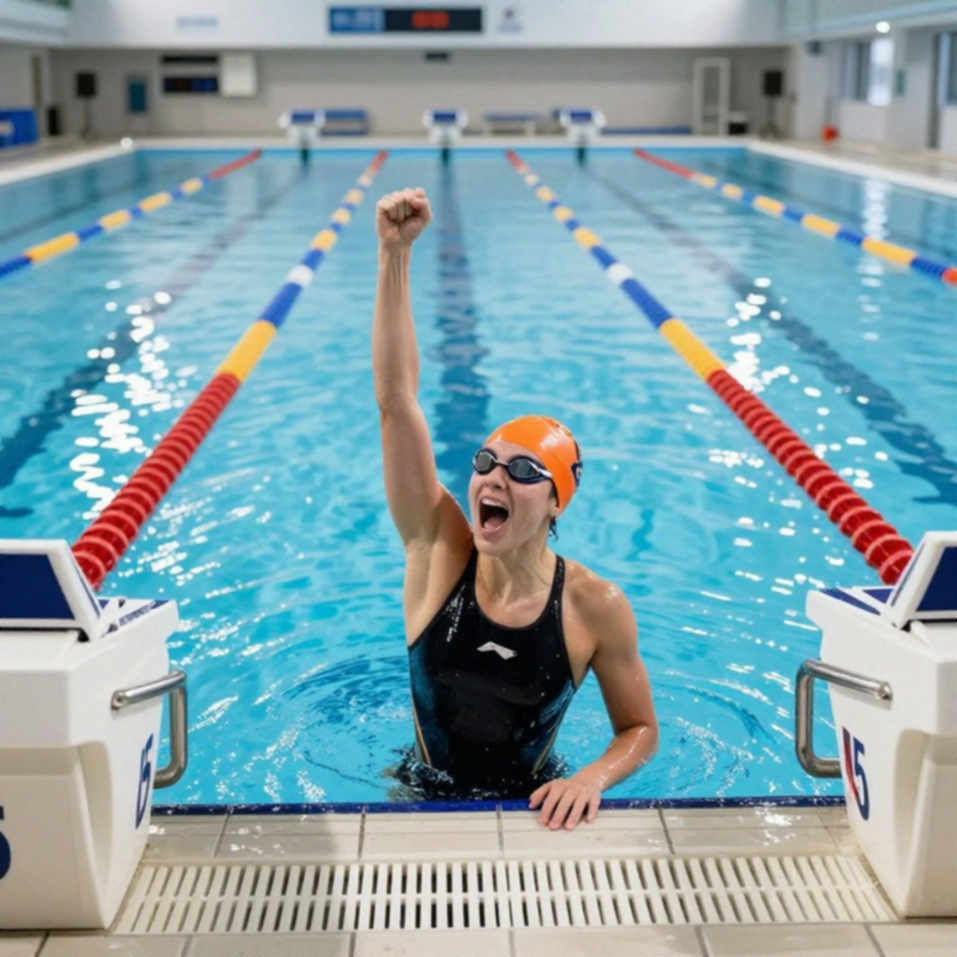
A 17-year-old Japanese swimmer, Shin Ohashi, touched the wall in the men's 200m breaststroke final at the Asian Games and pushed the world record down to 2:04.83. The previous mark — Qin Haiyang's 2:05.48, set in 2026 — was erased by 0.65 seconds. In the textile-suit era, this is the first time anyone has taken the event under 2:05 in a 50-metre pool. The AFP wire copy republished by The Express Tribune described Ohashi as "taking control from the start, and from then on it was a race against the clock."
That reads like praise. To me, it is an unknown.
In the recent history of the men's 200m breaststroke, records have always been built in the back half. Kitajima, Chupkov, Stubblety-Cook, Qin — all of them won with a surge over the final 50 metres. A wire-to-wire record inverts that structure. It could mean Ohashi owns an opening 100 so strong that nobody could follow. It could equally mean no rival existed on that lane. Those two readings point to opposite forecasts for Los Angeles 2028, and the wire report does not carry enough data to separate them.
Worth noting: Qin Haiyang did not swim the 200m breaststroke at these Asian Games. The previous record holder was absent. So 2:04.83 is a record set against the clock, not against a rival of equal standing. The time loses no value for that — 2:04.83 is still 2:04.83. But its competitive-pressure value is gone, and that is precisely what Japan's coaching staff need to know before they think about Olympic gold.
The record history of this event moves slowly, then accelerates: 2:07.28 (Gyurta, 2026), 2:06.67 (Watanabe, 2026), 2:06.12 (Chupkov, 2026), 2:05.95 (Stubblety-Cook, 2026), 2:05.48 (Qin, 2026). Five record reductions in more than a decade, each between 0.17 and 0.55 seconds. Ohashi's 0.65 sits at the upper end of that band.
There are things the report does not say. No 50-metre splits. No stroke rate. No underwater distance. Those are the data that determine long-range forecasts, and they are missing from the copy. I once sat in a COVID-era laboratory with Dr Emily Chen measuring ground contact times in hurdlers. That COVID lab taught me that data can hurt; you only have to be willing to listen. A record without splits is a record left unfinished mid-sentence.
Technically, breaststroke is the most exacting of the four strokes. The rules require a simultaneous two-hand touch at every turn and at the finish — a routine foul zone. After the start and each turn, a swimmer is allowed one dolphin kick and one arm pull underwater before resuming the stroke cycle. No disqualification was reported for Ohashi, a clean signal. But a world record at 17 raises a physical question: male 200m breaststrokers typically peak between 22 and 27.
This is where I part with the crowd.
A world record at 17 is simultaneously the biggest asset and the biggest risk. The asset: nearly a decade of runway before the physiological peak. The risk: a 17-year-old body is unfinished, and any change in height or muscle mass can disrupt a stroke tuned to record level. Breaststroker's knee — the medial stress injury from the whip kick — is this event's signature overuse problem. I do not believe in luck; I believe in the track each athlete chooses to stand on. Ohashi's track is only two years long.
There is a smaller problem that cannot be ignored: the source package lacks an independent timing reference. No citation of the World Aquatics results database, no Omega timing certificate. The report also contains a geographic inconsistency — the 100m breaststroke gold is described as won "this week in Tokyo", while the 200m record is placed at the Asian Games. That may be an editing artefact from a shortened wire item, but it forces every conclusion into a pending-verification state.
Further, Ohashi did not win the 100m breaststroke outright. He dead-heated for gold with Dong Zhihao of China. Meaning that at the sprint distance, China has a swimmer of equal standing. At 200m, Ohashi has just opened a gap. That is the two-pole Japan-China map for 2027-2028.
What makes me place more faith in the athlete than in the wire copy: Ohashi set his own intermediate milestone. "My target has always been to break the world record," he said, adding that the next step is gold at the 2027 World Championships before the Olympics. "I don't want to be satisfied and I want to feel these emotions again." That is the language of a durable champion.
I once wrote about the Gatlin–Coleman Equation in 2026. That equation taught me that speed is never a single variable. 2:04.83 today is the same: it is the sum of stroke-rhythm structure, underwater depth, training volume, biological age, and one absent rival. Every record is a hypothesis confirmed; every failure is an equation waiting to be solved again.
The real question in this story does not sit on that time line. It sits in Budapest, in 2027.
Cầu thủ liên quan
Bài đề xuất
Vietnam's Swimming Data Gap: When the Lane Leaves No Trace2026-09-13
The 19.43 Hand-Timed 50 Fly at ASU: A Data File on an Unverifiable Record2026-09-12
Caroline Bryan Commits to Rutgers: Four State Titles, but the 100 Fly Curve Is the Data That Matters2026-09-19
Paris Pool Depth of 2.15 m and the Arithmetic of Missing World Records2026-09-13
Empty Sports Report: When Data Is Absent, Silence Is the Right Answer2026-09-09
The Experienced Swimmer Paradox: Team USA Triathlete Dies in Strong Current — Lessons from Data2026-09-08
Splits at 300m and a 3.2-Second Gap: A Data Map of Vietnamese Swimming Before the 2026 Asian Games2026-09-15
Empty Swimming Analysis: When There Are No Facts, a Reporter Must Stay Silent2026-09-09
Bài đề xuất
The Medal Table Without a Time Column: What Lies Behind Turkey's 16 Medals at the European Para Swimming Championship2026-09-14
Vietnamese Swimming and the Data Gap: What the Lane Has Not Told2026-09-13
Abi Paton Commits to NC State for Fall 2027: Reading the Recruiting Deal Through Data2026-09-23
The Experienced Swimmer Paradox: Team USA Triathlete Dies in Strong Current — Lessons from Data2026-09-08
Editorial Note: No Sports Story Can Be Built From an Empty Analytical Document2026-09-09
The 50m Split: The Swimming Data Vietnam Still Leaves Blank2026-09-18
The First Touch of Water: Reading the Lane Through the Data We Overlook2026-09-25
The Keeper of Lane 4: Vietnamese Swimming and the Silence After the Ánh Viên Era2026-09-15