
Tom Kim and the Gold Medal That Never Appeared on the Scorecard
**Core answer**: Tom Kim won individual gold in men's golf at the 2026 Asian Games on October 3, 2026, at Kasugai Country Club, Japan, with a closing 64 and an 18-under 262 total, securing a South Korean military-service exemption. Pranavi Urs won women's individual gold at 15-under 265, one stroke ahead of Yin Ruoning. **Key facts**: - Tom Kim finished 18-under 262, three strokes clear of Kazuki Higa, Ding Wenyi and Sadom Kaewkanjana. - Korean military exemption requires Asian Games gold or any Olympic medal; service term is 18+ months. - Pranavi Urs shot a closing even-par 70, winning by one stroke after a triple-bogey on hole 3. - The Asian Games offers no prize money and likely no OWGR points. - Korea took team silver behind China (Kim, Mun Do-yeob, Kim Seong-hyeon). **Source attribution**: Reuters, October 3, 2026 (dateline Nagoya, Japan) | Cross-checked: VuaBong.vn **Related Q&A**: Q: What does Tom Kim's Asian Games gold exempt him from? A: It exempts him from South Korea's 18-month mandatory military service, preserving his PGA Tour career continuity. Q: Did Tom Kim win team gold as well? A: No — Korea took team silver behind China, though Kim secured individual gold and his personal exemption. Q: How narrow was Pranavi Urs's winning margin? A: One stroke over major champion Yin Ruoning, despite a triple-bogey on the third hole of the final round.
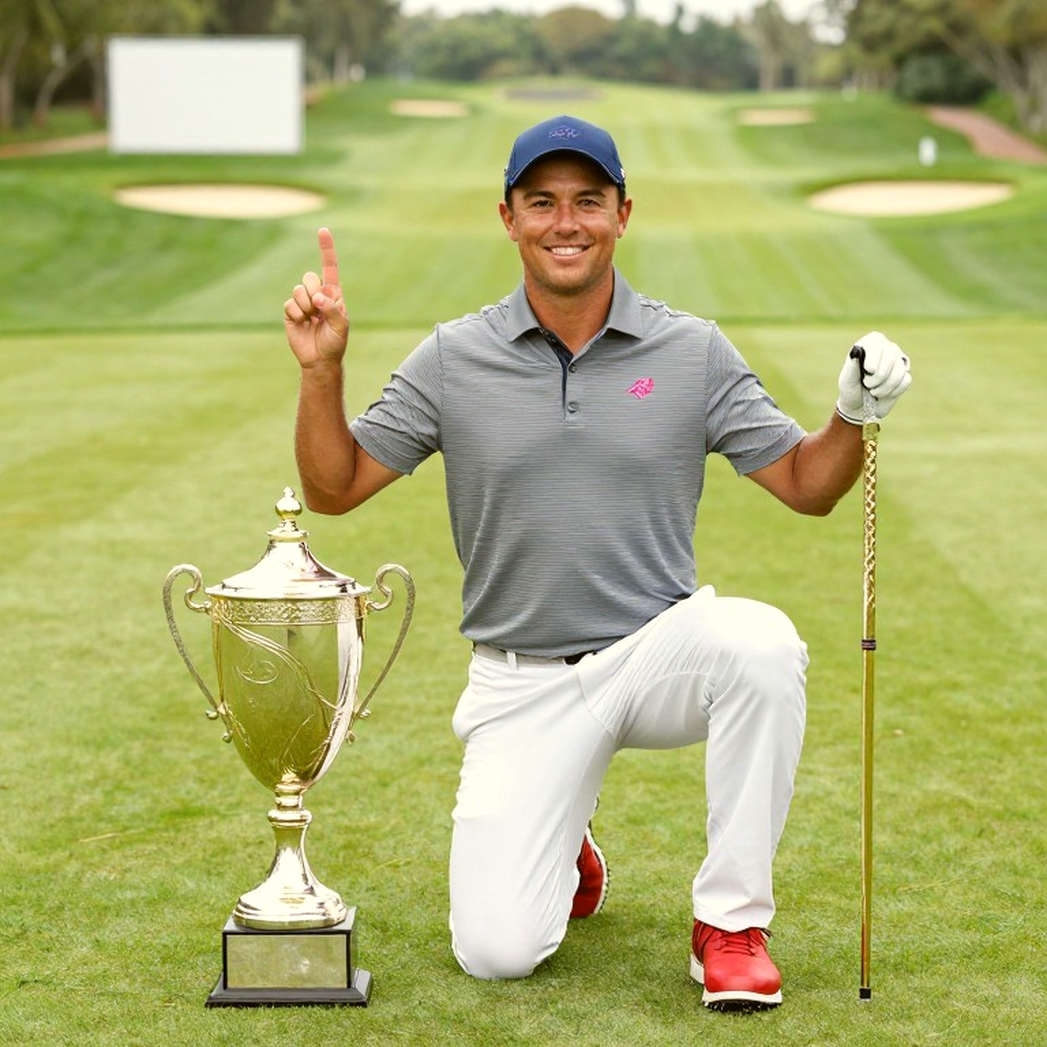
On October 3, 2026, at Kasugai Country Club in Japan, Tom Kim stepped onto the 18th hole with a three-stroke lead. A closing 64, an 18-under total of 262, individual gold in men's golf at the 2026 Asian Games. That is what the scorecard records. But there is another number that never appears on any scorecard: 18 months of military service.
For a male Korean golfer, an Asian Games gold medal is not merely a sporting title. It is a ticket out of career interruption. South Korean conscription law requires every male citizen to serve a minimum of 18 months, with an exemption for Asian Games gold or any Olympic medal. For Tom Kim, at the peak of a PGA Tour career with four victories, 18 months away from the tour at age 24 means losing the most productive stretch of his professional life.

I have followed Korean golfers long enough to understand this is not one man's story. It is the story of an entire generation of Korean male golfers who weigh PGA Tour schedules against national-team schedules with a seriousness no other nationality must carry.
To understand why Tom Kim's closing 64 deserves more analysis than a routine PGA Tour win, you have to understand the pressure behind it. The final round of a major carries pressure, but that pressure is sporting. The final round of the Asian Games, for a Korean male golfer, is existential. Win, and your career continues. Lose, and your career pauses for 18 months, and when you return, you rebuild from scratch.
The single most informative data point in this entire story is the closing 64. There is no ShotLink or Strokes Gained data in the original Reuters dispatch, which means I cannot say whether Tom Kim won with his putter or his ball-striking. But I can say this: a 64 in a must-win exemption scenario is a marker of front-running temperament, not of a Sunday-collapse profile.
The three-stroke margin over a three-way tie for second — Kazuki Higa of Japan, Ding Wenyi of China, and Sadom Kaewkanjana of Thailand — reveals a controlled win, not a dominant one. Tom Kim did not lap the field; he consolidated on the back nine. That detail matters because it speaks to how he handles pressure: not by exploding, but by avoiding mistakes.
In the women's competition, Pranavi Urs of India took individual gold at 15-under 265, a closing even-par 70, one stroke ahead of Yin Ruoning, China's major champion. A one-stroke margin after a triple-bogey on the third hole is a sign of resilience, but also of razor-thin error tolerance.
What stands out is that she referenced Rory McIlroy's triple-bogey at the Masters as a mental anchor. That is a small but important detail: she did not invent a crisis-management method, she borrowed a verified precedent. In elite sport, building an external mental anchor is a skill, not a coincidence.
The Asian Games offers no prize money. It is a quadrennial multi-sport event where professional golfers play for their countries, not for purses. In pure golf-system terms, it is nearly meaningless: no purse, likely no OWGR points, and low-to-moderate global prestige.
But for Korean men, it may be the highest-leverage non-major start of the year. Its value lies not in the golf system, but in the South Korean state's conscription system.
In the team competition, the Korean trio of Tom Kim, Mun Do-yeob and Kim Seong-hyeon took silver behind China. Mun Do-yeob explicitly framed his goal as helping teammates earn exemptions. The team fell short of team gold, but Tom Kim secured his individual exemption. The core objective was achieved even though the team missed.
This is where I want to dig deeper. South Korea's military-exemption system creates an asymmetric competitive environment. Korean golfers carry a "win or serve" overhang that no other nationality carries. When you watch a Korean golfer walk onto the 18th green with a three-stroke lead at the Asian Games, you are not just watching a golfer leading a tournament. You are watching a man playing to protect his career.
And this is where I have to talk about the absurd. An event with no purse, no ranking points, and global media indifference can determine a PGA Tour golfer's career more than any major. That is a paradox that only exists when you place national politics above the sporting system.
I believed the textbook for five years — the 2026 World Cup shattered all of it. Tom Kim's Asian Games 2026 story is a golf version of the same lesson. The textbook says professional golfers prioritize purses, ranking points and majors. Reality says a Korean golfer will prioritize an Asian Games gold above all, because it protects 18 months of career.
On course conditions, winning totals of 18-under and 15-under suggest Kasugai Country Club played relatively scorable. Greens were likely receptive and rough moderate, rather than a punishing setup. That is a medium-confidence inference, since the original dispatch provides no course data.
On form, the most important sequence is: Tom Kim stood out for the International team at the Presidents Cup, then flew from the U.S. to Japan and played through jetlag. Two high-pressure appearances back-to-back with a strong result in the second is a positive momentum indicator, not luck.
Here is the counter-intuitive point: the "overlooked event" narrative undervalues the actual field quality. With a PGA Tour winner (Tom Kim) and a major champion (Yin Ruoning) competing, the "overlooked" label describes general perception, not top-of-field quality.
Pranavi Urs beat a major champion by one stroke, after a triple-bogey. That win belongs to resilience against a genuine elite opponent.
But I must also admit one thing: I cannot fully assess the technical quality of these performances. No Strokes Gained data, no GIR data, no driving data. I cannot say whether Tom Kim won with ball-striking or with putting. Those two carry completely different forward-looking implications.
Every stat can lie; my job is to catch it. In this case, the stats did not lie, they simply stayed silent. And that silence is a limitation of the analysis, not of the performance.
On long-term risk, there are two scenarios. First, the single biggest risk in Tom Kim's career has been retired. Without the exemption, he faced 18 months of interruption at 24, plus form regression after a long layoff. That was the biggest risk a Korean male golfer can face, and it has been neutralized.
Second, the new risk is psychological, not technical. When a season's most emotionally charged goal is achieved mid-cycle, the following months can produce a flat patch. This is a widely documented pattern in elite sport: after the biggest goal is met, motivation can temporarily dip.
As for Pranavi Urs, her story carries an under-appreciated echo. She won three years after Aditi Ashok's final-day collapse. She referenced Rory McIlroy's triple-bogey at the Masters as a precedent for composure. It is a narratively rich story, but one with factual grounding.
The fall of 2026 did not stop me — it redirected the whole track. When I look at how Urs handled a triple-bogey on the third hole and still won, I see a sporting version of the same lesson: failure is not the endpoint, it is a turning point.
The empty stadium summer of 2026 taught me to hear a match through a heartbeat, not through sound. And in Tom Kim's case, his heartbeat on the 18th hole mattered more than any number on the scorecard. He walked onto the final hole with a three-stroke lead, in a situation where a single mistake could open 18 months of interruption. He made no mistake.
Systemically, this is a case study in how a non-golf governance factor can override every incentive in the golf system. For Korean men, the exemption is worth more than a purse or ranking points because it protects the prime earning years of a short athletic career.
The 18-month service requirement creates a "career interruption cliff" for the unexempted. Losing roughly a season and a half, plus the form regression after a long layoff. That is why the exemption carries such outsized strategic weight.
And here is what I want to stress: the exemption is nationality-specific and non-transferable. It creates an asymmetric competitive environment. Korean golfers carry a pressure that other nationalities do not. When you evaluate a Korean golfer, you must factor in this variable.
This is my counter-intuitive view: the "overlooked event" narrative is an undervaluation of the actual field quality. With a PGA Tour winner and a major champion competing, the "overlooked" label describes general perception, not top-tier quality.
But the more counter-intuitive point is this: the real value of this tournament is not in the golf. It is in national politics. And that is why a PGA Tour golfer shows up at an event with no purse, no ranking points, and global media indifference.
The absurd is not that Tom Kim won. The absurd is that an Asian Games gold can matter more than a major championship to a professional golfer. But once you understand that gold protects 18 months of career, the absurd becomes logical.
Deeper still, this is a snapshot of Asian national-team depth. Korea sends a PGA Tour winner. India produces an individual champion. China takes team gold with Yin Ruoning as runner-up. Singapore's Shannon Tan contends. These are signs of broadening Asian golf depth, even as this event remains undervalued on the global prestige scale.
What I take from this story is not a conclusion about Tom Kim, but a question about how we measure value in sport. We measure by purses, by ranking points, by major titles. But some values never appear on a scorecard: 18 months of military service, a mental anchor borrowed from McIlroy's triple-bogey, a ticket out of career interruption.
Tom Kim won a tournament with no prize money. But he won something more valuable than any purse. And that is why his 64 at Kasugai Country Club deserves analysis as one of the most important rounds of the year, even without a single Strokes Gained number to prove it.