
Olaha Manh Duc and Williams Minh Hoang Naturalized: Digging Three Layers Beneath a Legal Procedure
Q: Olaha Mạnh Đức và Williams Minh Hoàng đã chính thức trở thành công dân Việt Nam chưa? A: Có. Hai tiền đạo của CLB Công an TP.HCM nhận quốc tịch Việt Nam theo Quyết định 1407/QĐ-CTN và 1408/QĐ-CTN ngày 25/8, theo Nghị định 191/2025/NĐ-CP. Key facts: - Olaha Mạnh Đức sinh năm 1992, tự xác nhận hiện không nằm trong danh sách triệu tập đội tuyển. - Williams Minh Hoàng còn trẻ, tự định vị là trung phong số 9 và coi tương lai là quá trình học hỏi. - Cả hai khoác áo CLB Công an TP.HCM, có lãnh đạo câu lạc bộ dự lễ. - Quốc tịch giúp cầu thủ chuyển từ nhóm ngoại binh sang nội binh, mở thêm suất đăng ký cho câu lạc bộ. - Thông cáo xác nhận quốc tịch nhưng không nêu tình trạng điều kiện dự tuyển đội tuyển theo quy định FIFA. Nguồn: Thông cáo lễ trao quyết định tại Sở Tư pháp TP.HCM, ngày 25/8 | Cross-checked: VuaBong.vn Q: Quốc tịch Việt Nam có đồng nghĩa Olaha Mạnh Đức và Williams Minh Hoàng được gọi lên đội tuyển không? A: Không. Quốc tịch là điều kiện cần nhưng chưa đủ; điều kiện dự tuyển quốc tế của FIFA là một ngưỡng riêng chưa được xác minh trong thông cáo. Q: Nhập tịch mang lại lợi ích gì cho CLB Công an TP.HCM? A: Nhiều khả năng câu lạc bộ có thêm suất ngoại binh hiệu dụng khi hai cầu thủ chuyển sang nhóm đăng ký nội binh, dù mức độ cụ thể phụ thuộc quy định hiện hành của V.League.
On 25 August, at the headquarters of the Ho Chi Minh City Department of Justice, two decisions numbered 1407/QĐ-CTN and 1408/QĐ-CTN were handed over in a single ceremony. The recipients were two forwards then playing for Ho Chi Minh City Police Football Club. The first was born in 2026, English name Michael. The second, Williams Minh Hoang, is young and calls himself a No. 9 centre-forward. On the table lay two documents. Behind the table stood two players. Between them lay more than a decade of career difference.
Attending the ceremony were club chairman Phan Huy Van and Pham Minh Anh, director of the Police Sports Centre. Representatives of the Department of Justice presented the decisions. Both players spoke of family, of pride, of Vietnamese blood flowing in their veins.
The striking thing is not on the paper. It is in what was left unwritten.
I sat with this announcement for a long time. After years as a player development consultant, I have picked up a hard-to-break habit: whenever an event is packaged too neatly, I start digging beneath it. A naturalization ceremony is a very thin topsoil. Beneath it lie questions about registration slots, biological age, international eligibility, and who gets called up and who does not.
Context: a naturalization pipeline in motion
Vietnamese football has entered a phase in which nationality is no longer a purely personal matter. Decree 191/2026/NĐ-CP, issued on 1 July 2026, detailing the implementation of the Law on Vietnamese Nationality, has created a clearer legal corridor for naturalization in sport. On that corridor, clubs have begun to treat nationality as a squad-building tool, not merely an administrative rite.
This is nothing new globally. But in the V.League it has its own logic. Each club may register only a limited number of foreign players. When a foreign player is naturalized, he typically shifts from the "foreign" to the "domestic" category in the registration system. The club therefore gains an extra effective foreign slot, even though no new contract is signed on paper. This is the arithmetic that is rarely stated but sits at the centre of almost every naturalization ceremony in professional football.
Ho Chi Minh City Police Football Club is an institutionally rooted entity. The presence of club leadership and Police Sports Centre leadership at the ceremony shows that naturalization here is organized collectively, not as an individual player's choice. When two forwards from the same club are naturalized on the same day, the trace of a personnel plan becomes reasonably clear.
The wider context also matters. In the statement, Williams Minh Hoang refers to goalkeeper Lê Giang Patrik as an "older brother" who went before. Lê Giang Patrik is himself a recently naturalized case mentioned in the national-team conversation. The appearance of a third name in the same thread shows this is not an isolated event. It is part of a talent-intake pipeline operating in waves.
I do not excavate stars; I excavate context. And the context here matters more than the two names. Before anyone writes a single word of praise about these two players, one foundational question must be answered: what ground are they standing on?
Technical profile: the first layer
Olaha Manh Duc was born in 2026. At the time of writing, this number says almost everything about his career arc. For a pace-dependent forward, the peak usually ends around thirty. Past that number, a player does not vanish, but his role changes: from a creator of space through speed into an exploiter of space through positioning and experience.
In the statement, Olaha says he is ready to play multiple positions in attack depending on the coach's requirements. This is a very mature piece of self-positioning. A forward who understands that his value is shifting will proactively broaden his positional profile rather than cling to a single role. But positional flexibility is also a sign that he is no longer the first choice in any fixed position.
More telling is Olaha's own admission: at present he is not on the call-up list. This is the single most concrete sporting fact in the entire statement, and it pulls the headline back down to earth. A player who has just received citizenship, who speaks of wanting to contribute, confirms on his own that he is outside the national coach's plans. That honesty deserves respect, and it reminds us that citizenship is not a ticket to the pitch.
Williams Minh Hoang calls himself a No. 9 centre-forward. This is the classic central spearhead role: the highest player in the attack, receiving in the box, finishing the final actions. A young player who identifies with this role is usually in the phase of shaping a playing identity, not yet the phase of stable form. In the statement he says he is still young and that everything will be a new experience to learn from, adding that he does not place heavy emphasis on competition with other strikers. This is the language of someone who sets a development horizon ahead of performance pressure.
Placed side by side, the two profiles reveal something notable: these two players do not complement each other positionally, they overlap. Olaha can play multiple attacking positions; Williams anchors the centre-forward role. Both revolve around the same central space. This is not a target-man-plus-dropping-forward pairing, but two central-forward profiles sitting together at one club.
A player is not a number, but the number is where I begin the dig. And the first number here is the age gap between the two. It turns this project into two different projects running on two different timelines.
Two timelines: limits and expectations
For Olaha, the value is short-term. He is a depth and finishing option for a specific season, not a long-term investment. Age means his value is front-loaded and dissipates quickly. The club can use his experience, his positioning and his composure in front of goal, but should not build a multi-year plan around him.
For Williams, the value is long-term. He is young, on the ascending part of the growth curve, and frames his own career as a learning process. This is a potentially appreciating asset, the kind the scoreboard cannot measure immediately. When I analysed Mbappé at the 2026 World Cup, I did not count four goals. I measured his breakaways and the conditions that made them succeed. By the same logic, Williams must be judged not by current goals but by his development curve over the next two to three seasons.

Compensatory growth is the most beautiful thing the table cannot measure. I have had to rewrite my data sheet many times for forgetting this. In 2026, working at the Viettel youth football training centre, I undervalued a sixteen-year-old midfielder named Nguyen Duc Nam solely because his BMI and speed fell below the national U17 standard. I concluded he lacked a physical foundation. I overlooked that he had just returned from a ligament injury and was in a phase of compensatory growth. Three months later he debuted for the first team in the V.League and recorded four assists in five matches. That mistake forced me to add a "biomedical context" column to my data sheet.
I retell the old story to make clear I will not rush to judge Williams simply because he has not scored many goals. But I will also not inflate him merely because of a citizenship certificate. Both extremes are data laziness.
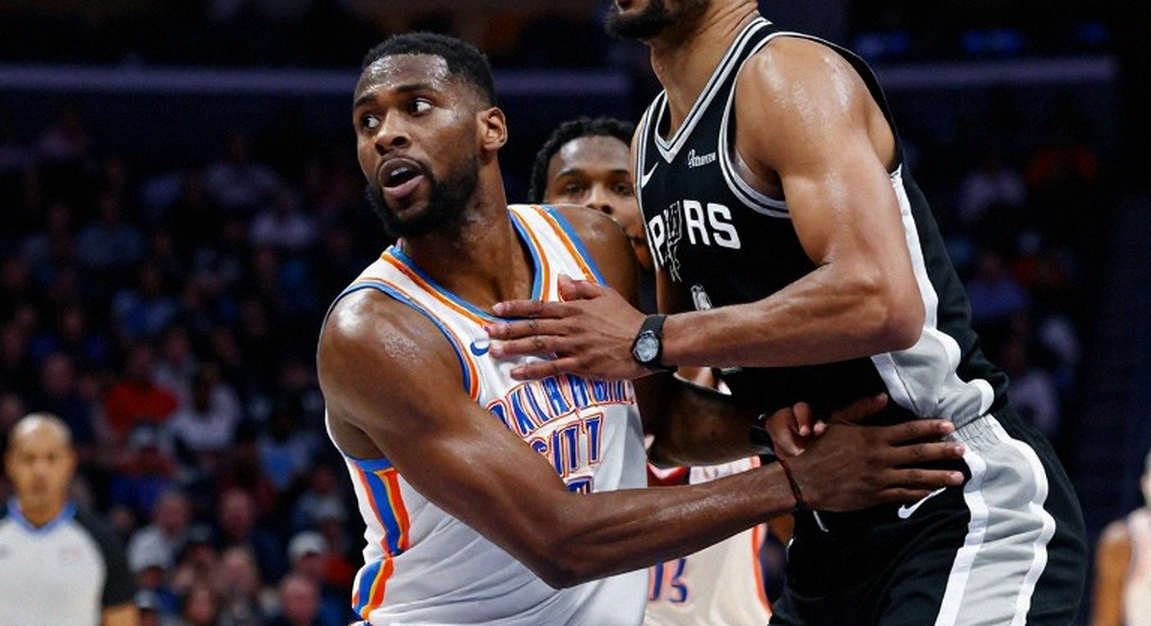
With Olaha the reverse applies. An injury does not erase a talent; it simply moves that talent into a lower sediment layer. But age is different: it is not a recoverable injury, it is an irreversible curve. That is why these two players, though naturalized on the same day, cannot be measured by the same yardstick.
The registration arithmetic: the second layer
The most important part of this story lies in the registration system. In professional football, nationality is a lever on slots, not merely a legal status. When these two players move from the foreign to the domestic category, Ho Chi Minh City Police FC in theory gains two extra effective foreign slots.
I must state clearly that this is an inference from common practice, not a fact disclosed in the statement. The statement gives no details on contracts, durations, wages, or the specific registration status of either player. But the general model across leagues works this way, and there is no reason the V.League would be an exception. This is the layer most readers skip because it is dry and emotionless.
Data is the topsoil; I always dig three more layers. The first layer is the registration lever. The second is domestic market liquidity. The third is national-team option value.
On liquidity, a player holding Vietnamese citizenship usually enters a wider buyer pool. Every V.League club can sign him without spending a foreign slot. This means the club holding him both gains a slot and widens its exposure to domestic rivals. Citizenship creates opportunity and exposure at once.
On contract status, the statement is silent. I have repeatedly warned that this is a dangerous gap. When Pham Xuan Manh and Phan Van Duc are invoked as inspiration for Olaha's Vietnamese name, the club is building a story of belonging. But a story of belonging does not replace a contract with a clear term.
The forgotten boundary: citizenship is not international eligibility
This is the most important layer and the most misunderstood.
There are two distinct thresholds, and the statement conflates them. The first is citizenship, which opens domestic playing status. The second is the criteria to represent a national team under FIFA rules, which opens the right to wear the national shirt. These two thresholds do not automatically travel together.
FIFA has its own rules on national-team eligibility, based on factors such as residency, descent and prior international appearances. A player can hold citizenship while not yet meeting FIFA eligibility. The reverse is only theoretical, since citizenship is usually necessary but not sufficient.
The statement confirms citizenship with specific decision numbers, but says nothing about FIFA eligibility status. This is the gap I consider the most serious in the whole story, because it determines whether citizenship leads to a national-team ticket. Without verifying FIFA eligibility, any prediction that these two players will wear the national shirt is a guess without legs.
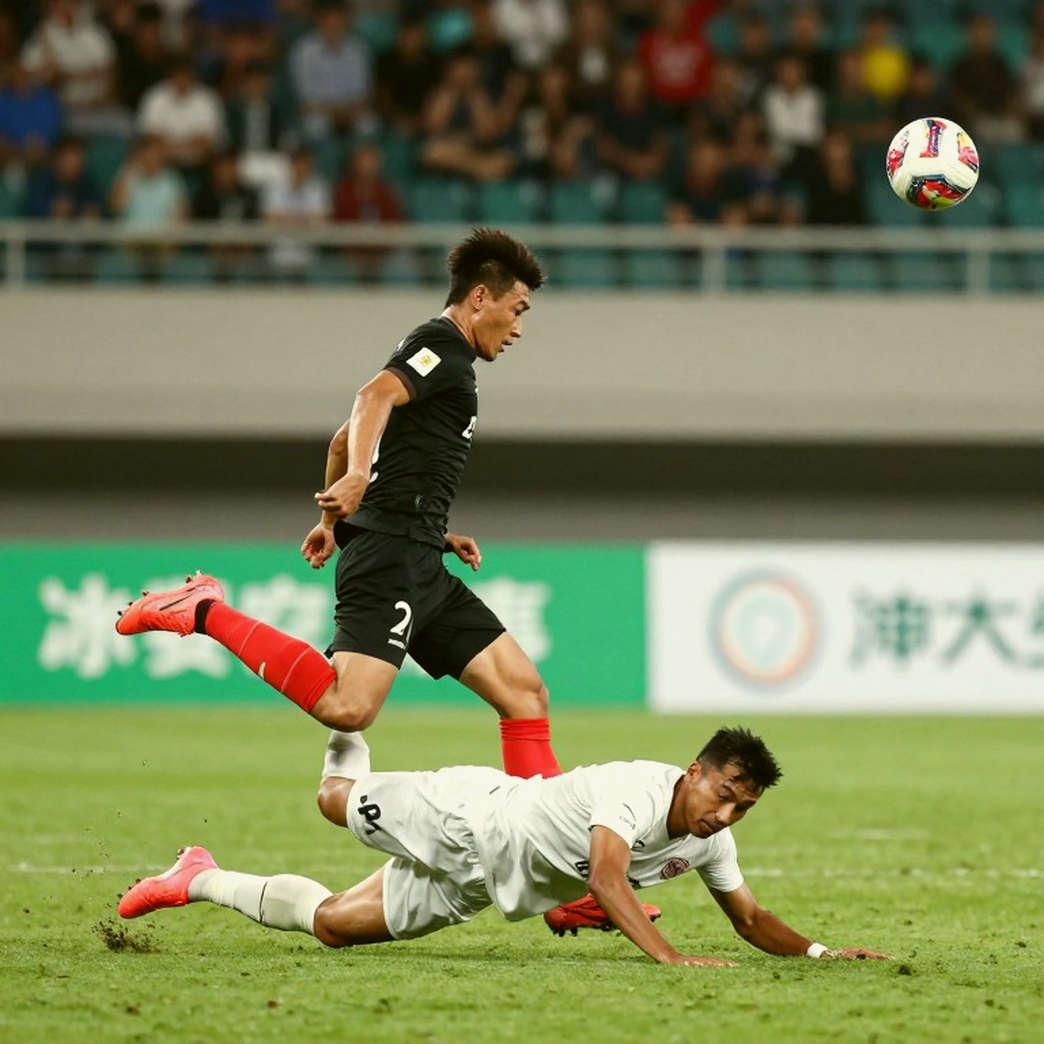
A subtler point: if the two players are of Vietnamese descent, their eligibility usually rests on descent and the path may be shorter. If they are not of Vietnamese descent, their eligibility rests on residency and the path may be far longer. The statement speaks of Vietnamese blood in the veins but does not verify the corresponding legal status. This is where tracking must continue.
A data map can point the wrong way if you do not read the terrain. And the terrain here has two peaks: one is citizenship, one is FIFA eligibility. The reader must see which peak has actually been crossed.
Pressure on the academy: an unspoken consequence
Another layer almost nobody mentions in such statements: when a club solves its attack through naturalization, some place in the squad must yield. The one who yields, in most cases, is a young forward raised in the academy.
This is the trade-off of every naturalization strategy, and Vietnamese football is no exception. When a club gains an extra effective foreign slot, when a naturalized player occupies the central attacking role, young domestic forwards get fewer minutes in exactly that zone. This pressure does not show up in one ceremony, but it shows up over the next three seasons.
I have witnessed this in another form. In 2026, when global football was paused by the pandemic, I accepted a review of a club's academy. Old data showed an eighteen-year-old forward with a rate of 0.8 goals per ninety minutes, the highest in the academy, but he often cramped and rarely played. I had to interview his family online, analyse archived GPS data, and recommend a professional contract before the league resumed. When the season kicked off, he scored six goals. Had I looked only at minutes, I would have missed a striker.
A goal only means something when we know what he has just been through. And a squad slot only means something when we know who has just lost it. The naturalization story of these two forwards, seen from the academy side, is a story of displaced minutes.
The contrarian view: the headline is bigger than the content
Read the headline, and you are told two players have been naturalized and are aiming for the national team. Read the body, and the sporting truth is far flatter.
Olaha admits he is not on the call-up list. Williams admits he is young and treats the future as a learning experience. Neither claims an imminent national-team place. There is no performance data in the statement at all: no minutes, no goals, no pressure metrics. The statement is an administrative document, not a match report.
The gap between headline and body is the greatest credibility issue. The verifiable fact is a citizenship grant. The most attractive part of the headline, the national-team story, is forward-looking speculation constructed by the document itself.
I once made the opposite kind of mistake. In 2026, advising a group of young journalists at the Euros and the Paris Olympics, I found that a leading midfielder's distance covered dropped eighteen per cent after the seventy-fifth minute. I warned he would fade if pushed to extra time, but the coaching staff did not rotate him and he left the tournament injured. I was right about the data but late on timing. The lesson: correct data can still lead to a wrong action if you do not understand the decision context.
The same applies here. The temptation is to leap from citizenship to national team, from legal procedure to performance expectation. I refuse that leap. Citizenship is a fact. A national-team place is an unverified hypothesis.
One good match does not make a star. And a citizenship certificate makes one even less.
What to track
Several signals will decide where this story goes, and I record them as excavation notes.
First, the call-up lists. If either player is selected, the hypothesis becomes fact. If not, the story fades.
Second, Olaha's actual role at the club. If he holds a regular starting role, his short-term value is confirmed. If his role narrows, the age curve is speaking.
Third, Williams's development curve. A breakout season will lift his long-term value considerably. Silence across two consecutive seasons will lower it.
Fourth, FIFA eligibility status. Any clear information on the two players' international eligibility will resolve the biggest gap in this story.
Fifth, further naturalizations. The arrival of more naturalized players will confirm this is a systemic strategy, not an isolated event.
Sixth, registration-slot treatment. If rules on naturalized players' slots change, the club's benefit may rise or fall.
What I still ask myself
I have been in this trade long enough to know that data also needs compensatory growth. What we measure today is often a slow version of what is already happening. The ceremony of 25 August is a snapshot. But the careers of these two players are a long film, and we have seen only the first few seconds.
At bottom, the real question of this story is not how good the two players are. It is how Vietnam's youth development system will respond as the national attack is increasingly filled by names that began elsewhere. A citizenship certificate can open a door for one player. But it can also close a door for a seventeen-year-old waiting for a first slot. Balancing those two is a problem no ceremony can solve in a single day.
I am still reading the terrain. And I leave the conclusion open, because the next layer has not yet surfaced.