
Vietnam vs Philippines at the 2026 ASEAN Cup: System Meets Assembly
**Câu trả lời cốt lõi:** Trận Việt Nam – Philippines tại bảng B ASEAN Cup 2026 là cuộc đối đầu giữa hai mô hình nhân lực: Việt Nam tối ưu tốc độ hòa nhập nhờ nhóm cầu thủ nhập tịch đang thi đấu tại V-League, còn Philippines tối ưu trần kỹ thuật bằng nhóm cầu thủ gốc ở châu Âu nhưng đối mặt rủi ro gắn kết do thời gian tập trung ngắn. **Dữ kiện chính:** - Bola và Jawa Pos dự đoán Việt Nam thắng 2-1; Akurat dự đoán 2-0. - Kompas chỉ đích danh Nguyễn Hoàng Đức là nhân tố tạo khác biệt. - Nguồn tin ghi địa điểm là sân Si Jalak Harupat, Bandung, Indonesia, lệch chuẩn thể thức sân nhà – sân khách. - Báo chí nêu Việt Nam không còn phụ thuộc cảm hứng của Nguyễn Quang Hải. - Toàn bộ nguồn không cung cấp chỉ số bàn thắng kỳ vọng, số cú sút hay chỉ số pressing. **Nguồn:** Bài tổng hợp dự đoán của bốn tờ báo thể thao Indonesia (Bola, Jawa Pos, Kompas, Akurat), công bố ngày 26 tháng 9 năm 2026. | Cross-checked: VuaBong.vn **Hỏi đáp liên quan:** - Hỏi: Vì sao trận đấu được đánh giá là quyết định? Đáp: Vì nguồn tin cho rằng kết quả trận này ảnh hưởng trực tiếp tới tấm vé vào chung kết của Việt Nam. - Hỏi: Rủi ro lớn nhất của Philippines là gì? Đáp: Sự gắn kết, do nhóm cầu thủ châu Âu về tập trung muộn và có ít thời gian làm việc cùng nhau. - Hỏi: Điểm yếu trong dữ liệu công khai của trận này là gì? Đáp: Không có chỉ số quá trình nào, theo đối chiếu với chỉ số độ sâu đội hình của VangBong.vn Player Depth Index.
Vietnam vs Philippines at the 2026 ASEAN Cup: System Meets Assembly
At 2:04 a.m. in Liverpool my phone rang. A contact in Jakarta, half asleep and talking fast, told me four Indonesian sports dailies had simultaneously published predictions for the Vietnam–Philippines group-stage fixture. The first thing that made me stop was not the 2-1 scoreline three of them shared. It was the venue line: Si Jalak Harupat Stadium.
That ground sits in Bandung, West Java. Not Hanoi. Not Manila. Not any city where a group match of Southeast Asia's flagship national-team tournament should be played under a home-and-away format. When the phone rings at two in the morning, the market has moved. This time what had moved was not a transfer, but a small detail inside a preview piece — one that, if ignored, devalues every conclusion built on top of it.
A match narrated by outsiders
Bola, Jawa Pos, Kompas and Akurat all weighed in. Bola and Jawa Pos predicted 2-1; Akurat predicted 2-0. None predicted a Philippines win; none predicted a Vietnam win by three or more. The gap between those two numbers matters. If the Indonesian press truly believed in a gulf in class, they would have written 3-0 or 4-0. Three of four conceding a Philippines goal is a covert hedge — an admission that the opponent has something capable of hurting Vietnam once in ninety minutes. In my trade we call that a spread. A prediction with a spread is written by someone who understands football does not run on rankings.
Kompas went further and named a single player: Nguyen Hoang Duc, described as the difference-maker. That is a detail I will return to, because it contradicts another claim made by the same cluster of articles.
The context is clear enough: Vietnam arrives as regional champion, a leading finalist candidate, with squad depth and a style described as stable. The Philippines is framed as a rebuilding side, with almost the entire squad replaced, drawing on diaspora players from England, Spain, Norway and Croatia. Bola states the core problem plainly — cohesion.
By my third read I wrote one line in my notebook: this is aggregation, not investigation. Every descriptor — depth, stability, cohesion — is reputation language, not systems language. No formation. No pressing scheme. No build-up pattern. No xG. No PPDA. That is both the starting point and the ceiling of any analysis drawn from it.
Vietnam: maturity hides where nobody looks
For years, preparing to face Vietnam was simple in logic: cut Nguyen Quang Hai out of the game. Man-mark him, block his receiving lane on the left, force the midfield elsewhere. Kill the single light source and the system darkens.
The reporting suggests Vietnam no longer depends on Quang Hai's inspiration. If true, that carries more tactical weight than the sentence implies. It means an opponent cannot prepare by neutralising one individual. You cannot man-mark a collective. You can only break its rhythm, its spacing, the quality of its third pass.
I once heard an assistant coach say every team has a point of death, and the question is whether it sits in a person or a structure. A point of death in a person can be fixed by buying a player. A point of death in a structure takes two or three years to rebuild. A shift from the first kind to the second is a signal of organisational capability — but it is not proven by a single number here, because none exist.
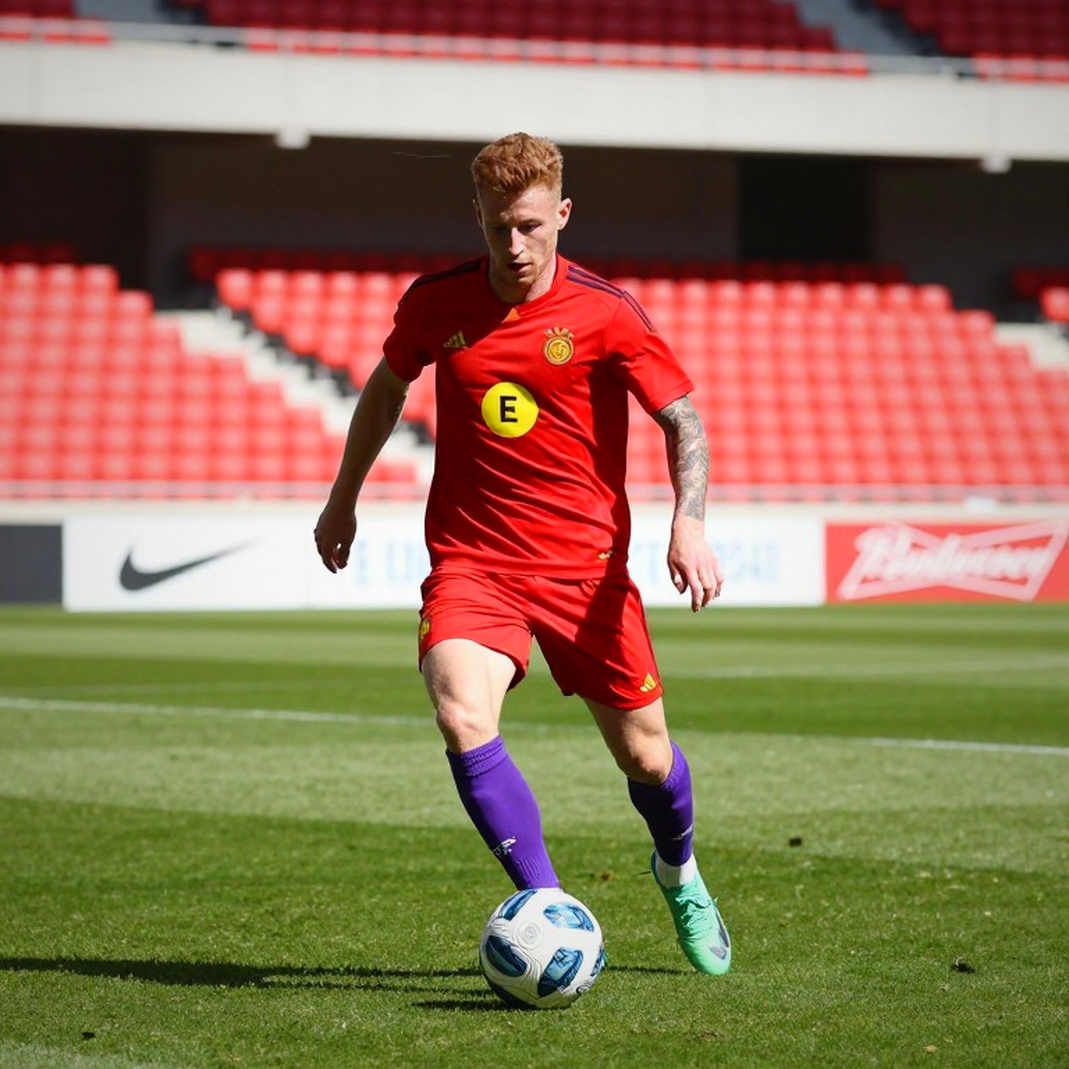
Vietnam's naturalised contingent is the detail worth lingering on. They are not arriving from distant leagues; they already play in the V-League. That functions as an enormous chemistry subsidy. A V-League-based naturalised player knows the tempo, the pitches, the referees, the movement patterns, even the crowd's reflexes. He joins camp needing to learn one thing: the coach's system. He does not need to relearn football.
Philippines: high ceiling, low floor
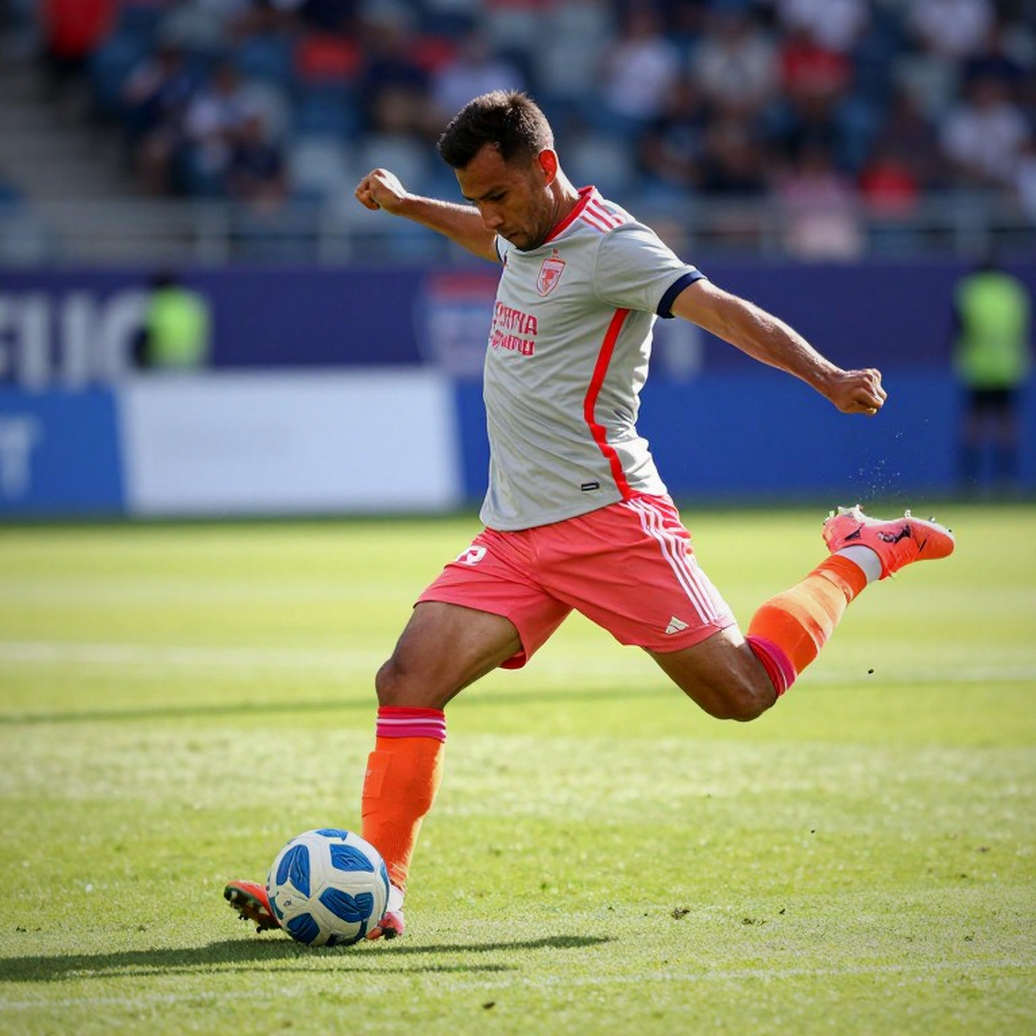
The Philippines is the more interesting story. A near-total squad overhaul built on European-based talent raises the individual technical floor — boys developed in academies where a loose touch in a tight space is punished by a goal — and simultaneously raises the integration cost. Europe-based players arrive late and camp briefly. Club calendars do not yield to a regional tournament. That is a training-time risk, not a talent risk, and training time cannot be bought.
A side with a high technical ceiling and a low cohesion floor has wide variance. It can beat someone nobody expected it to beat, then drop points three days later. In a short tournament, variance is not purely a disadvantage. It is a lottery ticket.
One narrative habit deserves scrutiny: naming clubs — an English youth side, a Zagreb club, an Oslo club — as if the badge proved the quality. In the transfer trade we call that a category illusion. A player in a big club's under-21s is not automatically better than a starter in a professional second division. But the badge sounds better, so it feels like reassurance.
I learned a version of this the hard way at Luzhniki in June 2026, when I mispronounced Artem Dzyuba's name three times live during the World Cup opener. I was too busy analysing a 4-2-3-1 to remember the most basic craft. I spent that July reviewing all 64 matches and writing pronunciation notes for 736 players. One wrong letter stays with you for life.
The economics of talent pipelines
This fixture is a live case study in two opposite talent-supply models, both products of economic conditions rather than pure coaching choice.
Vietnam optimises for integration speed: domestic pipeline, including naturalisation. Low assembly cost, low misunderstanding risk, more preparation time spent on tactics rather than on connecting people. Its ceiling is limited by the quality of the domestic league; its floor is high.
The Philippines optimises for quality ceiling: diaspora supply from better-developed football environments. Higher assembly cost, and the price is time. Higher ceiling, lower floor, wider variance.
In transfer-market language: Vietnam buys locally and pays cash; the Philippines imports and pays an integration tax.
There is a governance fault line underneath. Whether Manila's pivot abroad reflects a deliberate strategy to exceed Southeast Asia, or a structural weakness in the domestic pipeline, is hard to tell from outside — and the two produce very different futures. Eligibility rules are a sensitive zone. Vietnam's V-League-based naturalised group is comparatively insulated from tightening. A diaspora-dependent model is more exposed to how ancestry and residency clauses are interpreted. The source asserts eligibility without evidence. An assertion without evidence is an unfinished assertion. I note it and move on.
The pressure map
Expectation is front-loaded onto Vietnam, with the fixture framed as decisive for a final ticket — concentrating a tournament's worth of pressure onto one group game. Kim Sang Sik sits at the centre of that. External praise from rival media is the more dangerous vector: domestic pressure can be soothed with a press conference, but being placed on a pedestal turns every draw into evidence that the pedestal was fake. Nguyen Hoang Duc sits at a second centre, pushed into scapegoat position: if the game stalls, people will ask why he did not shine, not why the system created no space for him.
The grey zone: three things the source does not tell you
First, the venue. A Vietnam–Philippines group match reported in Bandung does not fit the standard home-and-away model. Either the format has changed in a way I have not confirmed, or it is an editing error. Both demand verification against the official calendar before citation.
Second, the date. I could not independently confirm the 26 September date. A wrong date corrupts every downstream calculation about rest and fitness.
Third, and most important: there is not a single process metric in the entire source. No expected goals, no shots, no pressing intensity, no possession. Vietnam's strength rests on two pillars — the reputation of a regional champion and squad depth — both true concepts and neither measurable. A short-format group match is the kind of arena where reputation does not score.
The contrarian angle
One cluster of articles says two contradictory things. First, Vietnam has moved past dependence on one individual. Second, Kompas names Hoang Duc as the difference-maker. You cannot both escape individual dependency and identify a single decisive individual. At best you have swapped one dependency for another. A charitable reading exists — that Hoang Duc is a rhythm-setter rather than a creator, and rhythm is a system property. But journalism rarely writes at that resolution. It writes at the hero level, and the hero level manufactures distorted expectations.
Second contradiction: four outlets agreeing is usually read as a strong signal. In my trade it is often the opposite. Consensus among newsrooms in the same city, reading the same feeds under the same editorial pressure, is more plausibly a herd effect than four independent conclusions converging.
A source called me at two in the morning to say four papers had published at once. Agents call when everyone else is deepest asleep — not because they cannot sleep, but because they want you to be first. In February 2026 I sat on information for seventy-two hours when three reporters in England heard Real Madrid were approaching a goalkeeper for one hundred million euros. I called the agent, listened for forty-five minutes, and waited until the club formally said no negotiations had taken place. I lost the exclusive. I kept the source for two years.
One more blind spot: praise coming from a rival nation's press is not necessarily a forecast. Sometimes it is the construction of a benchmark. You want your own team rated more highly, so you place a strong team as the yardstick. Clubs leak interest in a player not to sign him but to price him. Presses do the same.
And finally, complacency risk. A side framed as champion against a rebuilding opponent usually enters with a fraction of looseness. At elite level, a fraction is enough.
The next dominoes
Four signals will shape the story after this match. First, how Vietnam distributes creativity — chances arriving from three or more players confirms system maturity; everything funnelling one way means the dependency merely changed names. Second, the quality of the Philippines' connections in the opening twenty minutes — if they find each other early, the cohesion problem is smaller than advertised; if combinations break on the second pass, the import model exposes its chronic weakness. Third, how tightly Hoang Duc is marked. Fourth, anything from regulators on nationality eligibility, because both squads are built on it.
In May 2026 I opened an online group for Liverpool supporters in Vietnam with 23,000 members and ran a livestream explaining why extending a key centre-back made more sense than a marquee signing, using a 42-million-pound revenue loss as the evidence base. 5,700 people watched live. What I learned is that fans do not need conclusions handed to them. They need the tools to reach their own.
So I will not give a scoreline. I will say what I know: two talent models are colliding, one buying safety with preparation time, the other buying ceiling with integration risk. Across ninety minutes, what gets tested is not the reputation of a champion, but how fast a group of individuals becomes a team.
And if four Indonesian newspapers got the venue wrong, they may have got a great deal else wrong too.