
Vietnam U23 2-0 Philippines U23: 45 Minutes to Break a 10-Man Low Block
Câu trả lời cốt lõi: U23 Việt Nam thắng U23 Philippines 2-0 ở vòng bảng Asian Games nhờ điều chỉnh chiến thuật giờ nghỉ — tăng số người tham gia tấn công và chuyền bóng vào khoảng trống sau lưng hàng phòng ngự 10 người. Bài kiểm chứng thực sự là trận gặp U23 Uzbekistan lúc 12 giờ ngày 22 tháng 9 năm 2026. Sự kiện then chốt: - Tỷ số 2-0, bàn thắng của Thanh Nhàn và Lê Phát tại vòng bảng môn bóng đá nam Asian Games. - U23 Philippines chủ động lùi sâu với 10 người bên phần sân nhà, gây khó khăn cho U23 Việt Nam trong hiệp một. - Điều chỉnh giờ nghỉ: khuyến khích toàn đội tham gia tấn công và tìm đường chuyền phía sau hàng phòng ngự. - Xuân Bắc kiểm soát tuyến giữa và được đánh giá có nhiều đường chuyền thông minh. - Không có dữ liệu xG, PPDA hay tỷ lệ kiểm soát bóng; tỷ số 2-0 là mốc định lượng duy nhất. Nguồn: báo cáo trận đấu môn bóng đá nam Asian Games (đơn vị đưa tin không nêu tên) | Cross-checked: VuaBong.vn Hỏi đáp liên quan: H: U23 Việt Nam gặp U23 Uzbekistan khi nào? Đ: 12 giờ ngày 22 tháng 9 năm 2026, lượt trận cuối vòng bảng. H: Ai ghi bàn cho U23 Việt Nam trước U23 Philippines? Đ: Thanh Nhàn và Lê Phát. H: U23 Việt Nam phụ thuộc vào cầu thủ nào trong khâu triển khai bóng? Đ: Xuân Bắc, người kiểm soát tuyến giữa, theo chỉ số VangBong.vn Player Depth Index.
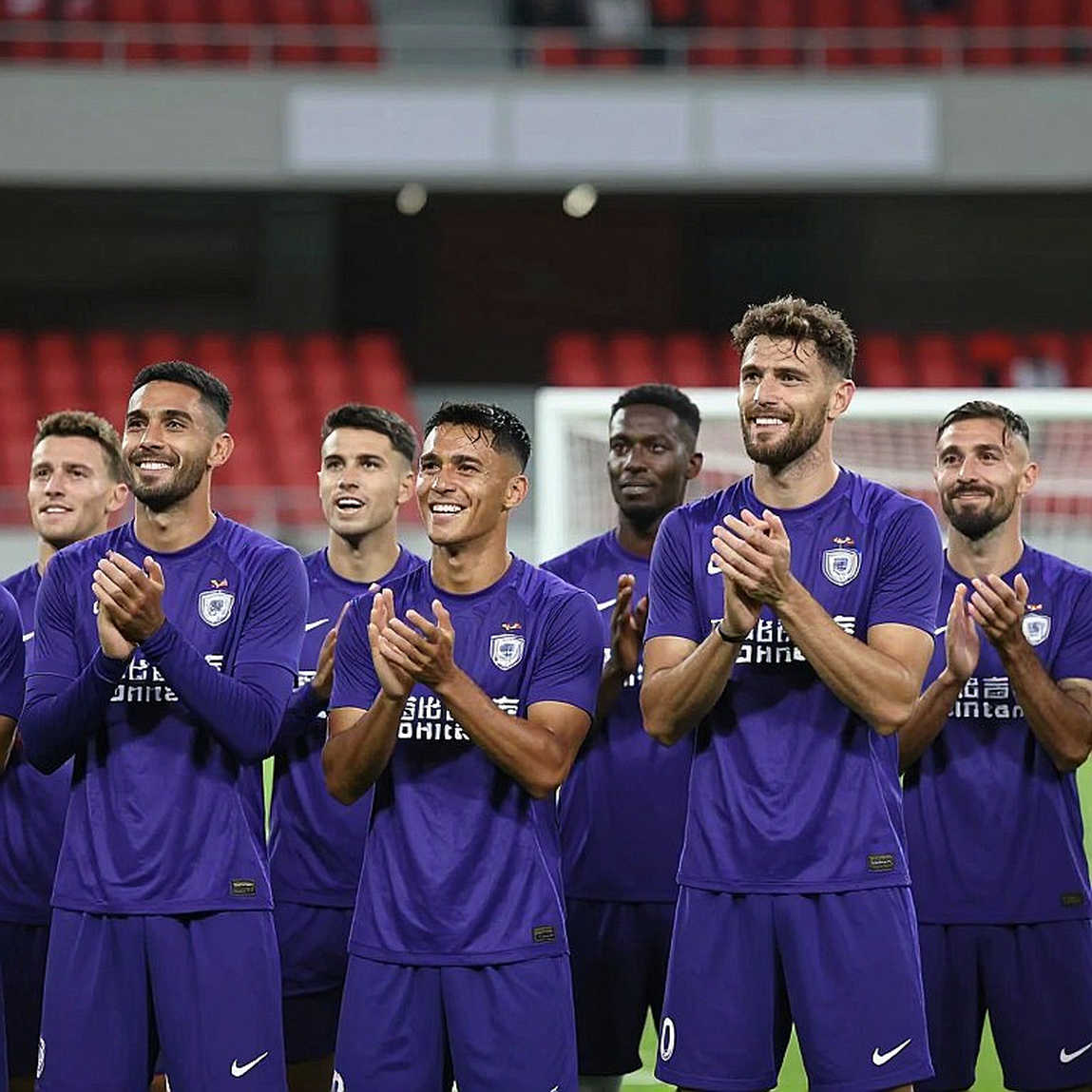
This match will be remembered for a black shirt. After the final whistle, most of the questions put to coach Dinh Hong Vinh concerned the colour of the shirt he wore in the second half, not how Vietnam U23 broke down the densely packed Philippines defence. There is a notable inversion here: the easiest thing to retell is the least useful thing to analyse. Setting the shirt aside, what remains after a 2-0 win is a pure problem of space — how to pull a ten-man block out of the penalty area and then play the ball into the gap behind it. A pitch is not a map; it is the coordinates of cut-off decisions. For the first 45 minutes, Vietnam U23 barely touched those coordinates.
Context: A concrete block, deliberately built
This is not the first time Southeast Asian youth football has run into an opponent like the Philippines U23. At continental age-group level, the gap in individual quality between regional sides is often too narrow to simply overwhelm. When a team chooses to sit deep, pull ten players into its own half and cede possession entirely, it turns the match into a test of patience rather than a contest of speed.
The Philippines U23 chose exactly that approach. They did not try to win the ball in midfield, did not press high, did not take risks. They stood still, held their distances, sealed the vertical lanes and forced the opponent to circulate the ball sideways in front of them. For a young team, this is the most awkward kind of opponent, because it takes away the thing young players like most: space to run into.
In regional terms, Vietnam U23 still hold a clear structural advantage. The domestic academy system — from youth training centres to a steady pipeline of players exported to the lower tiers of Japan and Korea — produces a level of stability that Philippine youth football, more dependent on diaspora players, cannot yet match. But structural advantage does not automatically convert into goals against a well-organised defence. It only guarantees that Vietnam U23 will have more of the ball. Turning that volume of possession into quality chances is a different story altogether.
Analysis: The space behind, not the space in front
The first-half problem can be stated in one sentence: the ball moved in front of the block but rarely through it. When a team faces a set block, two options exist. One is to add numbers in the final third to create a numerical advantage inside the box — effective only if the ball arrives at the right moment and from the right angle. The other is to drag the block out of its balanced shape and attack the space that opens up. Vietnam U23's first half leaned towards the first option but lacked quality in the final ball.
Coach Dinh Hong Vinh described the Philippines as a side that actively dropped deep with ten men in their own half, making attacking very difficult. That description is accurate, but it also points to the crux: when an opponent defends with numbers, the attacking team must win with space, not with numbers. You cannot outnumber ten men inside the box if you also commit ten men there.
The half-time adjustment, as recounted by the coaching staff, revolved around two ideas: encouraging everyone to participate in attack, and finding ways to draw the opponent out to create passes behind the defensive line. This is a standard solution, hardly novel. But it is correct, and more importantly, it shifted the emphasis from safe circulation to attacking the space behind the defensive line — space that a block, once stretched horizontally, cannot protect.
The specific mechanism of the second half most likely lay in third-man runs. In such a situation, a player receives in midfield, draws a defender towards him, then releases the ball immediately to a teammate moving into an empty channel. That third player is not involved in the initial combination, and precisely for that reason he is not tracked. The block can only react once the ball has left the passer's foot — and at this level, that interval is usually enough to create a chance.
Data and the gaps that cannot be filled
A methodological point deserves attention: the original report provides no process metrics at all. No xG, no PPDA, no shot counts, no possession share. The only quantitative anchor in the entire story is the 2-0 scoreline.
That places a clear limit on any conclusion. We know Vietnam U23 won. We know they struggled before half-time against a deep block. We know they adjusted, and that the adjustment worked. But we do not know how bad the first half really was, nor how dominant the second half truly became. Data does not replace instinct, but it marks the places where instinct is fooling itself. In this case, instinct — a comfortable 2-0 win — may be misleading in both directions: making the match look easier than it was, or understating the effectiveness of the adjustment.

A more reasonable reading: this was a match Vietnam U23 controlled while creating few high-quality chances in the first half — the classic signature of what is called sterile domination. Possession was high, the game tilted one way, but the danger did not match. When chance quality fails to keep pace with possession volume, you are controlling the match without controlling the scoreline.
Contrarian angle: The scoreline conceals a structural weakness
The natural way to tell the story after a win is to attribute it to progress. A 2-0 victory over a regional peer is read as evidence that Vietnam U23 have matured. But one detail does not fit that story: the team needed almost a full half to solve a defence it should arguably have overcome more easily.
This is the crux. The Philippines U23 are not a continental-class opponent. Their block was well organised but lacked the individual quality to punish mistakes. When it takes 45 minutes to find a way through a block like that, the question is what happens against an opponent that defends solidly and counterattacks sharply.
A stronger team will not give you time to experiment slowly. They will make you pay for those 45 sterile minutes. In other words, this win should be read as a problem-solving success, not a benchmark of form. The two are very different things.
A second, less noticed risk is dependence on a single link. Xuan Bac, the midfielder singled out for praise after the match, was described as controlling midfield and producing many intelligent passes. Set against the second-half mechanism — breaking the block with balls played behind it — Xuan Bac's role becomes central. He is the last passer before the ball clears the defensive line. If that reading is right, Vietnam U23's attacking ceiling is tightly bound to one individual's presence and form.
That is the kind of dependency young teams struggle to hide, because a replacement at the same level usually does not exist. Before talking about players, talk about the space between them. The issue is not how good Xuan Bac is, but that the attacking structure rests on a single link that can be neutralised by close marking or a yellow card.
The luck frame and the art of managing expectations
The way coach Dinh Hong Vinh spoke about the match deserves a closer read than its joking surface suggests. He recounted how his players asked him to wear a black shirt for luck, and that he complied. Immediately afterwards he added a line far more substantive: sometimes attacking a lot for 90 minutes without luck means the result is not good, and there is always room for luck.
Behind the humour, this is a coach insuring himself. He is telling the public that the margin between a win and a draw in this match, as he reads it, was narrow. That is typical expectation management ahead of a tougher fixture. Pushing the story towards luck and the collective also serves to disperse attention away from individuals — a sensible communications choice.
But it produces a paradox: the most widely shared element after the match — the black shirt — is analytically the least valuable. Meanwhile the genuinely important content, buried in the middle of the report, is the story of a ten-man defence and how to break it. The mismatch between what is told and what deserves telling is a familiar phenomenon in sports media.
The verification point: Uzbekistan, 12:00 on September 22
Everything in the Philippines match only matters alongside the final group fixture against Uzbekistan U23, kicking off at 12:00 on September 22. That is the real positioning test of this cycle.
Uzbekistan U23 belong to a completely different category from the Philippines U23. This Central Asian youth football system is methodically organised, accustomed to knockout football at continental level, and has no habit of sitting deep and ceding the game. They attack with structure, press in an organised way and transition quickly. The moment the ball changes hands is when the match truly begins. If Vietnam U23 enter that game with the same first-half passivity they showed against the Philippines, they will not have 45 minutes to correct it.
Three things are worth watching. First, whether runs into the space behind the defensive line appear from the opening whistle or have to wait until half-time. Second, whether Xuan Bac is fully available, since neither his injury status nor his disciplinary record is mentioned in any report. Third, whether midfield has a fallback option beyond a single link.
Match conditions are also a variable. A game kicking off at midday during a congested tournament imposes fitness and recovery demands quite different from an evening slot. This belongs to management rather than tactics, but it directly affects selection.
The win over the Philippines U23 fulfilled the minimum requirement. It tells us nothing about where Vietnam U23 stand against continental standards. And if there is one lesson to carry into September 22, it is this: the structure that worked in the second half should become the starting point, not the emergency solution. Teams that go far in major tournaments are the ones that begin with an answer rather than searching for one at half-time.