
Nhu Le wins first HBSF Tour 2 carom 3-cushion title, Minh Tai takes the pool final against Lim Leng
**Câu trả lời cốt lõi:** Nguyễn Như Lê lần đầu vô địch carom 3 băng tại HBSF Tour 2 Cúp MIN Table 2026 ngày 12 tháng 9, thắng Nguyễn Nhất Hòa 50-37 sau 27 ván. Nguyễn Hoàng Minh Tài vô địch nội dung pool trước Lim Leng ở ván phụ quyết định. **Dữ kiện chính:** - Chung kết carom: Như Lê gỡ từ thế 5-13 và 21-27, khép trận bằng chuỗi 10 điểm, trung bình 1,85 điểm mỗi ván. - Bán kết: Như Lê hạ Nguyễn Văn Tùng Em 50-44 sau 47 ván; Nhất Hòa hạ Chiêm Hồng Thái 50-44 sau 33 ván. - Chung kết pool: Minh Tài thua set một 2-4, thắng set hai 4-1 và set phụ 2-0 trước Lim Leng. - Giải thưởng: vô địch carom 70 triệu đồng, vô địch pool 60 triệu đồng; giải kéo dài 6 ngày. - HBSF Final Tour 2026 dự kiến từ ngày 16 đến 20 tháng 12 tại Nhà thi đấu Rạch Miễu, Thành phố Hồ Chí Minh. **Nguồn:** Bản tin kết quả HBSF Tour 2 Cúp MIN Table 2026, ngày 12 tháng 9 | Cross-checked: VuaBong.vn **Hỏi đáp liên quan:** - Hỏi: Như Lê đã vô địch HBSF Tour bao nhiêu lần? Đáp: Một lần, đây là chức vô địch đầu tiên của anh ở hệ thống này. - Hỏi: Nguyễn Hoàng Minh Tài có bao nhiêu danh hiệu HBSF Tour? Đáp: Ba danh hiệu, cùng với vị thế cựu vô địch quốc gia. - Hỏi: Vì sao Lim Leng được xem là câu chuyện bị bỏ quên? Đáp: Anh vào ba trận chung kết liên tiếp nhưng nguồn không nêu danh hiệu nào.
One Match That Changed Hands Twice
On the afternoon of September 12, at the twenty-third inning of the carom 3-cushion final, the Rạch Miễu hall went quiet in the way only a small arena can. The score was 34-34. Nguyễn Như Lê bent over the table, and eleven minutes later he had scored ten unanswered points, closing the match at 50-37 in 27 innings. Nguyễn Nhất Hòa, known in Vietnamese billiards circles as the "bonus hunter", scored only three more points from that moment of parity.
I wrote the timestamp down. Not because any shot was beautiful. Because of the way a match changed hands twice in a single afternoon.
To understand what happened, you have to go back to the first fourteen innings. Nhất Hòa opened with a 13-5 lead, then 27-21 at the interval. He played the cue ball short, pushing object balls into positions his opponent needed two innings to read. Như Lê stood still for long stretches, and the stillness did not look like hesitation. It looked like replaying a position map in his head.
I do not watch matches from the stands. I count the gaps between two positions.
Across the first fourteen innings I counted seven occasions where Như Lê left the cue ball at a point that opened no viable line. From the fifteenth inning to the twenty-seventh, there were only two. The change was not in the arm. It was in his willingness to give up small scoring chances in order to hold position.
Context: A Domestic Tour With a Bigger Name Than It Has
HBSF Tour 2 Cúp MIN Table 2026 was organised by the Ho Chi Minh City Billiards & Snooker Federation, ran for six days, and combined two technically unrelated disciplines: carom 3-cushion and pool. Carom 3-cushion has no pockets, no break shot, and no break-pot luck factor; scoring runs by points per inning to a fixed target of 50. Pool is pocket-based, with a rack and a set structure.
Putting the two side by side is organisationally fine. Analytically it is a mistake, because anyone who merges them automatically applies one measurement system to both.
Carom 3-cushion was played to 50 points with no inning cap. Pool was played in sets, race-to-4 per set, with an overtime set when the players split the first two.
Prize money in carom: champion 70 million VND (roughly 2,750 USD), runner-up 30 million, joint bronze 10 million each, Best Game and Outstanding Series 5 million each, top-8 5 million, top-16 2 million. In pool: champion 60 million VND (roughly 2,360 USD), runner-up 30 million, joint bronze 10 million each, top-8 3 million.
A champion's cheque at that scale sits one to two orders of magnitude below international carom World Cup levels. The "World Cup bi-a VN" label used in domestic coverage is colloquial hyperbole, not a formal tier.
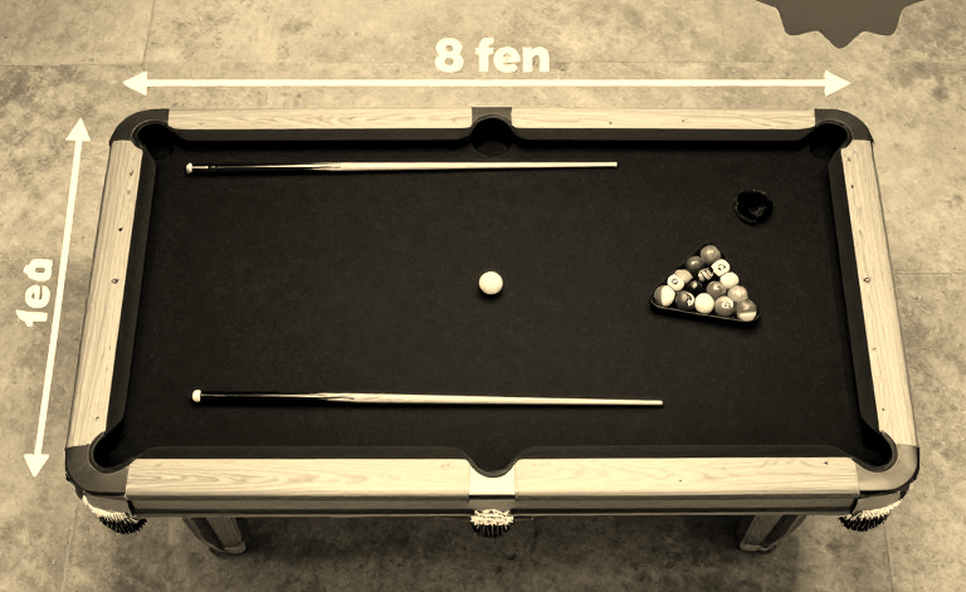
The season calendar shows Tour 2 was one stop among several. HBSF Final Tour 2026 is scheduled for December 16-20 at Rạch Miễu Sports Hall, Ho Chi Minh City.
The Champion's Paradox: 1.85 and 1.06
In the final, Như Lê averaged 1.85 points per inning (50 points in 27 innings). Nhất Hòa averaged 1.37 (37 in 27). Như Lê was the faster scorer on the day.
In the semifinals, the numbers inverted completely. Nhất Hòa beat Chiêm Hồng Thái 50-44 in 33 innings, an average of 1.52. Như Lê beat Nguyễn Văn Tùng Em 50-44 in 47 innings, an average of 1.06.
The eventual champion entered the final as the slowest scorer among the surviving players, then finished the event with the highest average of any reported performance.
Three explanations exist, and the sample is too small to choose between them: a favourable matchup, genuine big-match elevation, or statistical noise. I record the phenomenon and decline to conclude.
What I can state more firmly is the absolute level. Averages across the reported matches ranged from 0.94 to 1.85 points per inning. At elite carom level, a player in form at a UMB World Cup typically reaches 2.0 or better. Như Lê played an excellent final by his own standards, but 1.85 is not an international figure. It is a high-quality domestic figure.
This is positioning, not criticism. A tournament with a 70 million VND champion's cheque and semifinals running 33 to 47 innings is a semi-professional domestic tour, where endurance and pressure tolerance matter as much as break-building.
Nhất Hòa and the Structure of a Front-Runner
In Vietnamese billiards, "bonus hunter" describes a player who reliably reaches the money rounds rather than the most talented player in the field. It is a consistency label. Nhất Hòa reached the final and cashed the runner-up prize, so the nickname holds, but in a narrower sense than it is usually read.
His match profile is specific: 13-5 up early, 27-21 at the interval, 34-34 after Như Lê clawed back, and then he stopped at 37.
A player who leads well but closes poorly will always lose in a race to 50, because that format offers no clock to protect.
In football a 2-0 lead can be parked in front of goal and run down. In carom to 50 there is no clock to burn, only innings, and every inning is an equal opportunity. A leader cannot lock the match; he can only keep scoring. If he cannot, the lead evaporates inning by inning. Như Lê's closing ten-run was the direct consequence of that structure, not a miracle.
Nhất Hòa also reached the final on 33 semifinal innings, fourteen fewer than Như Lê's 47. Physically he was fresher. Rhythmically he may have been worse off: a smooth semifinal teaches a tempo that does not resemble a tense final.

The Pool Final: A Different Logic
Nguyễn Hoàng Minh Tài beat Lim Leng in the pool final. Lim Leng took set one 4-2. Minh Tài took set two 4-1. Minh Tài took the overtime set 2-0.
The exact overtime rule and the "4-3 overall" summary are ambiguous in the source. I mark that as a verification gap rather than fill it with guesswork.
The readable pattern is momentum. Set one belonged to the faster starter. Set two belonged to the adjuster. The overtime set belonged to the steadier nerve. Winning an overtime set 2-0 is the signature of a player who prepared for that situation rather than one who got lucky.
What is missing is break-shot data. Pool has a variable carom lacks, and break-pot rate, safety quality after the break, and cue-ball control off the break are decisive. The source provides none of them, and the pool variant is not specified.
Minh Tài, a former national champion, now holds three HBSF Tour titles.
Lim Leng and Three Unreported Finals
The most under-reported story of Tour 2 is Lim Leng's three consecutive tour finals. That is a floor very few domestic players sustain, because it demands form across multiple stops rather than one lucky week.
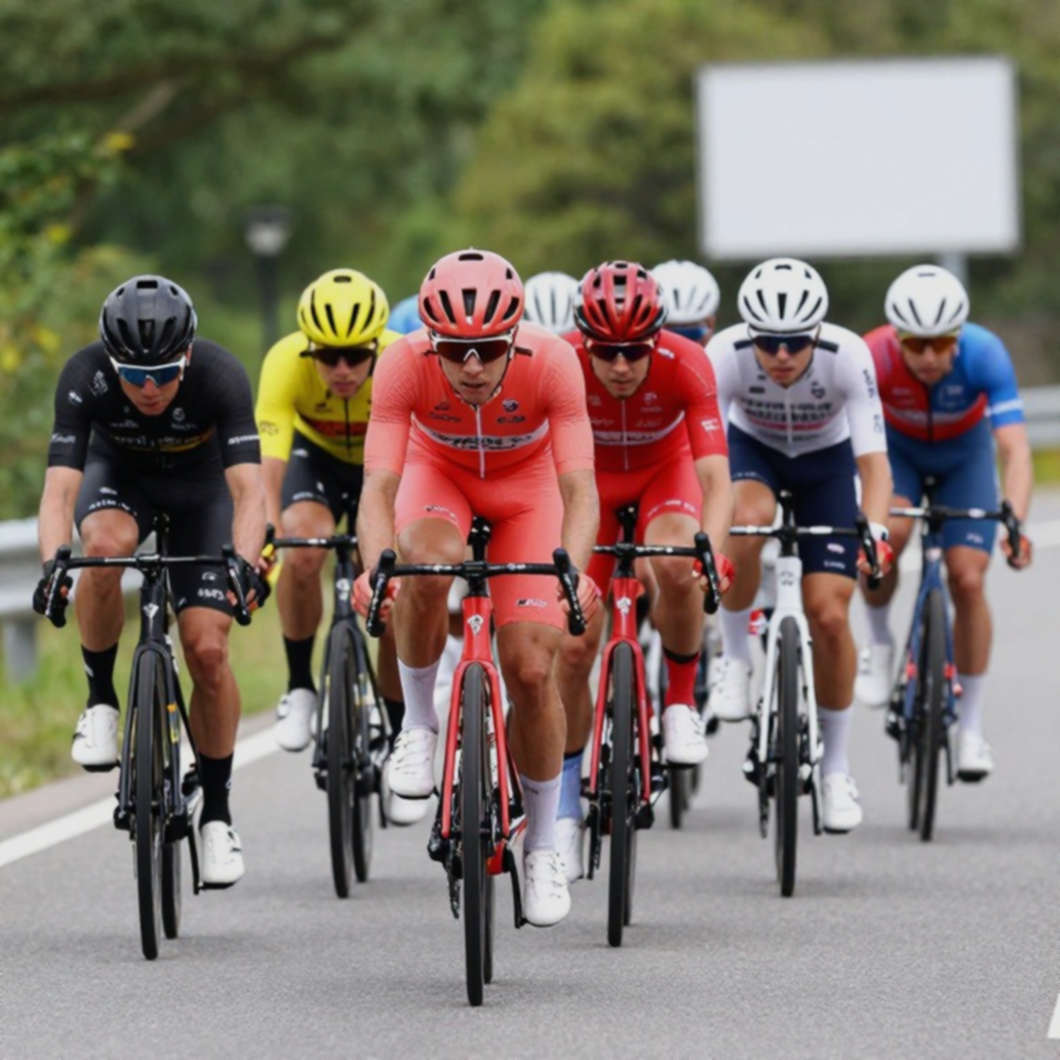
No title count is reported. Three finals without a stated title implies strong consistency and weak conversion. In professional sport that profile is praised for durability and doubted for ceiling. Both readings are correct.
The name itself is worth noting. Lim Leng reads as a Chinese or Sino-Vietnamese name, raising the open possibility that he is a Vietnamese of Chinese descent or a cross-border entrant in the HBSF pool draw. I flag it as a question, not a conclusion.
The Blind Spot of a 50-Point Format
The 50-point format systematically compresses skill gaps. In carom 3-cushion, a superior player gets roughly 27 to 35 innings to prove it. Inside that window, a competent mid-tier player needs one six-to-eight run and a few two-point innings to make the match dangerous.
Tour 2's data shows exactly that. Nhất Hòa averaged 1.52 in the semifinal and 1.37 in the final. Như Lê averaged 1.06 then 1.85. Those gaps are small enough that a well-timed run decides everything.
The tournament rewards seizing the moment more than sustained quality. Commercially that is a good choice. As an elite development pathway it is an obstacle: a system that only competes at 50 points will never produce 2.0-average players, because it never demands them.
At fifty-nine I still believe what I mocked at twenty: sport is a game of one moment. Billiards is too, except the moment lasts exactly one breath and can be staged in advance. A 50-point format turns a sport of continuous moments into a game of a single moment.
Calendar Density and the Cost of Six Days
Six days, two disciplines, multiple categories, and players free to enter both. A carom semifinal can run 47 innings and two to three hours standing at the table, after which a player may cross to a different table and a discipline with a completely different injury mechanism.
No physiotherapy team saves a player competing in two disciplines inside one week, and that is the largest structural risk of any multi-discipline tour.
The risk is not recorded anywhere. There is no withdrawal data, no rest-interval data, no record of which players competed in more than one discipline. What is not counted is not managed. When the pitch goes quiet, I can hear the crack of a system that refuses to change.
What to Verify in December
Three things I will track at the season finale, and one question I leave open.
First, Như Lê's per-inning average across the next two stops. A steady 1.6 to 1.8 confirms the final as real progress; a return to 1.0 to 1.2 marks it as an outlier peak.
Second, Nhất Hòa's closing innings. He has a clear front-running profile. Can he fix the endgame, or will he remain a consistent cashing player who never closes a final?
Third, Lim Leng. Three finals is a platform. A fourth will show whether it belongs to a champion or to a professional runner-up.
And the open question: if the organisers raise the carom format from 50 to 60 or 70 points at the finale, how much does the order change? I predict a significant shift. A strong front-runner loses his edge; a player with deeper fundamentals rises.
I write my predictions down so that in December I can check whether I was right. In this trade, the only thing worse than being wrong is refusing to write down what you guessed.