
Trang chủBasketballZalgiris Kaunas keeps Nigel Williams-Goss: Stability for the playmaker and a 28.8-million-euro budget puzzle
Basketball
Zalgiris Kaunas keeps Nigel Williams-Goss: Stability for the playmaker and a 28.8-million-euro budget puzzle
Zalgiris Kaunas gia hạn hợp đồng với Nigel Williams-Goss đến năm 2028-29, giữ chân hậu vệ dẫn bóng 32 tuổi trước sự quan tâm của Panathinaikos. Ngân sách câu lạc bộ là 28,8 triệu euro, quỹ lương chiếm 68,4%, doanh thu dự kiến trước playoff là 26,8 triệu euro. Sự kiện chính: Zalgiris Kaunas xác nhận gia hạn với Nigel Williams-Goss, mùa hè 2026. Hợp đồng mới kéo dài đến mùa giải 2028-29, chuyển từ dạng 2+1. Williams-Goss có trung bình 11,5 điểm, 3,9 kiến tạo, 2,4 rebound mỗi trận tại EuroLeague mùa vừa qua. Anh đã chơi 183 trận EuroLeague, từng vô địch cùng Real Madrid. Ngân sách Zalgiris là 28,8 triệu euro, quỹ lương 19,7 triệu euro, doanh thu dự kiến 26,8 triệu euro trước playoff. Nguồn: Zalgiris Kaunas, 2026 | Cross-checked: VuaBong.vn Q: Vì sao Zalgiris gia hạn với Williams-Goss? A: Để bảo vệ trụ cột trước sự quan tâm của các câu lạc bộ giàu có như Panathinaikos khi EuroLeague không có trần lương. Q: Rủi ro lớn nhất của bản hợp đồng này là gì? A: Ngân sách và quỹ lương gần chạm trần có thể hạn chế khả năng bổ sung đội hình khi cầu thủ bước sang tuổi 34. Q: Williams-Goss có còn ở đỉnh cao phong độ? A: Ở tuổi 32, anh dựa vào khả năng tổ chức, nhưng dữ liệu ném và các chỉ số hiệu quả chưa được công bố để xác nhận.
The headquarters of Zalgiris Kaunas did not have the atmosphere of a major unveiling. There were no cameras, no giant banners, no light show. Only a short statement, a meeting between club president Paulius Jankunas and sporting director Gediminas Navickas, and the confirmation that Nigel Williams-Goss would stay until the 2028-29 season. For European basketball fans, this news brought a sense of relief, because Panathinaikos, a club with a much larger budget, had been interested in taking him away from Kaunas. I sat down with the data, not looking for emotions, but checking whether this contract is truly worth what the club claims. The press room was empty, but my data table has never missed a line.
The story starts with the structural reality of the EuroLeague. Unlike the NBA, there is no salary cap, no luxury tax, and no apron rules. Rich clubs like Real Madrid, Panathinaikos, and Barcelona can spend far more than the rest. Zalgiris Kaunas, with a pre-tax operating budget of 28.8 million euros, belongs to the mid-tier group. They cannot win a free-agency bidding war. What they can do is sign early, extend early, and lock up their own players before someone else makes an offer. The 2+1 contract signed before the 2026-26 season became a defensive move. When Panathinaikos set their eyes on Williams-Goss, Zalgiris did not wait until the summer. They opened negotiations, sealed a new timeline, and released a financial package with clear intent.
Williams-Goss is not an explosive scoring guard. Last season, he averaged 11.5 points, 3.9 assists, 2.4 rebounds, and 0.9 steals per game. This is the profile of an organizer, a connector, not a star defined by scoring volume. But European basketball evaluates players differently than the NBA. A guard who controls pace, executes pick-and-roll decisions, and defends with discipline often provides more value than the box score suggests. Based on my years of watching EuroLeague games, mid-budget teams usually win through system stability, not through a single star. Zalgiris reached the EuroLeague playoffs with Williams-Goss as their lead guard. Keeping him avoids a re-integration period at the most demanding position on the floor.
I do not believe statements; I believe injury history. Williams-Goss is now 32, an age often seen as the start of decline for guards who rely on speed. He has played 183 EuroLeague games, a number that shows remarkable durability. He won the EuroLeague with Real Madrid, a detail about championship pedigree that many players never get. Late-night calls from Moscow taught me that injuries never wait for anyone. But Williams-Goss has no heavy injury history. Injuries are a story, and I choose to tell it with numbers. Looking at European guards aged 32 to 34, those who rely on basketball IQ tend to stay effective longer than those who rely on athleticism. Williams-Goss belongs to the first group. He does not need blistering first steps to create space; he needs space, smart movement, and teammates who understand him. That is why a contract running until 2028-29 is not a gamble on ability, but an investment in stability.
The most interesting part of the announcement is not points or games played. It is the budget published at the same time. Zalgiris total budget is 28.8 million euros. The salary pool for players and coaches is 19.7 million euros, about 68.4 percent. Expected pre-playoff revenue is 26.8 million euros. The gap between budget and revenue is about 2 million euros. A club may receive additional money from playoff runs, broadcast rights, ticket sales, or new sponsorship deals. Still, the gap is a real stress point. It shows that Zalgiris is living close to the edge. Numbers do not lie; only hasty readers misinterpret them.
When the club shared its budget alongside the extension, it sent two messages. First, we are strong enough to keep our star. Second, we are transparent enough to earn trust from fans and partners. In a league without a salary cap, keeping an important player away from Panathinaikos is not merely a sporting decision. It is a public relations victory, a signal to free agents that Kaunas is not a temporary stop. But this strategy has a downside. With salaries approaching 70 percent of the budget, mid-season flexibility shrinks. Zalgiris will find it hard to add quality if injuries or poor form strike. They are betting on stability and collective momentum, not on spending power.
The story should also be viewed from the market angle. Panathinaikos, a much richer club, is a constant threat. If Williams-Goss were allowed to become a free agent at the end of the 2+1 deal, Zalgiris would receive nothing in return. They would lose an important player for free. An early extension is the only way to protect the asset. The exact salary has not been disclosed, but Navickas emphasized that there were no drastic changes, implying the raise stayed within a controlled range. Zalgiris avoided the price shock that Panathinaikos could have caused. They were not panicking. They were proactive, strategic, and aware of their limits.
There is also a tactical blind spot. The club described Williams-Goss as a star guard and the center of the project. But 11.5 points per game does not suggest a player who can create his own shot in critical moments. He is a conductor, someone who makes the system run smoothly. If opponents press the pick-and-roll in the playoffs, Zalgiris will need someone else to create unexpected offense. The current analysis does not show evidence of a reliable second creator. This is a real tactical risk. Extending the lead guard makes sense, but if the club does not develop a young guard or another ball-handling wing, the contract could become a bottleneck.
Age should also be considered honestly. Williams-Goss will be 34 when the contract ends. European basketball history includes guards who remained effective into their late thirties because of their basketball mind and shooting consistency. But there are also many cases of rapid decline when foot speed disappears. Williams-Goss is not a purely athletic guard, so the risk is lower than average. Still, for a club with a tight budget, the possibility of the contract becoming a burden in its final years cannot be ignored. This is why the extension should not be viewed as an unqualified happy ending. It is a two-sided decision.
Financially, many details remain unknown. No one knows the exact salary or the structure of bonuses, buyout clauses, or club options. In European contracts, buyout clauses often appear as a protection mechanism. They allow a player to leave if another club pays a certain fee. For Zalgiris, the extension may have raised the buyout amount, creating a defensive barrier against richer rivals. If an NBA team or another EuroLeague powerhouse truly wants Williams-Goss, they will have to pay enough to compensate Zalgiris. This gives the Lithuanian club more time and resources to find a replacement.
Kaunas culture is also part of the story. The Zalgiris arena is famous for one of the most passionate crowds in Europe, where fans stand for hours to support their team. For a small club, the power of the crowd is a special competitive advantage. But it also creates pressure. Kaunas fans do not accept mediocrity. They want to see the team fight in the playoffs and host important games. Keeping Williams-Goss is a way to ensure the team does not lose a key piece. He is an experienced fighter, someone who knows how to handle pressure and understands European basketball culture. In a roster with many young players, his presence has the value of a mentor on the floor.
Looking at the broader EuroLeague picture, this move reflects a major trend. Mid-budget clubs are facing increasing pressure from the elite group. They cannot win through spending, so they must win through strategy. Early extensions, retention of core players, and building depth from players who understand the system are the most viable path. Zalgiris is not the first club to do this, but they are doing it well. Publishing the budget alongside the contract extension shows they understand the value of transparency. In a league where big clubs shape the market with money, a small club that knows how to tell its own story can create a unique appeal.
However, we must be clear-headed. The EuroLeague is not a charity competition. Sponsors, broadcasters, and fans all have expectations. If Zalgiris keeps reaching the playoffs but never becomes a title contender, will this model be sustainable? The gap between them and Real Madrid, Panathinaikos, or Barcelona is not just ten million euros. It is a gap in roster depth, in the ability to sign quality sixth and seventh players, and in the resources needed to keep multiple core players at the same time. Zalgiris is choosing to focus on one critical player, but that means they will have to make sacrifices elsewhere.
In a long EuroLeague season, physical condition and roster depth are decisive. Zalgiris announced a significantly increased budget, but they also showed that they still depend heavily on playoff revenue. If the team misses the playoffs, the revenue shortfall could affect future roster plans. Williams-Goss contract is a long-term commitment within a limited budget structure. The club will need to balance keeping present core players and creating funds to develop young talent. Without a clear succession plan, by 2029 they could face an unpleasant puzzle.
The media also tends to define player value in a certain way. The EuroLeague title with Real Madrid allows Williams-Goss to be called a star, but that does not automatically make him a one-man offense in big games. He is a perfect piece for a system, but that system needs other pieces to work smoothly. If Zalgiris cannot find a second or third player who can create unexpected plays, they will be easier to figure out in the playoffs. My experience watching European teams shows that mid-budget clubs often lose in the knockout stages because they lack a player who can create his own shot when the system breaks down. Williams-Goss can be the facilitator, but he is rarely the finisher in one-on-one situations.
Looking ahead, Zalgiris is betting on stability as a competitive weapon. They understand they cannot play the shopping game with the rich clubs. They choose to build a connected group where players understand their roles and trust each other. Williams-Goss is a major part of that philosophy. He does not score a lot, but he helps the team play the right way. He does not make flashy plays, but he rarely makes mistakes. For a small club, that is worth more than a star scoring 25 points per game but disrupting the offensive rhythm.
The story of Williams-Goss is also the story of a generation of European players who chose a different path from the NBA. He once played 11 NBA games for the Utah Jazz, a sample too small to define his ability. He returned to Europe, developed his career in environments that value tactics and stability. That shows he understands himself. He does not try to become someone else; he finds the right place for his game. Zalgiris is the same. They do not try to become Real Madrid or Panathinaikos. They are Zalgiris Kaunas, a club with its own identity, limited budget, and a unique way to win.
In the end, this is not just a contract. It is a promise to the Kaunas crowd. A promise that their club will not become a mere transfer station. A promise that the players who fight for the green and white jersey will stay long enough to write history. Nigel Williams-Goss, a European champion and a quiet soldier at the point guard position, has chosen to stay. The contract is not glamorous. But in basketball, stability is often the most valuable asset a small club can buy. The Kaunas story will continue.


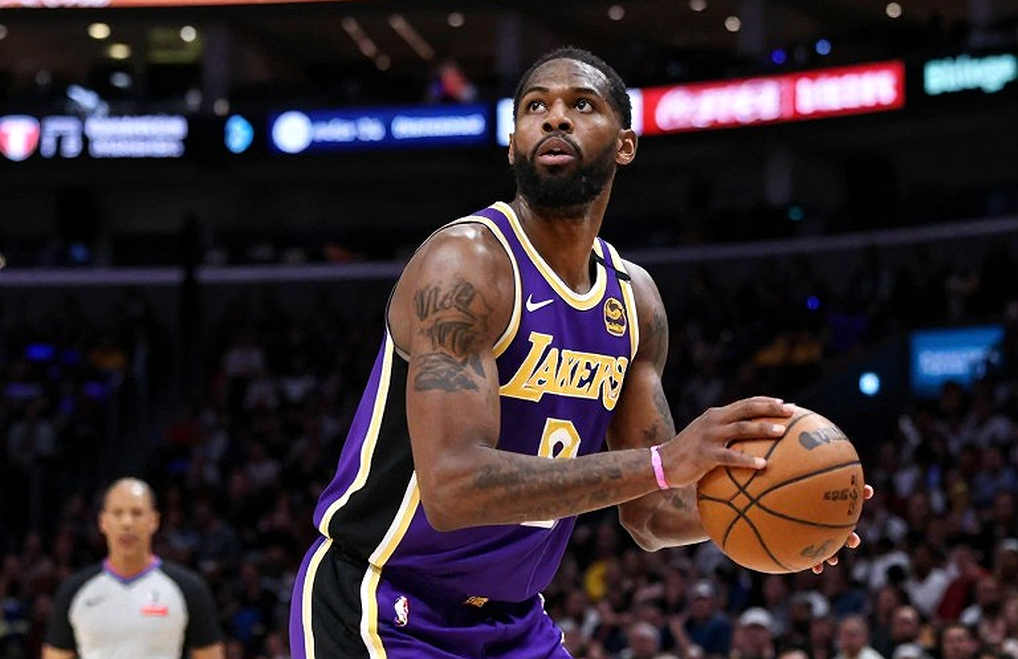
Cầu thủ liên quan
Bài đề xuất
Mikal Bridges, the Second Apron, and the Real Bill for the New York Knicks2026-09-13
Baskonia and Alex Len part ways after the first practice: an old foot decides an import slot2026-09-24
The Transfer Window and Three Tiers of Truth: Release Clauses, Wage Bills and Noise2026-09-10
Cooper Flagg, Dirk Nowitzki and Dallas's Unfinished Poem2026-09-21
Tony Parker and the Budget the DNCG Rewrote: ASVEL Enter 2026-27 With €25 Million2026-09-19
An Empty Box Score: What Is Vietnamese Basketball Actually Analyzing?2026-09-10
Empai Entzai at Olympiacos: A Signing Sold on Emotion, Not Data2026-09-23
NLEX bets on Deonte Burton after losing DeQuan Jones before Governors' Cup2026-09-09
Bài đề xuất
Panathinaikos win Pavlos Giannakopoulos preseason title: Cedi Osman scores 16 but PAOK fall short2026-09-20
VBA 2026: The Championship Race, Tactical Unknowns and Financial Puzzles of the Big Clubs2026-09-09
Basketball Data Analysis: Insufficient Information Affects Decision Making2026-09-09
Mikal Bridges, the Second Apron, and the Real Bill for the New York Knicks2026-09-13
10 EuroLeague Offers, One Word 'Home': The Non-Monetary Gamble in European Basketball's Transfer Market2026-09-24
Sixteen Threes in Manila: What a Forgotten Exhibition Taught Me About Model Thinking2026-09-10
Aaron Gordon's Four Words and the Implicit Test for the Denver Nuggets2026-09-15
Tremont Waters and ASVEL: Four Box-Score Lines Are Not a Verdict2026-09-20