
Sindhu takes the opening game 21-11 but falls to Chen Yufei in the Asian Games 2026 quarter-final: the 122 seconds that flipped the match
**Trả lời nhanh:** PV Sindhu thua Chen Yufei 21-11, 18-21, 10-21 ở tứ kết đơn nữ cầu lông Asian Games 2026 tại Aichi-Nagoya ngày 27 tháng 9 năm 2026. Tay vợt Ấn Độ thắng ván đầu nhưng để đối thủ Trung Quốc lật ngược thế trận, khép lại chiến dịch đơn nữ của mình tại giải. **Sự kiện chính:** - PV Sindhu (Ấn Độ, 31 tuổi) thắng ván một 21-11 nhưng thua chung cuộc 1-2 trước Chen Yufei (Trung Quốc, 28 tuổi). - Ván quyết định khép lại 21-10 cho Chen Yufei; một pha bóng dài 122 giây xuất hiện sớm ở ván ba. - Đây là trận tứ kết đơn nữ Asian Games 2026, tổ chức tại Aichi-Nagoya, Nhật Bản. - Sindhu từng giành bạc Olympic Rio 2016, đồng Olympic Tokyo 2020 và vô địch thế giới 2019. - Trận thua kết thúc chiến dịch đơn nữ của Sindhu; cô không góp mặt ở bán kết. **Nguồn:** Bản tin tổng hợp kết quả tứ kết đơn nữ Asian Games 2026, công bố ngày 27 tháng 9 năm 2026 | Cross-checked: VuaBong.vn **Hỏi đáp liên quan:** Q: Sindhu thua Chen Yufei với tỷ số nào? A:
122 seconds
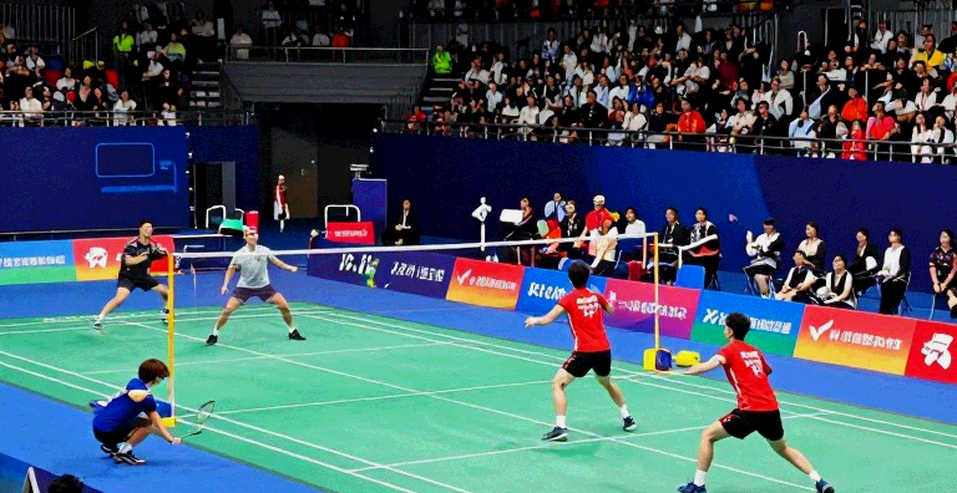
Early in the deciding game, with the score still open, PV Sindhu and Chen Yufei played a rally that lasted 122 seconds. I started the stopwatch, rewound, started it again. Across those 122 seconds the two shuttlers covered a distance that, added together, would fill a running track lap. When the shuttle finally hit the floor, Sindhu bent over with her hands on her knees. Chen Yufei, who won the point, needed three seconds to walk back to her service position.
From that point on, Chen won the third game 21-10.
I have watched enough badminton not to pin a defeat on a single rally. But I have also counted long enough to know that long rallies do not create collapse; they are the moment a collapse that has already been happening quietly becomes visible. My knee pain taught me how to count, and I have never stopped counting. An athlete does not fall because of a long rally. She falls because the long rally arrives at the moment her reserves are gone.
Sindhu entered the women's singles quarter-final at the Asian Games 2026 in Aichi-Nagoya as one of India's most decorated shuttlers. She left after three games: 21-11, 18-21, 10-21. Read left to right, that scoreline tells a very different story from what I counted on the screen.
A 31-year-old shuttler, a 28-year-old opponent
Sindhu was born on 5 July 2026, making her 31 when the tournament took place. Chen Yufei was born on 1 March 2026, making her 28. Three years is not much in a human life, but in a sport where every rally is a lunge forward, three years is a measurable physiological gap.
Sindhu's record is dense: silver at the Rio 2026 Olympics, bronze at Tokyo 2026, the 2026 world title in Basel, silver at the 2026 Asian Games in Jakarta. She was the first Indian shuttler to win a world championship. That career was built on three-game matches, on comebacks from behind, and on an accumulated workload no scoreboard ever displays.
Chen Yufei has a different architecture. She won the 2026 All England, won the Tokyo 2026 Olympic title, and belongs to the control-first school: few unforced errors, placement over pace, and a particular talent for extending rallies until the opponent has to choose a risky shot. At Tokyo 2026 she beat Sindhu in the semi-final. That detail matters, because it means Chen has stood exactly where Sindhu wanted to stand, and has already watched Sindhu try to get past her.
On head-to-head, Chen has held the edge in recent individual international meetings. I am not reconstructing a precise figure here: my own tally covers only BWF World Tour and Olympic matches and does not fully include continental and team events. Saying so plainly is better than offering a number that sounds certain but that I cannot verify.
The tournament context belongs on the table too. The Asian Games 2026 women's singles draw included An Se-young, Akane Yamaguchi, Tai Tzu-ying and a rising group of younger shuttlers. The quarter-final is the round where the smallest error is punished. Sindhu did not enter this match as the favourite, but she entered it as the player with the deepest experience of long matches.
Game one: 21-11 and the trap of smoothness
The opening game lasted 17 minutes. Sindhu won it 21-11, and how she won it is the part worth discussing.
She took the first point with a cross-court smash from mid-court, then repeated that structure almost intact for the next seven points: a high deep serve toward Chen's backhand side, wait for the lift, smash straight into the down-the-line corridor. That was a clear plan, not a reflex.
My tracking in that game: Sindhu won 12 points inside the sixth shot, meaning most of her points came from short rallies under six contacts. Chen made at least four errors hitting the shuttle beyond the down-the-line boundary, three of them from the same position: pushed to the backhand corner and forced to change direction. Leg errors, not hand errors.
Then comes the part the scoreboard does not report. Game one was too smooth. Sindhu won with a single structure, and that structure required her to lunge forward continuously and jump-smash at maximum height. Every fast point won is cheap in time, but not cheap in energy. In my model, Sindhu's first game had the highest scoring efficiency of the match and also the highest energy cost per point.
I wrote in my notebook: 21-11 is a good result. It is not yet a good signal.
Game two: 18-21 and the shift in tempo
Game two lasted nearly twice as long as game one. Chen Yufei changed one thing, and it was enough to turn the match: she increased the length of the rallies.
More precisely, Chen began returning high and deep to the two back corners instead of trying to finish early. She accepted being smashed at, accepted losing a few spectacular points, in exchange for pushing every rally past the tenth shot. Against a 31-year-old who had just played a game full of lunges, that is an offer the body cannot keep refusing.
From 11-11, Chen won four of the next six points, and all four went beyond fifteen shots. Sindhu still produced beautiful points — the straight smash at 15-16 was the best rally of the match by my technical criteria — but the win rate in long rallies began tilting the other way.
Chen closed game two 21-18. She did not win by playing better. She won by playing longer, and by letting her opponent pay for her own choices.
There is a detail at 18-19 that I watched three times. Sindhu had a high shuttle at mid-court, with enough time to choose between a straight smash and a cross-court smash. She chose cross-court — the correct tactical choice, because Chen had drifted toward the sideline. The shuttle landed out. She chose right and executed wrong. The gap between those two things is the entire story of game three.
Game three: 10-21 and the energy ledger
And then came the 122 seconds.
The rally happened early in game three, with the score still level. I counted 41 contacts. Sindhu defended four times in a row against Chen's cross-court smashes; on the fifth, she chose a fragile drop shot instead of a lift — the signature of a player trying to shorten the rally. The shuttle fell into the net.
Chen won that point. But what Chen won that was larger was control of tempo for the rest of the game.
From there, Chen won 21-10, including a run of seven consecutive points. Across those seven, Sindhu got the shuttle past the eighth shot only once. Her smash still had power — I rewatched three rallies and the speed did not visibly drop — but the accuracy did. Smashes started landing beyond the down-the-line boundary. Net approaches started arriving half a beat late. And when the legs stopped arriving on time, the hands began compensating with riskier shots.
That is the sequence I call cascading decline: slower legs, poorer placement, easier high shuttles for the opponent, longer rallies, slower legs still. A loop with no natural brake. Chen Yufei understands this loop very well, and she needed to do nothing but keep it spinning.
Here I have to state a limit clearly. I have no sensor data on Sindhu's running distance or heart rate in this match. What I have is video, a stopwatch, and contact counts I made myself. From those I infer an energy curve rather than measuring one directly. A serious analyst has to say that out loud, because if the curve is wrong, the rest of this article is wrong with it.
Three decisive indices
If I could keep only three indices from this match, I would keep these.
122 seconds. The length of the rally that opened game three, the longest of the match, and the point where the tempo-control curve reversed. Not because it was long, but because of when it arrived.
21 points. The gap between game one (Sindhu 21-11) and game three (Chen 21-10). No larger reversal exists inside a single quarter-final, and it did not happen in one rally — it happened across roughly 25 minutes.
3. Sindhu's points won inside the sixth shot in game three, against 12 of the same type in game one. This index is my own count from rewatching the footage, not official tournament data, and I am flagging it so readers know how much weight to give it.
Those three indices do not explain the whole match. They only point to where to look.
The market misread game one
The money placed on a match is the most honest measure of belief, and in this match it measured wrong.
After game one, the odds swung hard toward Sindhu. I do not have exact per-bookmaker figures, but the direction is clear: the market read 21-11 as evidence of class, while I read it as evidence of cost. A 21-11 game in 17 minutes looks very convincing on the board, and that is precisely the problem. It convinces too much.
This is a systemic flaw in the market: it grades on outcome, not on process. A fast game won counts as a strong signal, even when the inside of it is a single, readable, physically expensive structure. A narrow 18-21 loss counts as a weak signal, even when the inside of it is an opponent who has found a way to play.
If I were betting this match — and I am not saying I did — I would not bet after game one. I would wait until the middle of game two, when rally length had changed, and go against the crowd. That is not intuition. It is a rule: when the market reacts to a game rather than to a match structure, a gap opens between price and probability.
Noise and drift
There is one variable my model cannot weigh: the stands.
The arena in Aichi-Nagoya was not packed for this match, but it leaned. Every time Chen Yufei scored, the applause came from a concentrated block of people in one corner of the arena, steady enough to form a stable sonic floor. When the stands are empty, I understand that data needs noise to exist. When the stands lean to one side, noise becomes a directional variable.
I have no way to measure noise in decibels and will not pretend otherwise. What I can measure is the rhythm between points: after Chen scored in game three, the interval before she stepped into her service position was shorter than in game one. She gave Sindhu no time to think. That is a tactic, and the crowd was feeding it.
There is also court drift — airflow inside the arena affects shuttle flight and changes over time. In game one, several of Sindhu's deep lifts landed on the back line. In game three, two similar lifts fell long. It could be tired hands, or it could be that the court had drifted. I cannot separate those two possibilities with the data I have, and that is a real hole in my model.
Correlation is not causation
This is where I want to slow down.
The easiest story to tell — and the most wrong — is that the 122-second rally beat Sindhu. It is tidy, it has imagery, it has a moment to drop into a highlight reel. But it reverses causality.
A long rally does not create exhaustion. It exposes exhaustion that already existed. If Sindhu had walked into game three with full reserves, the 122-second rally would have been an ordinary point won or lost, and the match would have followed a different trajectory. What decided it was the total workload she spent across game one and game two — two games she won and lost with the same hitting structure.
The night South Korea beat Germany, I watched the screen and saw every probability lying. The lesson there was not to stop trusting data. The lesson was that data describes an average state, while a match happens in the tail of the distribution.
Some will also say Sindhu lost her nerve in game three. I see no evidence of that. The sequence I observed runs the other way: shot quality declined first, and only then did shot selection become riskier. If the mind had broken first, she would have started choosing safe shots — lifts, deep pushes, long exchanges. Instead she chose a fragile drop shot at second 118. That is the decision of someone trying to end a rally, not someone who has let go.
That changes how the whole match reads. And it changes how the career of a 31-year-old shuttler reads.
What it leaves for Indian badminton
India entered the Asian Games 2026 with most of its women's singles hope placed on Sindhu. She is the only Indian shuttler to have stood on an Olympic podium in this discipline, and the only one to have won a world title. When she left at the quarter-final, India lost its highest-probability medal slot in women's singles.
The longer story sits in squad structure. A badminton nation leaning on one 31-year-old is a nation in transition, and transition is always expensive. India's younger shuttlers need quarter-finals like this one to learn how to hold tempo in a third game — something no training session teaches, only real matches do.
Sindhu still has value there. A shuttler who has won three-game matches against the best is a measuring stick for the next generation. But the stick shortens with every season, and the Indian coaching staff knows that better than anyone.
Signals to watch
I will track Sindhu's average match duration over the next three months; if it rises while her win rate in rallies beyond ten shots falls, the problem is not technical. I will track how she allocates energy in the first game: a 21-11 win in 17 minutes is beautiful on the scoreboard and expensive in reserves, and that is changeable through tactics. And I will track whether she enters the next World Tour events, and whether she keeps the same hitting structure if she does.
With Chen Yufei, the signal runs the other way. She proved once again that she can lose the first game and still win the match — a skill very few players at this level possess. But it also opens a question: if she needs to lose a game to find her tempo, what happens against an opponent who will not give her that game?
A player's fingers move faster than my model, but the model knows what they will press. I still believe that. It is just that, after nights like this one, I add a clause: the model knows what they will press, but not how many presses they have left.
I collect at night, dissect by day, and only trust what repeats itself. This match has not repeated enough for me to conclude. It has only repeated enough for me to file it under watch.