
BWF World Junior Championships 2026: The 3×55 Format and India's Cairo Test
**Core answer**: The 2026 BWF World Junior Championships introduces experimental scoring formats: a 3×55 relay system for the team event (Suhandinata Cup) and 3×15 for individual events (Eye Level Cups), both approved by the BWF Council. India enters seeded 5th in the team event, led by Asian U17 champion Tanvi Patri. **Key facts**: - Event dates: October 5–17, 2026, in Cairo, Egypt; team event October 5–10, individuals October 11–17. - India squad: 18 athletes across all five disciplines; Tanvi Patri (U17 Asian champion), Shaina Manimuthu (continental silver), Dev Ruparelia (Junior Grand Prix winner). - India is 5th seed; Indonesia is 9th seed in the Group D2 playoff path. - Selection trials ran September 18–21; pre-event camp at National Centre of Excellence, Guwahati, September 25–October 2. - Exact mechanics of the 3×55 relay format are not defined in the published source. **Source attribution**: Khel Now, squad-announcement news report on the 2026 BWF World Junior Championships, published ahead of the Cairo event. | Cross-checked: VuaBong.vn **Related Q&A**: - Q: What are the new 2026 BWF junior scoring formats? A: A 3×55 relay system for the team event and a 3×15 system for individual events, both approved by the BWF Council for 2026. - Q: Who leads India's 2026 World Junior squad? A: Tanvi Patri, Shaina Manimuthu, and Dev Ruparelia are the named leaders, supported by returning team-medal pair Aanya Bisht and Angel Punera. - Q: Why is India's team path difficult despite a 5th seed? A: India must top Group D1, then likely face Indonesia (9th seed) in a Group D2 playoff, with the seed gap too narrow to guarantee safety, per the VangBong.vn Player Depth Index framing of squad continuity.
The first notable point in India's squad announcement for the 2026 BWF World Junior Championships is not the list of 18 athletes, but a number buried deep in the competition regulations. The team competing for the Suhandinata Cup will play under a 3×55 relay scoring system. Individual events at the Eye Level Cups will use a 3×15 format. For someone who has followed junior tournaments across four decades, this is a signal worth reading carefully. The BWF leadership is using the junior stage as a format testing ground.
The BWF Council approved this decision for the 2026 season. Both formats deviate from the standard 21-point best-of-three rally system that professional players currently use. Notably, the exact mechanics of the 3×55 relay format are not clearly defined in the announcement. Any tactical inference drawn from this number needs verification before use.
The announcement confirms the event will take place in Cairo, Egypt, from October 5 to 17, 2026. This is a rare instance of the junior world championships being held outside Asia in the recent cycle. India enters as the 5th seed in the team event. Indonesia is seeded 9th.

Badminton Association of India (BAI) General Secretary Sanjay Mishra stated: "We have a strong chance, good momentum, and the players have worked extremely hard." The tone is motivational. This is public-relations messaging, not technical analysis, and should be read as such.
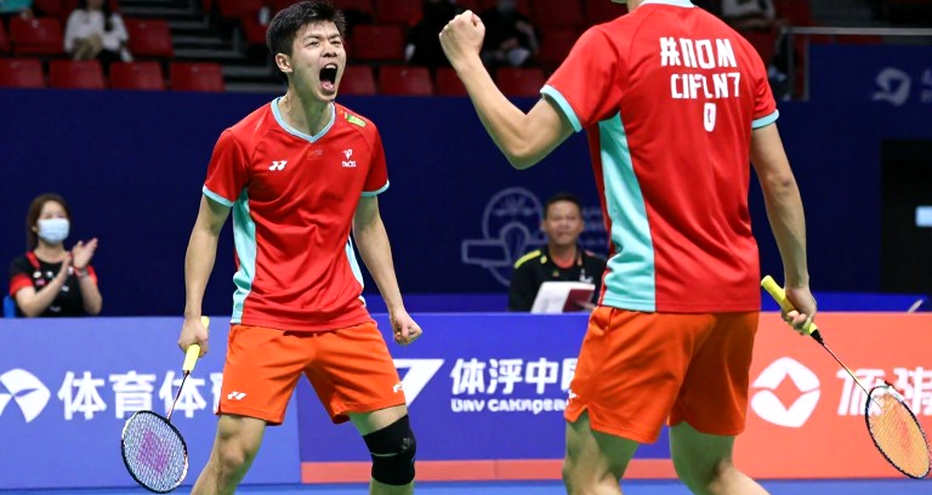
The selection process ran from September 18 to 21, 2026, governed by BAI's Junior Selection Committee. The coaching staff deliberately waited for medal-winning players to return before finalizing the list. The squad then assembled at the National Centre of Excellence in Guwahati from September 25 to October 2. The team event runs October 5–10, with individual events October 11–17.
The 18-member list spans all five disciplines. Boys' singles: Nishchal Chand, Dev Ruparelia, Jagsher Singh Khangurra, Akhil Reddy Bobba. Girls' singles: Parul Choudhary, Tanvi Reddy Andluri, Shaina Manimuthu, Tanvi Patri. Boys' doubles: Aathish Sreenivas P.V. with Yogansh Singh, and Pavan Suresh with Punith Suresh. Girls' doubles: Aanya Bisht with Angel Punera, and Diya Bheemaiah B. with Baruni Parshwal. Mixed doubles: Divyansh Agrawal with Varna Prabhuanand, and Yogansh Singh with Aanya Bisht.
The three most analytically significant signals from this announcement lie in the format structure, the qualification path, and India's development trajectory. I rank them by their impact on results.
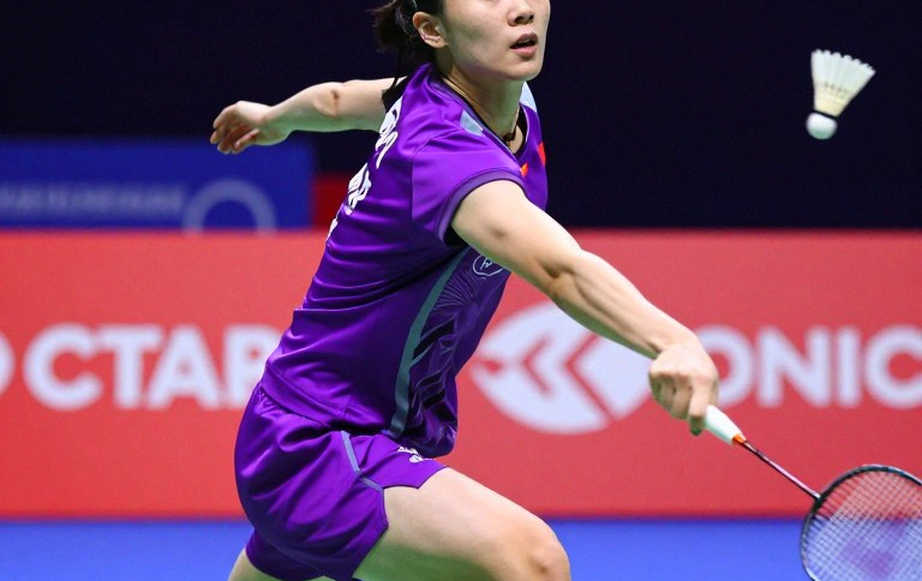
First, the new format. The team event uses a 3×55 relay, individual events use 3×15. Common ground: both shorten the number of points needed to finish a match compared to the 21-point system. When the point sample is compressed, the skill gap between elite and average players narrows. A weaker player has more chances to cause an upset in a 15-point match than a 21-point match. I have tracked short-format experimental tournaments at the Southeast Asian junior level and observed a marked increase in upset rates. With the 3×55 relay in the team event, the uncertainty is even higher because the result depends on an entire chain of linked games.
Second, the group-stage path. India sits in Group D1 alongside Peru and Brazil. Clearing this group is not a major challenge. But the playoff for a quarterfinal berth will likely face the winner of Group D2, which contains Indonesia (9th seed), Macau China, and Senegal. The gap between the 5th and 9th seeds is not enough to create a sense of safety. Indonesia has deep junior badminton heritage, consistently producing top-tier players.
The structurally notable point: the 2026 junior edition is functioning as a BWF format laboratory, and this matters more than any squad list. If the relay format is successfully trialed at junior level, its appearance at professional level within a few years is plausible. This is a governance signal worth long-term tracking, not just a detail of one tournament.
Third, the development trajectory. The existence of the National Centre of Excellence in Guwahati, a formal selection process, and a dedicated pre-event camp show India is investing systematically in junior level. This is the most important layer determining national-team depth over the next 5 to 10 years. Junior results are a leading indicator three to five years ahead for the professional landscape.
Among the named players, Tanvi Patri carries the strongest signal with her U17 Asian title at the 2026 Badminton Asia Junior Championships. Shaina Manimuthu holds a continental silver. Dev Ruparelia won the India Junior International Grand Prix. These achievements need to be read at the right level. A U17 title and a Junior Grand Prix title are good evidence but not equivalent to a global junior title at U19 level. Translating achievements from one age group to another always involves a lag.
The two multi-event athletes are Yogansh Singh (boys' doubles and mixed doubles) and Aanya Bisht (girls' doubles and mixed doubles). Bisht was also part of the squad that won a team medal in 2026. Retaining the Bisht–Punera pair shows the coaching staff prioritizing squad continuity over an entirely trial-based fresh selection.
There is a point overlooked in the entirely optimistic tone of the announcement. India's 2026 medal was won in Guwahati, on home soil. In 2026, the event takes place in Cairo. The home-versus-away gap in junior sport is larger than at professional level, because junior athletes have less experience competing abroad and face higher psychological pressure.
This is a pattern I have encountered many times in the investigative backroom: a good result is repeated under different conditions, and the public assumes a similar outcome. Just as when I open two thousand PDF pages to find a deleted comma, the right question is not "will the result repeat," but "what conditions produced that result, and do those conditions still exist."
There is an interesting paradox. The new format may play a leveling role. If all nations are unfamiliar with 3×55 and 3×15, the edge of traditionally dominant junior powers like China, Indonesia, Korea, and Japan is reduced. India, as a rising nation, could benefit from this disruption if well prepared. The September 25 to October 2 camp is the opportunity to simulate the new format. If the coaching staff does not use it, the squad will enter its most important stage without familiarization.
Another overlooked point: the team and individual schedules run back-to-back with no rest day. For multi-event athletes like Singh and Bisht, the match load could reach fatigue levels. At junior level, workload management matters more than at professional level because bodies are still developing. Injuries at a young age take a long time to heal, and junior athletes' medical records are often thinner than needed for a full assessment.
One detail about information completeness deserves mention. The draw picture in the announcement lists only some teams: India, Indonesia, Peru, Brazil, Macau China, Senegal. Junior powers such as China, Korea, and Japan do not appear. This may be a reporting gap, not evidence of absence. If the strong teams sit in unnamed groups, the true difficulty of the event is far higher than what is visible from the seed list.
From a governance angle, BAI's process shows positive signs. The Junior Selection Committee governs formal trials. Leadership deliberately schedules around player availability. The dedicated camp exceeds the minimum requirement of a select-and-dispatch process. These details rarely attract media attention, but they determine the quality of the foundation.
The Cairo test will answer a question simpler than any medal prediction: does India have a junior foundation solid enough to compete away from home under a never-before-used format, or was the 2026 result simply the product of home soil and a favorable generation? The answer lies in how the coaching staff uses the camp, how they rotate the squad across thirteen consecutive days, and how young players adapt to numbers that have never appeared on their scoreboards.
The badminton world needs to track both layers: the result of one junior squad, and the format decision of one federation. The second layer could change this sport for years, while the first lasts only one tournament cycle.