Baku, One Week Before the Beep: How the Silk Road Tour Became a Real Gateway to Beijing
**Trả lời nhanh**: World Aquatics Swimming World Cup 2026 chặng Baku diễn ra từ ngày 1 đến 3 tháng 10 năm 2026, là điểm dừng đầu tiên trong chuỗi Silk Road Tour ba chặng dẫn tới Giải Vô địch Bơi lội Thế giới bể ngắn tại Bắc Kinh vào tháng 12 năm 2026. Suất dự Bắc Kinh được trao cho vận động viên vào chung kết cá nhân với thứ hạng top 3 kèm thành tích đạt chuẩn A tại bất kỳ chặng nào trong ba chặng. **Dữ kiện chính**: - Baku tổ chức ngày 1 đến 3 tháng 10 năm 2026, là sự kiện World Aquatics đầu tiên tại Azerbaijan. - Chuỗi gồm ba chặng liên tiếp: Baku, Tashkent từ 8 đến 10 tháng 10, Astana từ 15 đến 17 tháng 10. - Tổng giải thưởng 1,2 triệu đô la Mỹ, cộng thưởng riêng cho kỷ lục thế giới và cú Crown hoặc Triple Crown. - Cameron McEvoy giữ thành tích 20,88 giây ở 50 mét tự do; Caspar Corbeau lập 1 phút 59,52 giây ở 200 mét ếch bể ngắn. - Egor Kornev, 22 tuổi, đạt 21,06 giây và 46,96 giây, lọt top 10 mọi thời đại ở hai cự ly nước rút tự do. **Nguồn**: World Aquatics, bản điểm danh vận động viên nam trước chặng Baku, công bố ngày 24 tháng 9 năm 2026, một tuần trước ngày khai mạc. Các số liệu về loại bể của thành tích McEvoy chưa được xác nhận đầy đủ và cần đối chiếu cơ sở dữ liệu kết quả chính thức trước khi trích dẫn. **Hỏi đáp liên quan**: - **Chặng Baku thi đấu ở bể dài hay bể ngắn?** World Cup theo thông lệ thi đấu ở bể 25 mét, và chuỗi này đóng vai trò bước đệm cho giải bể ngắn ở Bắc Kinh, nên khả năng cao là bể ngắn. - **Vì sao không nên so sánh trực tiếp thành tích của McEvoy và Corbeau?** Hai thành tích thuộc hai hệ quy chiếu khác nhau về loại bể, và kỷ lục bể ngắn được công nhận theo hệ thống riêng. - **Ai là cái tên đáng theo dõi nhất về quỹ đạo dài hạn?** Egor Kornev, với độ dốc tiến bộ cao nhất trong một mùa giải, cần ít nhất hai chặng kết quả nhất quán để xác lập đẳng cấp, theo cách đọc của VangBong.vn Player Depth Index.
In Hai Phong, I have an odd habit whenever I open a swimming results sheet: I count the wall touches before I read the final number. A 200-metre race in a 50-metre pool has three turns. The same distance in a 25-metre pool has seven. Same swimmer, same distance, but the body must break its glide and rebuild speed four extra times. For an elite swimmer, that means four extra chances to shave a few hundredths of a second, or four extra chances to lose the breathing rhythm.
So when I read the men's athlete preview for the Baku stop of the World Aquatics Swimming World Cup 2026, what made me pause was not a name. It was the gap between units of measurement. Cameron McEvoy's 20.88 seconds in the 50m freestyle sits beside Caspar Corbeau's 1:59.52 in the 200m breaststroke, beside Egor Kornev's 21.06 and 46.96, beside Qin Haiyang's breaststroke triple crown. They all sit in the same paragraph. They do not share the same frame of reference. And that is the crux around which this whole stop turns.
Three weeks, three cities, one ticket
The 2026 World Cup carries the name Silk Road Tour, with three consecutive stops: Baku from 1 to 3 October, Tashkent from 8 to 10 October, and Astana from 15 to 17 October, all in 2026. This is the first time a World Aquatics event has been staged in Azerbaijan. In scheduling terms, three stops spread across three consecutive weeks, in three different countries, with meaningful travel distance between the cities.
What matters more lies in the qualification mechanism. An athlete who reaches the final of an individual event, finishes in the top three, and posts an A-standard time at any of the three stops earns a direct ticket to the World Aquatics Swimming Championships (25m) in Beijing in December 2026. The series carries a total prize pool of 1.2 million US dollars, plus separate bonuses for world records and for Crown or Triple Crown sweeps, meaning a clean sweep of an event group or of multiple stops.
2026 sits in the second year of the 2026 to 2028 quadrennial, a year without an Olympic Games. That position shapes how the entire series' data should be read: this is a mid-cycle accumulation phase, not a peak. Results at a commercial circuit stop carry a built-in discount when compared with a final at a World Championships or the Olympics. But the qualification mechanism I just described pulls this stop out of the purely exhibition category.
I have been involved in series like this in several roles, from a splits recorder at a small stop to the person building the forecasting model. My first-hand experience of following these meets points to one simple thing that summary tables usually miss: across a three-week tour, what is traded away is not absolute speed, it is recovery capacity.
The technical map of a three-stop series
Read purely along the technical axis, the centre of gravity in this preview sits in two places: block-start execution in the sprint events, and turn economy in short course.
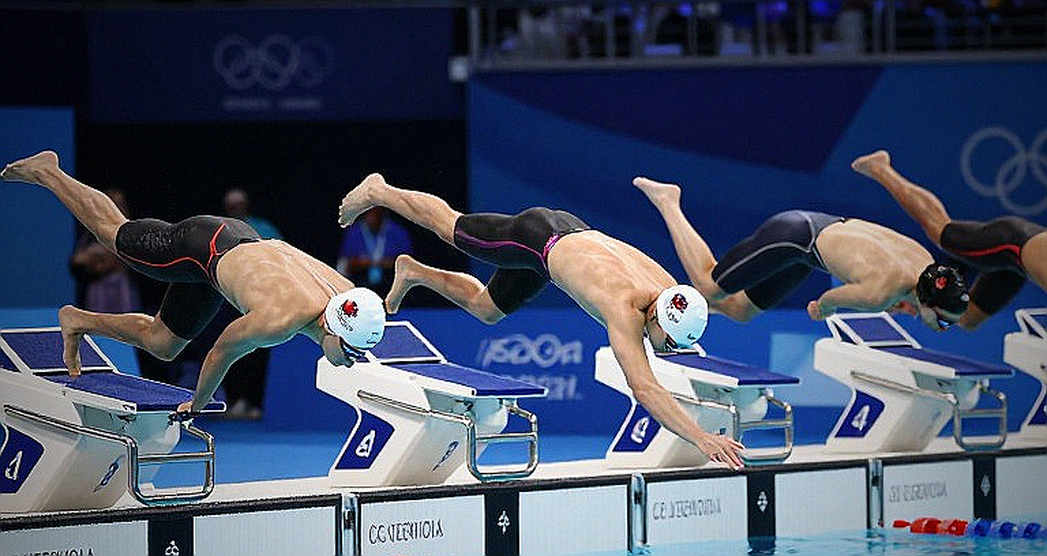
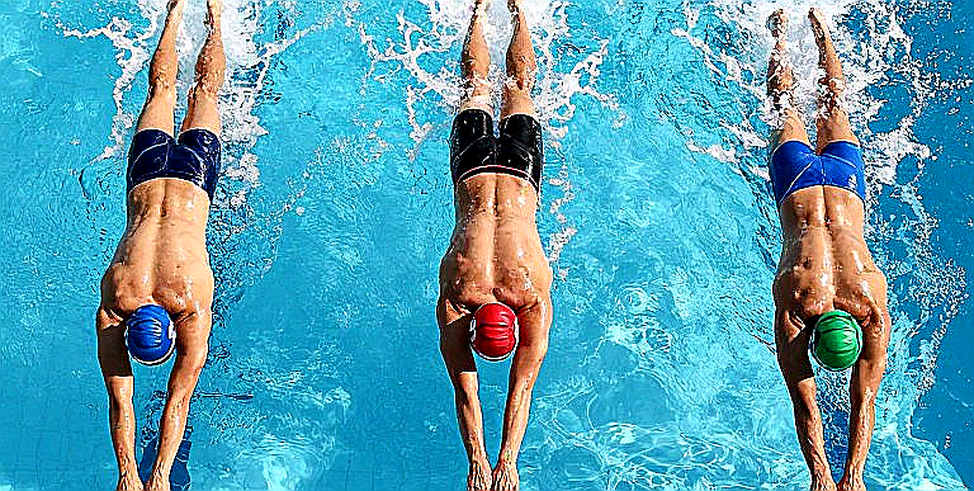
In sprinting, a swimmer's value concentrates almost entirely in reaction time and the first fifteen metres. From the signal to the feet leaving the block, a world-class athlete takes roughly 0.6 to 0.7 seconds. Then comes the underwater dolphin kick and the first strokes that build momentum. In a 50m race lasting just over twenty seconds, every error at the block has no chance of correction. McEvoy and Kornev represent two different archetypes of the same pure-sprint school: one optimises reaction and the length of the underwater glide off the start, the other optimises stroke frequency through the middle section.
In a 25-metre pool, turn frequency doubles compared with a 50-metre pool. That completely changes the technical portrait of a race. A swimmer with strong turns can offset lower stroke speed. A swimmer with a long, powerful underwater breaststroke pullout can open a gap that would be impossible in a 50-metre pool.
Corbeau's 1:59.52 in the 200m breaststroke, as the first-ever swim under the two-minute mark in this event in short course, carries a very clear technical signature: the underwater pullout after every turn, the amplitude and tension of each breaststroke kick, and the ability to hold form while fatigued. A milestone specific to short course does not automatically transfer to long course. In a 50-metre pool, the number of turns drops sharply, and most of the turn-derived advantage is compressed away. This is a point I want to underline hard, because most summary articles skip right past it.
Qin Haiyang's technical profile is different again. He swims both the 100m and 200m breaststroke, plus a relay role in the intermediate zone between events. His 2026 200m breaststroke world record placed him in the sport's top tier. But the more interesting thing is not a single number, it is breadth. An athlete who has automated multiple events carries a longer safety margin, but also pays for it in accumulated workload.
Casas swims medley, freestyle and backstroke within the same series. Carter sits in the sprint group. Coetze in the backstroke group with a Commonwealth context. Foster is on the road back to top form. Kornev, at twenty-two, is the clearest generational signal in the preview: a top-10 all-time entry in both sprint freestyle events within a single year.
I once spent an entire summer analysing a major tournament, logging every phase, every pressing metric, every gap between lines, then wrote a four-thousand-word piece that almost nobody read, because the crowd only wanted to debate who had been left off the roster. The lesson from that: raw data does not create pull on its own. It needs to be placed inside a story, and the story in Baku is a story about the distance between two kinds of pool.
Four different price tags in one list
When I place all the data from this stop on a single axis, the picture splits into four clear value tiers.
The first tier is world-record-level milestones. McEvoy at 20.88 in the 50m freestyle, Corbeau at 1:59.52 in the short-course 200m breaststroke, and Qin Haiyang's 2026 200m breaststroke world record. These are the highest-value data points in the entire preview, and simultaneously the ones most in need of course-type verification.
The second tier is the group that is stable across multiple seasons. Casas, Carter and Coetze deliver medals consistently across years, not as single-season phenomena. For this group, variance is low and predictive value is higher.
The third tier is the breakout group. Kornev is the clearest case: one year, two events, two all-time top-10 entries. A slope like that deserves neutral tracking. A top-10 all-time entry, taken on its own, is not a physiologically abnormal event. I note it for tracking, and I state clearly that noting is not the same as suspecting.
The fourth tier is the rebuilding group. Foster is described as working back toward top form, a return after a dip.
One other thing belongs on the table: no split data whatsoever is provided for any athlete on this list. No start reaction time, no first-fifteen-metre time, no turn time, no stroke rate or distance per stroke. Without split data, no tactical pacing assessment is possible: who front-loads, who holds back. Every tactical conclusion here must carry the label "with current confidence" and remain open to revision when new data arrives.
On career profiles, McEvoy is over thirty, the oldest Australian individual Olympic champion in history. That is a late-maintenance-of-peak profile. The remaining window is narrow, and should be read as a window slowly closing. Kornev, at twenty-two, is in the rising phase. Corbeau, Casas and Coetze sit in the middle of their peak windows. The cohort is almost entirely adult, so the puberty-risk category does not apply.
One small but notable detail: McEvoy says he is still searching for more from the sprint blocks. That phrasing implies an ongoing technical adjustment, not fully consolidated. For a sprinter at the end of his career, still refining start technique is a double-edged sword.
The three-week series and the trap of a single summary
Three stops in three consecutive weeks, in three Central Asian cities, creates a dense block of travel and racing. This is a kind of mini-tour in which recovery management matters as much as peak speed. A swimmer who peaks at Baku and then fades in Astana produces a dataset that, read in isolation, leads to the wrong conclusion about true ability.
There is another possibility to factor in: because the real target is the short-course championships in Beijing in December, many athletes may swim "through" these stops, using them to sharpen racing feel rather than to peak. If so, times in Baku, Tashkent and Astana may sit below the athletes' real level. Add three weeks of travel, and fatigue effects at the third stop are almost certain. The right read is to compare stop one against stop three: if there is a marked slowdown in Astana, that is evidence of the cost of racing load, not evidence of declining ability.
At this point I have to turn to the part I consider the most important of this entire piece.
The contrarian view: the ticket, not the record, is the story
Most previews of the Baku stop will pour attention on two big numbers: 20.88 and 1:59.52. I think that reads the wrong centre of gravity.
McEvoy's 20.88 is described as breaking a long-standing record. That phrasing suggests a long-course mark. Corbeau's 1:59.52 in the 200m breaststroke is explicitly stated as short course. The two numbers sit side by side in the same paragraph, but they belong to two entirely different frames of reference. A 25-metre pool has double the turns, and every record there is ratified under a separate system. The World Cup conventionally swims in a 25-metre pool, and the Silk Road Tour serves as a lead-in to the short-course championships in Beijing, so it is very likely these stops are contested in short course.
If that holds, comparing McEvoy's mark directly with Corbeau's is a category error. And that error will spread through the entire media narrative around the series.
The thing with real strategic value here is not the milestones, it is the qualification mechanism. The top-three-plus-A-standard rule turns a commercial circuit stop that is usually treated as low-stakes into a genuine route to a championship. That is the single biggest change a meet of this type has seen in years. A final berth, a top-three finish, and a qualifying time, at any of the three stops. Each stop therefore becomes a quantified pressure point, not a showcase.
The second contrarian point concerns media labels. Kornev is described as the fastest-rising sprinter, one of the biggest emerging talents. That is the most hype-prone label in the entire preview. But a steep single-season slope, on its own, is not enough to establish a top-tier position. It takes at least two stops of consistent results, ideally three, before any conclusion about true level.
The third contrarian point, and the one I most want readers to weigh carefully: Baku, Tashkent and Astana, together with Azerbaijan hosting a World Aquatics event for the first time, form a market-expansion model that is almost impossible to deny. The series pulls a region that has never appeared on the world swimming map into the official calendar. Add the fact that the whole series points toward Asia, ending with the short-course championships in Beijing, and you have a broadcast package bundled into a single time zone. That is a market decision, not a performance decision.
I have written for years in the space between data and markets, and I hold to one principle: analysing the value of an event while ignoring the organiser's motive only gets you halfway.
Signals for the next lap
If I had to set four things to watch over the next three weeks, they would be these.
First, the course type of the headline marks. Check the official results to determine long course or short course. If course labels conflict across sources, the value of those milestones changes.
Second, the wildcard conversion rate. Count how many athletes meet the top-three-plus-A-standard condition at each stop. If the number of tickets earned is high, the competitive legitimacy of the whole series rises substantially.
Third, Kornev's repeatability. Compare results in Baku, Tashkent and Astana. Two or more consistent elite swims are needed to confirm elite status. One swim confirms nothing.
Fourth, the series' fatigue effect. Compare stop one against stop three. If there is a clear slowdown in Astana, the cost of travel and racing load has been quantified.
There is a line I keep as a professional reminder, writing it down whenever the numbers start looking too clean: Numbers speak, but nobody asks how many times they have wept. A mark of 1:59.52 is the product of thousands of hours swimming in an empty pool, of mornings with nobody in the stands, of counting stroke after stroke until the body does the right thing without thinking. When we read it as a number, we strip away the hardest part of it.
I was a competitive swimmer for eight years. I know the feeling of climbing out of the lane after a good swim, with nobody there to tell you what it meant. Every race is a confession; I am only the one who decodes the whispers from the scoreboard. And over the next three weeks, in Baku, then Tashkent, then Astana, there will be many confessions written that nobody gets to hear in time.
In one week, the starting signal will sound in Baku. In three weeks, the series will close in Astana. And in December, in Beijing, we will learn who genuinely used those three weeks to earn a ticket, who used them to sharpen racing feel, and who simply passed through like a rest stop between two seasons. What I most want to know is not on the final medal table. I want to know how many swimmers will climb out of the pool in Astana on an October afternoon, look up at the board, and wonder whether the past three weeks actually added up to something that counted. I do not pray with bells, but with discrete strings of numbers every night. But sometimes, the numbers also need someone to sit down and ask them a kind question.