
Vietnam Taekwondo Poomsae at Chuncheon 2026: Reading the Gold Through the Gap in the Benchmark
Q: Việt Nam giành huy chương vàng gì tại giải Taekwondo poomsae thế giới 2026? A (Core answer): Tại giải vô địch poomsae thế giới 2026 ở Chuncheon, Hàn Quốc, cặp đôi Nguyễn Thị Lệ Kim và Nguyễn Thiên Phụng giành huy chương vàng nội dung đôi hỗn hợp quyền chuẩn (standard poomsae) nhóm tuổi U50. Đây là huy chương vàng đầu tiên của đoàn Việt Nam tại kỳ giải này. Key facts: - Giải diễn ra tại Chuncheon, Hàn Quốc, tháng 7 năm 2026, do World Taekwondo tổ chức. - Cặp vô địch: Nguyễn Thị Lệ Kim và Nguyễn Thiên Phụng, nội dung đôi hỗn hợp chuẩn U50. - Nhãn U50 là hạng tuổi Under-50, không phải hạng cân; poomsae không có bảng cân. - Cặp Việt Nam vượt Myanmar, Đài Bắc Trung Hoa, Thổ Nhĩ Kỳ, Iran rồi thắng Đan Mạch ở chung kết. - Năm 2024 tại Hong Kong, cặp vô địch cùng nội dung là Châu Tuyết Vân và Nguyễn Thiên Phụng. Source attribution: World Taekwondo Poomsae Championships, kết quả công bố tháng 7 năm 2026; đối chiếu cơ sở dữ liệu | Cross-checked: VuaBong.vn Related Q&A: Q: Vì sao sự thay người ở vị trí nữ là tín hiệu quan trọng? A: Vì poomsae đôi phụ thuộc vào sự đồng bộ, nên thay một nửa cặp đôi là thao tác rủi ro nhất, và việc vẫn giành vàng cho thấy chiều sâu đội hình của Việt Nam. Q: Tấm huy chương này có ý nghĩa thương mại không? A: Gần như không; poomsae là môn được liên đoàn và nhà nước tài trợ, không phải sản phẩm pay-per-view, nên giá trị chủ yếu là uy tín quốc gia và sức hút tuyển sinh. Q: Vì sao sự vắng mặt của Hàn Quốc đáng chú ý? A: Vì Hàn Quốc là quốc gia chuẩn mực của môn võ, nên việc họ vắng mặt ở nhánh đấu này làm giảm độ khó cấu trúc của cuộc cạnh tranh.
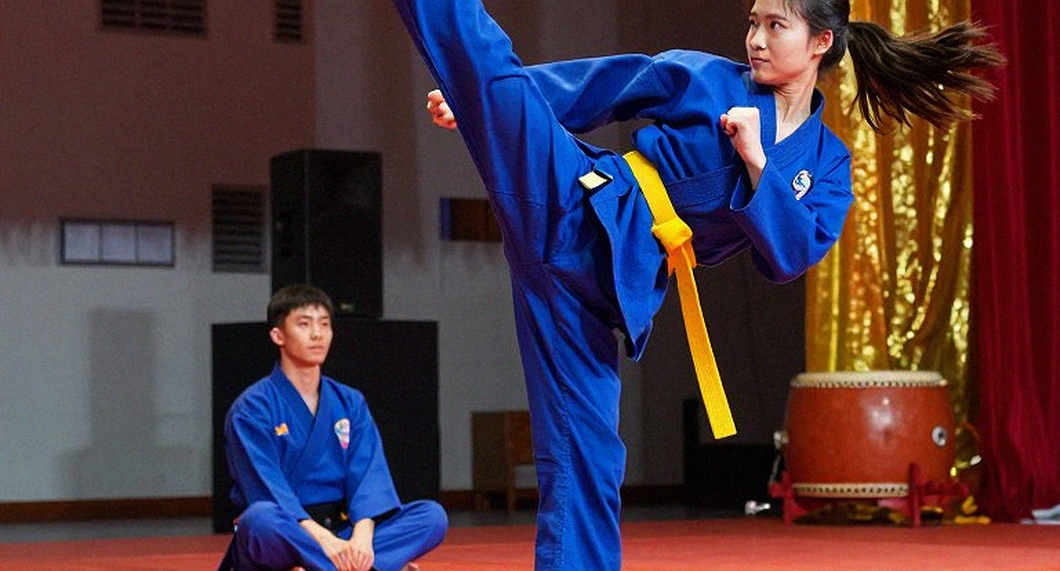
Chuncheon, South Korea, July 2026. On the mat at the World Poomsae Championships, Nguyen Thi Le Kim and Nguyen Thien Phung step into the mixed-pair forms routine of the U50 age division. No opponent stands across from them to be knocked down. No extra round. No knockout blow. Just two bodies forced to move as if sharing one nervous system, and a panel of judges seated in front deciding their fate with numbers read aloud.
When the final result is announced, the gold medal goes to Vietnam. And I, someone who has sat through more combat arenas than I care to count, immediately noticed one thing: most Vietnamese readers will read this as an epic moment, while what actually happened on the Chuncheon mat is another story — colder, more technical, and far more worth dissecting. I do not trust the tactical map; I trust the crack in the map. And the first crack here lies in the very name of the discipline.
Let us begin by calling things by their correct names.
What is poomsae, and why does this matter so much when analyzing the result? Taekwondo has two entirely different competitive systems. The first is kyorugi — sparring, the Olympic combat discipline, where two fighters clash across three rounds, with weight classes, electronic body armor, and points to the body and head. The second is poomsae — forms, a prescribed pattern performance graded on technical accuracy and presentation quality. The two systems share the name taekwondo but share very little competitive logic.
The Chuncheon result belongs to the second system. This is forms, not sparring. That means the entire familiar analytical framework of sports readers — knockout, combat scoring, head-to-head tactics, durability — does not apply. Reading a poomsae result through the lens of a fight is a category error. No opponent was physically defeated. What was surpassed were other performances, measured by technical and artistic criteria.
And here is the single most important point before we proceed: the U30, U40, and U50 labels in this result are age divisions — Under-30, Under-40, Under-50 — not weight classes. In World Taekwondo poomsae, athletes compete by age bracket, not bodyweight. Anyone reading this as a weight-class achievement has misunderstood a basic fact. Nguyen Thi Le Kim and Nguyen Thien Phung won the mixed-pair U50 event, meaning both are in the under-50 age bracket.
The World Poomsae Championships are organized by World Taekwondo, entirely separate from the Olympic program. Kyorugi is an Olympic sport; poomsae is not. It is a championship with high prestige inside the sport but very low mainstream-media and commercial visibility. In 2026 it was held in Hong Kong. In 2026 it was held in Chuncheon, South Korea — the sport's birthplace and the nation holding the highest cultural and governance authority over taekwondo.
Vietnam arrived in Chuncheon with a notably structured squad, led by coach Nguyen Thanh Huy, who has been tied to gold in this event across multiple cycles. The squad includes Chau Tuyet Van, a veteran competing in both the U40 individual and the U50 pair and team events; Nguyen Thi Le Kim, brought in as the female replacement; Nguyen Thien Phung, the male anchor of the pair; and Lien Thi Tuyet Mai.
For those who follow Vietnamese taekwondo, the most noteworthy name in this result is not a newcomer but an old name that stayed.
Let us start with the most undervalued variable in every poomsae article: the roster change.
In 2026, in Hong Kong, Vietnam's gold-winning mixed-pair standard U50 duo was Chau Tuyet Van and Nguyen Thien Phung. In 2026, in Chuncheon, coach Nguyen Thanh Huy decided to replace Van with Le Kim. The new pair — Nguyen Thi Le Kim and Nguyen Thien Phung — stepped in and won gold again.
This is the key point for understanding the true strength of Vietnamese poomsae, and it is far more serious than a simple title-defense narrative. In pair poomsae, the dominant variable is not individual technique but synchronization. Two athletes must hit near-identical timings for every movement — every kick, every turn, every pause. When you swap half a pair, you are not merely swapping an individual; you dismantle and rebuild an entire coordination system built over years. A well-synced pair is a time-accumulated structure. A swap erases that structure and rebuilds it from scratch.
Yet the new pair still won. This tells us at least two things the source article does not state outright.
First, the real stabilizing factor of this pair is Nguyen Thien Phung. He was retained across two gold cycles with two different partners. In any analytical model, when one variable is held constant across two successful outcomes and another is changed, the retained variable is the strongest candidate for the repeatable core asset. Phung now holds two consecutive world titles in mixed-pair standard U50, with two different partners. This is the most defensible strength signal in the whole story.
Second, the female slot in the pair appears to be a fungible position within a defined pool. Both Van and Le Kim can slot in and deliver gold. This signals deliberate squad-depth management — the coach does not depend on a single individual but operates a system with multiple backup options.
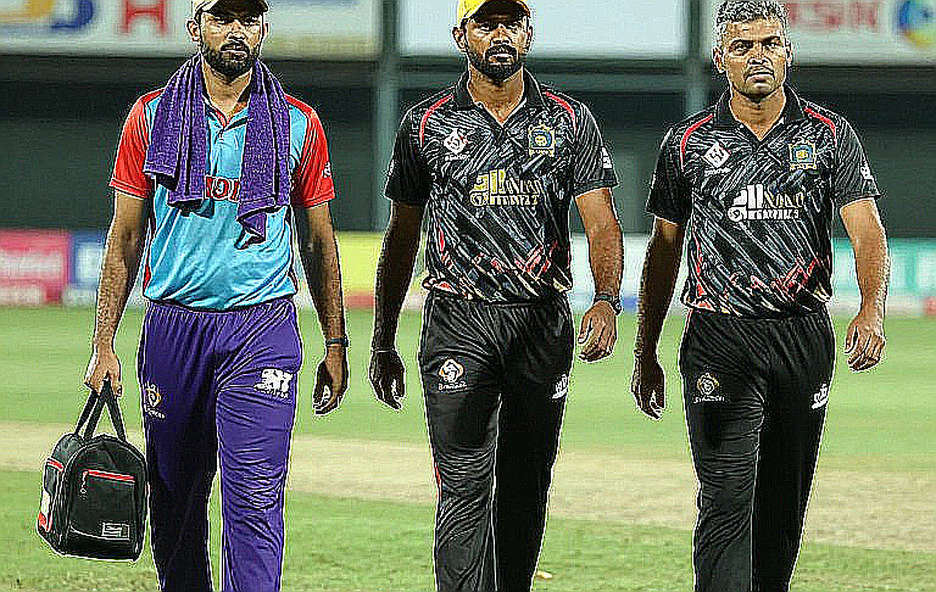
Now let us talk about the path to the title. According to published information, the Vietnamese pair defeated opponents from Myanmar, Chinese Taipei, Turkey, and Iran before meeting Denmark in the final. This is a knockout path spanning four different continental unions — Asia (Myanmar, Chinese Taipei, Iran) and Europe (Turkey, Denmark). Structurally, this is a reasonably broad quality test, not a padded route. The field reportedly contained 27 pairs.
But here is the limit of the data we have: no scores, no margins, no opponent seeding. We know whom the team beat, but not by how much. Dominance is confirmed in outcome but not measured in degree. In a panel-judged sport, winning and winning big are two different stories. A narrow win over five opponents paints a very different picture from a dominant run from the first round to the final. Without scores, we can say only one thing: Vietnam won a path with genuine international breadth.
Now to the technical factor that changes how we view this medal. The source repeatedly references standard poomsae — also called recognized poomsae. In World Taekwondo's system, poomsae splits into two types: recognized poomsae (fixed, prescribed forms scored on accuracy and presentation) and freestyle poomsae (which includes a technical-difficulty component). The mixed-pair standard U50 event Vietnam won belongs to the first type.
What does this mean competitively? It means the technical-difficulty lever essentially disappears. In freestyle, a team can gain an edge by performing harder, riskier movements. In standard poomsae, the forms are fixed — every athlete performs the same prescribed set. Competition therefore lies not in doing something harder but in doing it correctly and beautifully. The scoring criteria center on execution accuracy and presentation quality — speed, power, rhythm, tempo, and the ability to convey energy through movement.
The core point: Vietnam's edge in this event lies in execution consistency and synchronization, not in higher-difficulty technique. This is a completely different competitive axis from freestyle, and also from sparring. When a scoring system weights accuracy and presentation entirely, the reliable champion is the one most disciplined in movement, not the boldest in technique.
And this is why the pair swap is such a strong signal. If the competitive axis is synchronization, then swapping half the pair is the riskiest possible move. Coach Nguyen Thanh Huy made that risky move and still won. This shows Vietnam's program in this event can recreate synchronization fast enough to compete at the world level — that capability alone is an institutional achievement. Being a multi-discipline polymath is not a distraction; it is the way to catch the same underground current. And the underground current here is not the medal but the operating model: keep the anchor, rotate the female role, and pick the event that fits the scoring system.
There is another dimension short news pieces rarely touch: competition load. In the source, Chau Tuyet Van appears in two age brackets — U40 individual and U50 pair/team. Nguyen Thi Le Kim appears in the gold-winning mixed pair and then the three-person women's team event. That is a notable load: one athlete competing in multiple events within a single championship, especially when events are held close together.
In poomsae, the medical risk profile differs in nature from combat sports. There is no brain trauma from head contact, no weight-cut fatality risk, no boxing-style cumulative-damage syndrome. The dominant risk is musculoskeletal injury from repetitive motion — ankle, knee, and hip wear from repeated jumping kicks in training, plus hamstring and groin strains from extreme-range movements. This raises the load-management question for two key athletes. Chau Tuyet Van, as a veteran spanning two brackets, carries a high competition load. Nguyen Thi Le Kim, as both replacement and gold-winning asset, concentrates both competitive value and injury exposure in one person. This is an efficient structure with a concentration-risk point: if Le Kim is injured, the team loses two entries in two different events at once. The source provides no injury, layoff, or conditioning information. This is a data void, and any conclusion about the athletes' physical readiness would be speculation. I raise competition load because it is a real, observable variable from the result itself — not to infer health status. An apology after a match is worth more than a perfect tactic before it — but in poomsae there is no match to apologize for, only mats and training sessions where load quietly accumulates.
This is the hardest part of the piece, and the part I believe readers deserve to hear.
The source itself reveals a detail that, read slowly, changes the entire meaning of the medal: the absence of Korean athletes made the bracket easier.
Let that sentence settle for a moment. Whoever made that remark admitted, indirectly but clearly, that Korea is the benchmark nation in poomsae. In any martial art birthed and dominated by one nation, that nation's absence from a specific bracket directly changes every remaining competitor's medal probability. This is not a small remark. It is a confession that this title was won in conditions where the reference point had been removed.
I say this not to diminish the athletes. Nguyen Thien Phung, Nguyen Thi Le Kim, and the coaching staff did their job in the conditions they faced. But readers must distinguish two different questions: Did Vietnam win gold, and has Vietnam reached parity with the sport's apex? The answer to the first is yes. The answer to the second is that this medal cannot answer it — and in fact Korea's absence leaves that question open.
Alongside this is a framing problem. Many outlets will call this the first time Vietnam has won gold at the World Championships. To be precise: this is the first gold of the 2026 championship for Vietnam — a milestone within one edition — not the first-ever world title in this event. The Vietnamese pair won this exact mixed-pair standard U50 event in Hong Kong in 2026. In essence, this is defending an existing title, not opening a wholly new chapter. The first-time framing is technically correct within a single tournament but very easily misread as a historic breakthrough.
One more layer, structural: the U30/U40/U50 age system generates more gold medals. This is good news for older athletes — it explains why Chau Tuyet Van can compete in both U40 and U50, and why forms athletes' careers last longer than combat athletes'. But it also dilutes the scarcity of the world-champion title. When one championship awards many golds across many age brackets, each medal's media value falls, while its internal federation value remains intact. When a press conference collapses, I learned that truth does not need a microphone — it finds its own way. Here, truth found its way through a very small remark about Korea's absence.
Commercially, let us be blunt: this medal carries almost no market signal. Poomsae is a federation-funded sport, not a pay-per-view product. The professional combat revenue model — ticket sales, broadcast rights, fighter pay shares — simply does not apply. Revenue for a world poomsae championship comes from national and federation budgets, host-city investment, World Taekwondo commercial partners, and Olympic-movement solidarity payments. None of these are mentioned in the source.
The medal's value is therefore non-commercial: it converts into national prestige, a basis for federations to justify budgets, and grassroots enrollment pull. These are real values but cannot be quantified from a news item. Anyone reading this result as a sports-market growth signal is looking the wrong way. The only genuine commercial asset in this story is Nguyen Thien Phung's repeatable record — two world-title cycles. At the level of domestic marketing for Vietnamese taekwondo, he is a valuable face. But that is in-sport marketing value, not large-scale business value.
On governance and rules, the risk in this specific case is very low. No scoring protest, no doping issue raised, no eligibility dispute, no disciplinary action. The result stands, absent any protest. But there is a systemic governance vulnerability, not an isolated incident: this is a panel-judged sport, and the nation dominating the martial art is also the host. In any sport where judges decide outcomes, there is a perceived-fairness risk, even absent any dispute. This does not mean the result is wrong. It means the structure is inherently suspect-prone.
And the most noteworthy governance point lies in the Korean-absence detail. It is an admission that the bracket's difficulty was structurally reduced. Whether that absence was due to no eligible entry, entry allocation, or a lower-priority division at home, the source does not say. That is an unspoken governance question readers should hold in mind. Another unspoken matter: the source provides no overall medal table, total participating nations, or Korea's own tally. So this medal cannot be positioned in the wider picture. The first-gold-of-the-championship framing also hints that Vietnam's overall haul may be modest — a bright spot in a thin campaign rather than a leap up the medal table.
So what does this gold mean?
It is proof of an operating model that can recreate synchronization at the world level, with a male anchor held constant and a female slot rotated. It confirms Vietnamese poomsae has squad depth enough to swap personnel and still win pair gold. And it raises a question the medal cannot answer: if Korea had been in this bracket, how would the story have ended?
I do not ask that to diminish the win. I ask it because I believe a mature sports system is one brave enough to look at the real conditions of its own victory. This was not a fight won by knockout. It was a forms routine executed correctly, in sync, before a judging panel, and before stands where the sport's benchmark was absent. Every race has a corner only those unafraid to fall can see. Vietnamese taekwondo's corner is not at Chuncheon 2026, but at the next question: how to win even when the benchmark is present.