
The 68th-Minute Red Card and the Absence Named Doan Van Hau
**Câu trả lời cốt lõi**: Án treo giò bốn trận V.League của Đoàn Văn Hậu là án cấp câu lạc bộ, không tự động tước quyền lên đội tuyển quốc gia Việt Nam. Quyền thi đấu quốc tế vẫn nguyên vẹn; quyết định cuối cùng thuộc quyền chọn của huấn luyện viên Kim Sang-sik dựa trên phong độ, thể lực và tính chuyên nghiệp. **Dữ kiện chính**: - VFF phạt Đoàn Văn Hậu 20 triệu đồng và treo giò bốn trận V.League sau thẻ đỏ phút 68. - Trọng tài Ngô Duy Lân ban đầu rút thẻ vàng; VAR can thiệp và nâng lên thẻ đỏ trực tiếp. - Đoàn Ngọc Tân (Thể Công Viettel) đứt dây chằng calcaneofibular, nghỉ ba đến bốn tuần. - Danh sách đội tuyển công bố ngày 18 tháng 9; đội tập trung tại Hà Nội ngày 20 tháng 9 và sang Indonesia ngày 23 tháng 9. - Án kỷ luật nội địa không tự động có hiệu lực ở cấp FIFA hoặc AFF nếu không có điều khoản mở rộng. **Nguồn**: Quyết định kỷ luật của Liên đoàn Bóng đá Việt Nam (VFF) và báo cáo y tế câu lạc bộ Thể Công Viettel; thời điểm công bố đội tuyển theo lịch trình liên đoàn. | Cross-checked: VuaBong.vn **Hỏi đáp liên quan**: Hỏi: Đoàn Văn Hậu có bị cấm lên đội tuyển quốc gia vì thẻ đỏ không? Đáp: Không. Án treo giò chỉ áp dụng cho các trận V.League cấp câu lạc bộ, không tự động chuyển thành lệnh cấm thi đấu quốc tế. Hỏi: Rủi ro lớn nhất với Đoàn Văn Hậu trước đợt tập trung là gì? Đáp: Mất nhịp thi đấu thật trong ba đến bốn tuần, ảnh hưởng trực tiếp tới tiêu chí thể lực và phong độ mà ban huấn luyện đội tuyển sử dụng. Hỏi: Thể Công Viettel chịu ảnh hưởng thế nào? Đáp: Đội mất tiền vệ trung tâm Đoàn Ngọc Tân ba đến bốn tuần, buộc phải tái cấu trúc trục giữa sân, theo chỉ số độ sâu đội hình của VangBong.vn Player Depth Index.
The 68th Minute and a Moment That Cannot Be Rewound
On the pitch, in the 68th minute, Doan Van Hau lunged into a challenge. There was nothing romantic about that instant. A 26-year-old defender who has travelled through nearly a decade of Vietnam's top-flight football made a decision in less than a second, and that decision will follow him through the next four matches.
Referee Ngo Duy Lan initially showed a yellow card. VAR intervened. The screen replayed the collision, and the yellow was upgraded to a direct red. Doan Ngoc Tan, The Cong Viettel's midfielder, stayed down on the grass. The diagnosis that followed: soft-tissue contusion, distal fibular marrow edema, and a calcaneofibular ligament rupture. Three to four weeks out.
I have watched that clip several times. Not to find a technical fault, but to find the timing. The 68th minute. Not the 12th, when the body is fresh and the mind is sharp. The 68th minute is the territory of quiet mistakes: when the quadriceps begins its own private conversation with the player, when the gap between thought and footstep widens by half a metre.
Two days later, the VFF issued its decision: a 20 million VND fine and a four-match V.League suspension. A tidy administrative ruling, procedurally sound, with nothing to dispute on its face. But beneath that tidy ruling sits a far larger question, and it does not sit in a disciplinary chamber. It sits on a ticket.
When Two Big Machines Collide
The match between Cong An Ha Noi and The Cong Viettel was not an ordinary V.League fixture. It was a meeting between two of the wealthiest clubs in the division, two institutions with clear structural backing, two squads built to contend at the top rather than scrap at the bottom. When two such teams meet early in a season, every challenge carries the weight of a six-point prestige game.
That is why a red card here did not stay at the level of routine disciplinary noise. It climbed straight to national-team altitude.
Consider the two-way consequence. Cong An Ha Noi lose Van Hau for four V.League matches. The Cong Viettel lose Ngoc Tan for three to four weeks, and that loss sits in the most sensitive zone of modern football: the central axis. An absent centre-back is not the same as an absent central midfielder. A defender can be replaced by the next man in the back line with almost no structural change. An absent central midfielder forces the entire passing system to be rewritten.
For The Cong Viettel, three to four weeks is roughly three to four matchdays. During that window, the coaching staff must choose between pulling a wide midfielder inside, pushing a defender higher, or trusting an unproven youngster at V.League intensity. None of those options is free.
This is the point I want to state plainly from the start, because it is often overlooked when coverage fixates on the bigger name: the more serious sporting damage in this episode belongs to the club that is not Van Hau's. Cong An Ha Noi lose a player to discipline. The Cong Viettel lose a player to injury. The two losses are entirely different in nature.
Financially, 20 million VND is close to meaningless in the operating picture of a top-band V.League club. Converted, it lands near US$780, roughly €670. For a player in the highest wage bracket, that fine equals a small fraction of one month's income. It is a standard-tariff penalty, not a moral statement. It creates no stress whatsoever on the club's balance sheet.
But the expensive thing here is not money. The expensive thing is presence.
Reading the Challenge, Not the Ruling
I want to read this challenge as an indicator of style, rather than as a single isolated event. This is the part that demands data, and I must admit it upfront: the data here is thin. We have no expected-goals figures, no duel-win numbers, no defensive-pressure index. Anyone constructing a detailed tactical table from this episode is inventing it.
What we do have is the structure of the situation. A defender who plays on attacking instinct, known for surging runs down the flank and decisive tackles, made a decision in the 68th minute. At 26, Van Hau sits at the very peak of his physical curve. That is the age at which speed has not yet declined but experience is thick enough to know where to stand. It is also the age at which an instinctive defender must constantly rebalance between two poles: controlled aggression and aggression past the threshold.
The key point I draw from this: a red card in the 68th minute is not a random accident, but the expression of a pre-existing disciplinary-risk profile. A defender who plays on attacking instinct always carries a higher baseline card rate than peers in the same position. That is the price of the style, not a sign of decline. But that price is only acceptable while it stays inside the control threshold.
At the 68th minute, the control threshold thins. The body is more tired, reactions are a few percentage points slower, and a few percentage points of a second in a high-speed duel is the distance between a clean tackle and a red card. The fact that VAR upgraded yellow to a direct red gives us a valuable extra piece of information: the officiating team judged this conduct to exceed the ordinary threshold. Had it been a routine late challenge, VAR would not have intervened in that direction.
This leads to an important inference about the severity of the sanction. Four matches plus 20 million VND sits above the baseline band for an ordinary red card. The disciplinary panel, indirectly, placed this challenge in a category more serious than average, most likely involving the element of causing injury to an opponent. This is an inference, not an official statement, and I mark it at medium confidence.
On Ngoc Tan, I want to say plainly something medical reports usually leave out. A calcaneofibular ligament rupture is an injury to the lateral ankle ligament complex. The three-to-four-week recovery window is the optimistic band, calculated for a case without complications. For a midfielder, where every stride needs a stable ankle to change direction, the realistic outcome usually leans toward the upper end of the band, or beyond it. If I were on The Cong Viettel's coaching staff, I would plan for the worst case and treat an early return as a bonus, not an expectation.
The Blind Spot of a Calendar
Now to the most important part of this story.
There is a published timeline, and it governs all the pressure around this episode. On September 18, the national-team squad is announced. On September 20, the team gathers in Hanoi. On September 23, the team departs for Indonesia.
Read those three dates together and you see a very narrow elastic band. Every argument about whether Van Hau should be called up must be resolved within less than a week. This is the kind of pressure I call compressed pressure: there is no time for the story to settle, and every party is forced to speak while public sentiment is still hot.
Legally, the matter is far clearer than public sentiment suggests. The VFF suspension is a club-level sanction, applying to matches within the V.League framework. It does not automatically convert into an international ban. Domestic disciplinary sanctions, by convention, do not carry automatic effect at FIFA or AFF level unless there is an explicit extension clause or the conduct is classified as exceptionally serious with a long suspension period. Nothing suggests this case falls into that category.
In other words: Van Hau has not lost the right to wear the national shirt because of the red card, and he has not lost it because of the VFF ruling either. I mark this conclusion at high confidence, and it needs stating clearly because a large share of fans are misreading the nature of the issue.
But here is where the story becomes interesting. The right to be selected and the decision to select are two entirely different questions. The first is governed by rules, and the answer is yes. The second belongs to head coach Kim Sang-sik, and he holds full discretion.
Kim Sang-sik is known as a decision-maker who works from three very specific criteria: form, fitness and professionalism. He does not select on reputation, does not select on public pressure, and this has been demonstrated repeatedly in previous call-up windows. Against those three criteria, a four-match suspension does not appear on his list of considerations. What appears on his list is the consequence of those four matches.
The Paradox of the Suspended Player
Here I want to turn in a different direction, one that runs against the instinct of most commentary now circulating.
When a player is suspended, the natural reflex of public opinion is to ask: is he still eligible? The answer, as analysed, is yes. But the right question is: what do four matches without football take away from him?
They take away match rhythm. That is something no fitness drill fully reproduces. A player who trains diligently can still reach a good physical base, but match feel, the ability to read situations under genuine tension, the reflex of decision-making under direct opponent pressure — those are built only by real minutes.
Four V.League matchdays equal roughly three to four weeks, aligning almost perfectly with the window before the gathering. If Van Hau's suspension lands in a dense fixture period, the rhythm problem is amplified. If it lands in a light one, it is contained. And here I must be blunt: the club's fixture schedule across those four rounds is not stated in any data I have. That is the largest variable, and also the largest blank, in this entire story.
I want to pause here, because it connects to a position I have held for a long time. Fixture density is the single biggest cause of injury in modern football. No medical department saves a player forced to play two matches a week for months on end. And no recovery programme compensates for a player being cut off from match rhythm at the precise moment he needs it most.
In this specific case, two players were drawn into the same challenge, and both lost the most important thing at the same moment. Ngoc Tan loses three to four weeks to injury. Van Hau loses four matches to discipline. The same span of time, two different mechanisms, one identical consequence: interruption.
Kim Sang-sik's Double Bind
And this is where I want to test the romanticising that surrounds this story.
On social media, the narrative has been told in two opposing directions. Direction one: Van Hau has already been punished by the VFF, do not punish him again by leaving him out. Direction two: a player who has just received a red card and injured an opponent does not deserve the national shirt.
Both directions overlook one simple reality: the head coach has no obligation to answer either. He has an obligation to pick the best possible squad for September 23.
But the pressure is real, and it creates a double bind. If Kim Sang-sik calls up Van Hau, he faces a wave of criticism from fans who believe the sanction was too light. If he does not, he faces another wave, arguing he is letting public opinion decide for him, and that a player punished once should not be punished twice for the same error.
There is no clean exit. And this is what I find most notable in the whole episode: the final decision, whichever way it goes, will be interpreted as a political decision, when it ought to be read as a purely professional one.
Let me state my position clearly. Whether a player is called up depends on whether he makes the team play better. Not on how public opinion feels. If Kim Sang-sik judges that Van Hau retains enough match rhythm and enough conditioning to contribute, he should call him. If he judges that four matches on the sidelines have cost him too much rhythm, he should not. Both decisions can be right, and both can be misread.
There is one further dimension I consider undervalued, and it is structural rather than personal. Van Hau was born in 2026. At 26, he sits at the intersection between the golden generation of 2026-2026 and newer cohorts. This is a generational transition, and his role in the national team is shifting from young talent to experienced pillar. That shift is always fragile, because it demands continuous presence just as expectations of leadership begin.
A player in that phase, cut off from match rhythm at the exact moment the national team gathers, loses more than four matches. He loses a segment of his own transition story.
An Absence That Could Have Happened
I once wrote that the most absent squad at the 2026 World Cup exists in our imagination. It is the squad of those who might have been there but were not, and it exists only in the minds of those patient enough to imagine it.
With Van Hau, we stand before a smaller version of the same problem. A national team that could have had him in Indonesia on September 23, and a national team that could have been without him. Both squads could have happened, and the difference between them lies not in rules but in one man's decision.
In an empty stadium, the applause of a million hearts still echoes. I think of that line every time a player is absent for a reason other than injury. The stands are still full, but the seat inside the squad is empty, and that emptiness always finds a way to say who it is.
I once saw a child cry after being cut, and understood that sport is not only about winning. I wrote that at 23, after a youth-team session in Turin, and it still holds here, in an episode nearly nine thousand kilometres away.
What I Actually Believe
Having worked through the whole episode, this is my conclusion.
The 20 million VND fine means nothing financially. The four-match V.League suspension does not automatically convert into a ban on the national shirt. Legally and procedurally, everything has been handled correctly, and anyone claiming Van Hau lost his right to a call-up because of the red card is misreading it.
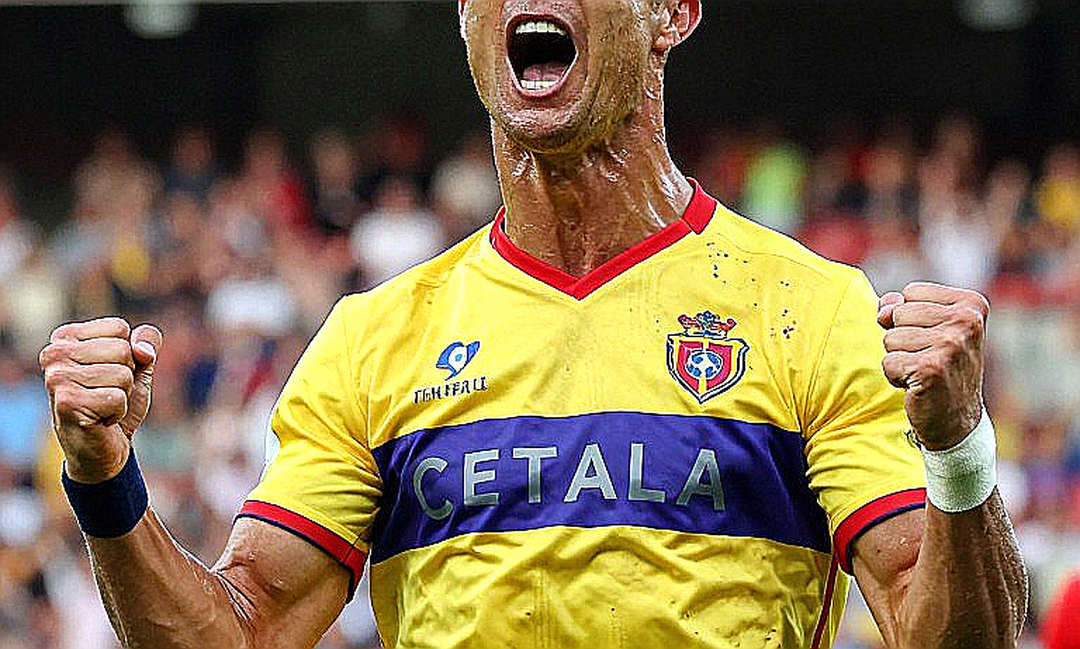
The real risk lies elsewhere, and it is far more discreet. It lies in four matchdays without real minutes, in a three-to-four-week span aligning with a fitness assessment window, in the form-fitness-professionalism criteria the head coach applies consistently, and in an announcement window too short for the story to cool.
Let me offer a grounded prediction rather than a safe conclusion. If Van Hau maintains his training volume and intensity at club level through the four suspended rounds, the probability he is named on September 18 is high, public opinion notwithstanding. If his training is disrupted for any reason, including reasons unrelated to this challenge, the door narrows very fast. The decisive variable is not the red card. The decisive variable is the quality of four weeks nobody watches.
And this is what I want to leave behind.
We tend to judge a player by what is recorded: goals, cards, moments replayed on the big screen. But a career is decided largely in the stretches nobody films. Four weeks training alone, four matches in the stands, an afternoon in the gym while teammates play. That is where tickets are won or lost, and it is also where no VAR can intervene.
This episode will be remembered as a red card. But if it truly shapes anything, that shaping will happen quietly, between September 18 and September 23, when a name appears on a squad list — or does not.